
Energy & Utility AI Development Company
Building AI systems that help energy producers, utilities, and grid operators forecast demand, protect critical infrastructure, and operate the grid with greater precision.
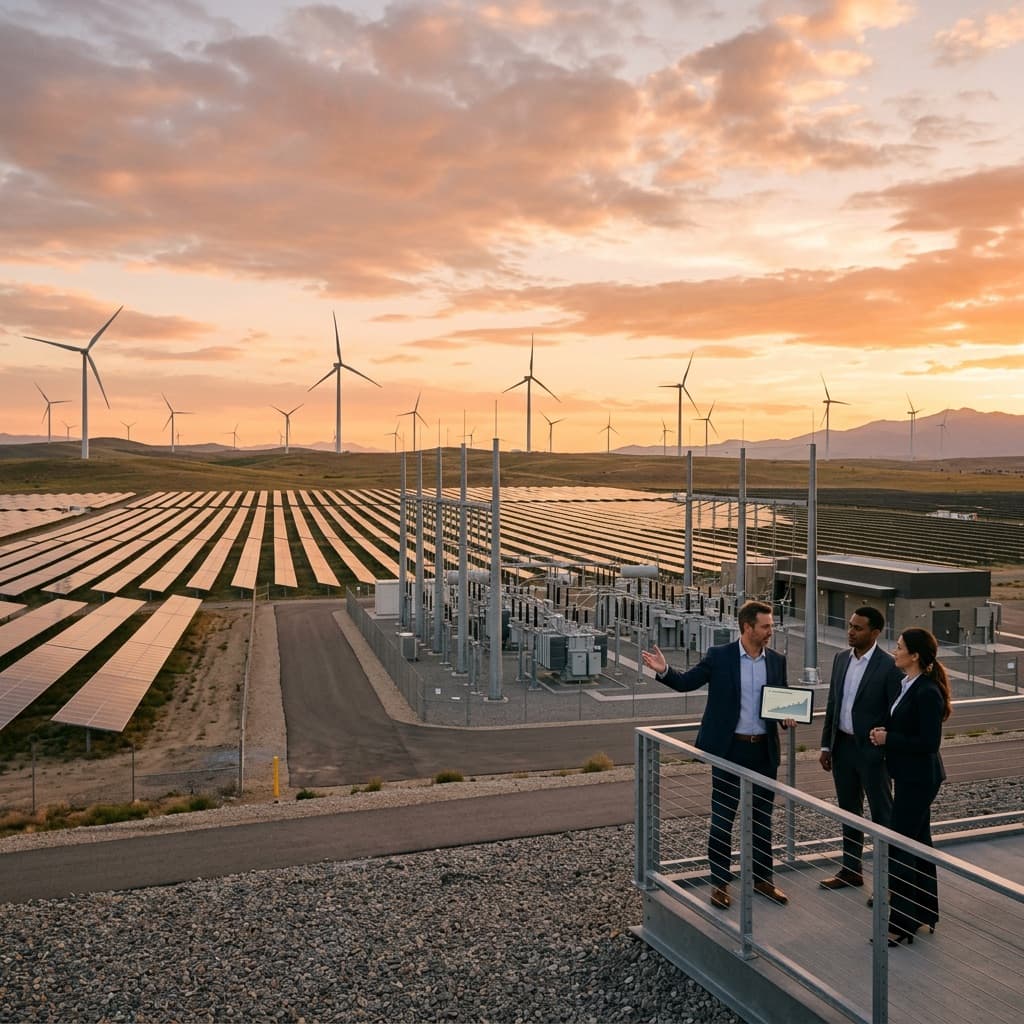
Antier partners with utilities, independent power producers, and grid operators to deploy AI systems built for real-world grid conditions and regulatory scrutiny.











AI Solutions Built for Energy Producers, Utilities, and Grid Operators
Energy and utility operations run on physical assets, weather-driven demand, and regulatory obligations that leave little room for guesswork. We build AI systems that address the specific forecasting, maintenance, and reporting problems utility operations leadership and energy engineering teams deal with every day.
Grid Load Forecasting
We build short-term and long-term load forecasting models that combine historical consumption, weather data, and real-time grid telemetry to predict demand at the feeder, substation, or system level. Accurate forecasts help operators size reserve margins correctly, reduce costly peaker-plant dispatch, and plan capacity investments with more confidence.
Predictive Maintenance for Infrastructure
Our predictive maintenance models analyze sensor data from turbines, transformers, substations, and transmission assets to detect early signs of degradation before failure occurs. By combining vibration, thermal, and acoustic signals with historical maintenance records, these systems help operations teams shift from calendar-based servicing to condition-based intervention.
Renewable Energy Yield Optimization
We develop forecasting and optimization models that improve the accuracy of wind and solar generation predictions and support better curtailment, dispatch, and maintenance decisions. These models incorporate weather modeling, satellite and sensor data, and turbine- or panel-level performance history to reduce forecast error and improve capacity factor.
Outage Prediction & Response
Our outage prediction systems analyze weather patterns, asset condition, vegetation risk, and historical failure data to flag distribution segments most likely to fail. When outages do occur, AI-assisted fault localization and crew dispatch models help restoration teams prioritize work and reduce customer minutes interrupted.
Energy Trading Analytics
We build analytics platforms that support price forecasting, risk exposure modeling, and bidding strategy for participants in wholesale and retail energy markets. These systems combine market data, weather forecasts, and generation and load signals to help trading desks make faster, better-informed decisions under volatile market conditions.
Emissions & Sustainability Reporting Automation
Our AI solutions automate the collection, calculation, and validation of Scope 1, 2, and 3 emissions data across generation, transmission, and operational activities. This reduces the manual effort behind ESG disclosures and regulatory filings while improving the consistency and auditability of sustainability reporting.
Ready to Modernize Grid Operations with AI?
Talk to Our Energy AI Team ↗AI Use Cases Across Energy Operator Types
Every type of energy operator faces a different mix of forecasting, asset, and market challenges. Our AI development services are tailored to the operational realities of each segment, from generation to trading to the grid edge.
Investor-Owned & Municipal Utilities
We help utilities apply AI to load forecasting, outage management, and infrastructure planning across service territories that mix aging assets with new demand from electrification and data centers. Our work supports both regulatory reporting requirements and day-to-day operational reliability.
Independent Power Producers & Renewable Generators
For wind, solar, and hybrid generation portfolios, we build forecasting and yield optimization models that improve generation predictability, reduce curtailment losses, and support power purchase agreement compliance.
Transmission & Distribution (Grid) Operators
We develop AI systems for grid operators that improve situational awareness across substations and transmission corridors, including fault detection, load balancing, and infrastructure investment prioritization based on asset health data.
Energy Retailers & Demand Response Providers
Our AI models help retailers forecast customer-level consumption, segment demand response participants, and design dynamic pricing programs that shift load without degrading customer experience.
Industrial & Commercial Energy Consumers
Large energy consumers use our AI solutions to forecast their own consumption, optimize on-site generation and storage, and manage exposure to volatile wholesale prices.
Microgrid & Distributed Energy Resource (DER) Operators
We build optimization and dispatch models for microgrid and DER operators that balance local generation, storage, and demand in real time, improving resilience during grid disturbances.
Where the Energy Industry Is Investing in AI
AI adoption in energy and utilities is accelerating as operators face aging infrastructure, workforce attrition, and rising reliability expectations. The trends below, drawn from published industry research, provide context for where the sector is heading.
in annual grid investment needed by 2030
The International Energy Agency projects that global grid infrastructure investment must rise substantially this decade to support electrification and renewables integration, a gap that AI-assisted planning and asset optimization tools are increasingly used to help close.
typical reduction in unplanned downtime
Research on predictive maintenance programs across asset-intensive sectors, including power generation and transmission, consistently reports reductions in unplanned equipment downtime within this range once condition-based monitoring replaces fixed-interval servicing.
of utility executives prioritizing AI investment
Recent surveys of power and utility leadership show a strong majority now rank AI and advanced analytics among their top strategic technology priorities, driven by aging infrastructure and growing reliability pressure.
improvement in renewable forecast accuracy
Machine learning approaches to wind and solar output forecasting, incorporating weather modeling and historical generation data, have been shown in government and national-lab-affiliated studies to meaningfully reduce forecast error compared with traditional statistical methods.
See What AI-Driven Grid Operations Could Look Like for You
Request a Solution Walkthrough ↗What Sets Antier Apart as an Energy AI Development Partner
Our track record across AI development and complex, regulated industries shapes how we approach energy and utility engagements.
Years of Experience
AI & Tech Experts
Global Clients
Projects Delivered
AI Implementations Driving Outcomes Across Energy & Utility Operations
Our case studies illustrate how AI development translates into measurable operational improvement, from forecasting accuracy to maintenance efficiency, across energy, infrastructure, and related industries.

Industries & Asset Environments We Support
Energy and utility operations span very different asset types and operating models. We tailor our AI development approach to the specific infrastructure, data sources, and regulatory context of each environment.
Electric Utilities (Transmission & Distribution)
We support utilities managing substations, feeders, and transmission corridors with AI for load forecasting, outage prediction, and infrastructure investment planning.
Renewable Generation (Wind & Solar)
Our forecasting and yield optimization models help wind farm and solar plant operators improve generation predictability and reduce performance losses across turbine and panel fleets.
Oil & Gas Midstream & Processing
We apply predictive maintenance and anomaly detection to pipelines, compressor stations, and processing facilities where unplanned downtime carries significant safety and cost implications.
Water & Wastewater Utilities
Our AI solutions support demand forecasting, pump and treatment asset monitoring, and energy consumption optimization for water utilities managing energy-intensive operations.
Energy Trading Desks & Market Operators
We build analytics platforms for trading desks and market operators that support price forecasting, risk modeling, and settlement accuracy across wholesale energy markets.
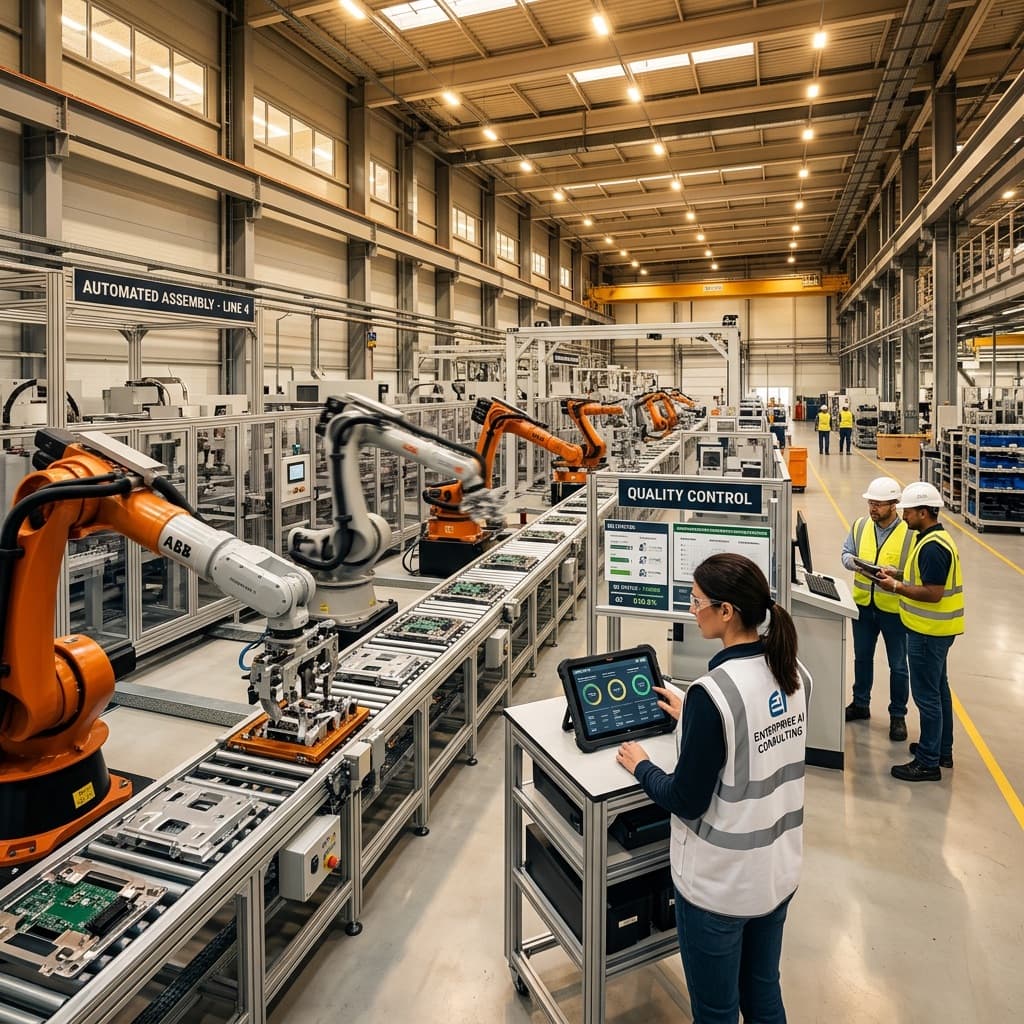
Industrial & Manufacturing Energy Users
Large industrial energy consumers use our AI models to forecast consumption, manage on-site generation, and reduce exposure to demand charges and price volatility.
EV Charging Network Operators
We help charging network operators forecast demand at individual stations, optimize charging schedules against grid conditions, and plan infrastructure expansion based on usage patterns.
Have a Specific Grid or Asset Challenge?
Discuss Your Use Case ↗Core AI Capabilities for Energy & Utility Operations
Our energy AI development services combine forecasting, asset intelligence, and grid reliability capabilities built to work with the operational and OT systems already running your business.
Load & Demand Forecasting
Predicts electricity demand at the system, substation, or feeder level using historical, weather, and grid data.
Renewable Generation Forecasting
Improves wind and solar output predictions to support dispatch, curtailment, and trading decisions.
Price & Market Forecasting
Models wholesale and retail price movements to support trading strategy and procurement planning.
Battery Storage Dispatch Optimization
Determines optimal charge and discharge schedules based on price signals, demand, and asset constraints.
Demand Response Optimization
Identifies and sequences load-shedding opportunities across customer segments to meet grid needs.
Weather-Driven Risk Modeling
Assesses storm, heat, and extreme weather risk to inform operational and staffing decisions.
Predictive Maintenance Models
Flags early signs of equipment degradation using sensor and historical maintenance data.
Vibration & Thermal Anomaly Detection
Identifies abnormal turbine, transformer, and rotating equipment behavior before failure.
Digital Twin Simulation
Models asset and grid behavior virtually to test scenarios without operational risk.
Asset Health Scoring
Ranks infrastructure by failure risk to prioritize inspection and capital planning.
Vegetation & Right-of-Way Risk Detection
Analyzes imagery and growth data to flag vegetation encroachment risk near lines.
Remaining Useful Life Estimation
Estimates how much service life remains in critical assets to guide replacement timing.
Outage Prediction
Forecasts likely outage locations using weather, asset condition, and historical failure data.
Fault Localization
Pinpoints likely fault locations on distribution and transmission lines to speed restoration.
Crew Dispatch Optimization
Prioritizes and routes field crews based on outage severity and restoration impact.
SCADA/OT Data Integration
Connects AI models with SCADA, EMS, and OT systems for real-time situational awareness.
Real-Time Anomaly Alerts
Surfaces unusual grid or asset behavior to operators as it happens, not after the fact.
Emissions & Compliance Reporting Automation
Automates the collection and calculation of emissions and regulatory reporting data.
Predictive, AI-Driven Maintenance vs. Traditional Reactive Maintenance
Moving from calendar-based to condition-based maintenance changes how utilities and energy producers plan capital spend, deploy crews, and manage risk.
| Comparison Factors | Reactive / Calendar-Based Maintenance | AI-Driven Predictive Maintenance |
|---|---|---|
| Maintenance Trigger | Fixed schedules or repairs after failure occurs | Condition-based alerts from sensor and telemetry data |
| Downtime Impact | Unplanned outages disrupt operations and revenue | Failures are anticipated and addressed during planned windows |
| Asset Lifespan | Parts replaced on generic schedules regardless of actual wear | Components serviced based on real degradation patterns |
| Crew Deployment | Reactive dispatch after failure reports | Prioritized, risk-ranked work orders for field teams |
| Cost Profile | Higher emergency repair and overtime costs | Lower long-term maintenance spend and smoother budgeting |
| Data Utilization | Limited use of historical failure and sensor data | Continuous learning from sensor, weather, and maintenance history |
Our Approach to Delivering Energy & Utility AI Solutions
AI development for energy and utility operations has to account for legacy OT systems, safety-critical environments, and strict data requirements. Our process is built around those realities from the outset.
- 1
Operational & Asset Assessment
We start by understanding your generation, transmission, distribution, or trading operations, existing infrastructure, and the specific reliability, forecasting, or maintenance challenges you're trying to solve.
- 2
Data & Infrastructure Readiness
We assess available sensor, SCADA, historian, and enterprise data sources to determine what's usable today and what needs to be structured, cleaned, or supplemented before model development begins.
- 3
Model Strategy & Architecture Design
Our team defines the forecasting, anomaly detection, or optimization approach best suited to your use case, along with the deployment architecture needed to support real-time or batch processing requirements.
- 4
AI Model Development & Training
We develop and train models using your historical operational data, validating performance against known events such as past outages, maintenance failures, or forecasting errors.
- 5
SCADA/OT & Enterprise System Integration
We connect AI models with SCADA, EMS, historian, GIS, and enterprise asset management systems so predictions and alerts reach the tools your operations teams already use.
- 6
Field & Simulation Testing
Before full deployment, models are tested against simulated scenarios and, where appropriate, limited field pilots to validate accuracy and operational fit under real conditions.
- 7
Deployment Across Operations
Once validated, we deploy the solution into production environments, whether that means control room dashboards, field crew mobile tools, or automated reporting pipelines.
- 8
Continuous Monitoring & Model Retraining
Energy systems change with weather patterns, asset aging, and market conditions, so we monitor model performance over time and retrain as new data becomes available.
Let's Build a Roadmap for Your Grid AI Initiative
Schedule a Consultation ↗Why Energy & Utility Companies Choose Antier
Energy and utility leaders choose Antier for AI development because our work is grounded in the operational and regulatory realities of asset-intensive, safety-critical industries.
Domain-Aware AI Development
Our teams understand the difference between a customer support workflow and a substation failure prediction, and design models, data pipelines, and interfaces accordingly.
OT & Legacy System Integration Experience
We have hands-on experience connecting AI systems with SCADA, EMS, historians, and other operational technology that predates modern cloud architecture, without disrupting existing operations.
Security & Grid Compliance Awareness
We build with an awareness of the security and compliance expectations that govern critical infrastructure, including access controls, data handling, and operational technology segmentation.
Scalable, Phased Delivery Model
We structure engagements to deliver value incrementally, starting with a focused use case and expanding scope as data maturity and organizational readiness grow.
Transparent Development Process
Every engagement includes structured communication, milestone-based delivery, and visibility into model performance, so stakeholders understand what's being built and why.
Long-Term Support & Model Maintenance
Beyond deployment, we provide monitoring, retraining, and enhancement support to keep models accurate as operating conditions, asset fleets, and regulatory requirements evolve.
What Influences Energy AI Development Cost
The cost of an energy or utility AI project depends on data readiness, integration complexity, and how the solution needs to operate within existing infrastructure. We evaluate each of these factors before scoping an engagement.
Data & Sensor Readiness
Projects that rely on existing SCADA, historian, or IoT sensor data typically move faster than those requiring new instrumentation or significant data cleanup before model development can begin.
Model Complexity & Use Case Scope
A single-site forecasting model requires less effort than a multi-asset predictive maintenance system spanning hundreds of substations or turbines across a service territory.
SCADA/OT Integration Requirements
Connecting AI outputs into control room systems, EMS platforms, or field crew tools adds integration work beyond model development itself, particularly with older OT environments.
Real-Time vs. Batch Processing Needs
Use cases requiring real-time anomaly detection or dispatch decisions carry different infrastructure and latency requirements than periodic forecasting or reporting workflows.
Regulatory & Security Requirements
Projects touching critical infrastructure, customer data, or regulated reporting may require additional security controls, audit trails, and compliance documentation.
Deployment Environment
Whether a model runs in the cloud, at the edge on substation hardware, or in a hybrid configuration affects both development approach and ongoing infrastructure cost.
Ongoing Monitoring & Support
Many operators choose continuous model monitoring, retraining, and performance reporting after launch, which is scoped separately from initial development.
Technologies Powering Our Energy & Utility AI Solutions
We select technologies based on what energy and utility operations actually run on, from OT protocols to the forecasting and analytics frameworks best suited to time-series and sensor data.
AI & ML Frameworks
Time-Series & Forecasting
IoT & Edge
Data Platforms
Grid & OT Integration
Cloud Platforms
DevOps & Deployment
Monitoring & Analytics
Need a Cost Estimate for Your Energy AI Project?
Get a Quick Consultation ↗Regulatory & Security Standards Behind Our Energy AI Solutions
Antier develops AI solutions for energy and utility operators with an awareness of the security, reliability, and governance frameworks that shape critical infrastructure. Our approach focuses on data protection, operational safety, and regulatory alignment.
NERC CIP Alignment
For grid-connected AI systems, we design with awareness of NERC Critical Infrastructure Protection requirements around access control, system security, and change management for bulk electric system assets.
IEC 61850 & Grid Protocol Compatibility
Our integration approach accounts for common substation automation and grid communication protocols, helping AI systems interoperate with existing OT infrastructure rather than replace it.
ISO 50001 Energy Management Alignment
Where relevant, our sustainability and consumption reporting solutions are designed to support alignment with ISO 50001 energy management system principles.
ISO/IEC 27001 Aligned Security Practices
We follow security-focused development and operational practices inspired by internationally recognized information security management standards to protect sensitive operational and customer data.
NIST AI Risk Management Framework
Our development process incorporates risk-aware practices that support AI governance, transparency, and accountability across critical infrastructure deployments.
EU AI Act Readiness
Where applicable, we help energy operators prepare for emerging AI governance requirements by emphasizing transparency, documentation, and risk assessment in system design.
Customer & Smart Meter Data Privacy
For solutions touching customer consumption or smart meter data, we apply privacy-focused data handling and access controls aligned with regional data protection requirements.
Spotlight on Insights
Antier's AI insights help energy and utility leaders track emerging trends in grid modernization, predictive analytics, and AI infrastructure.
 AI Strategy
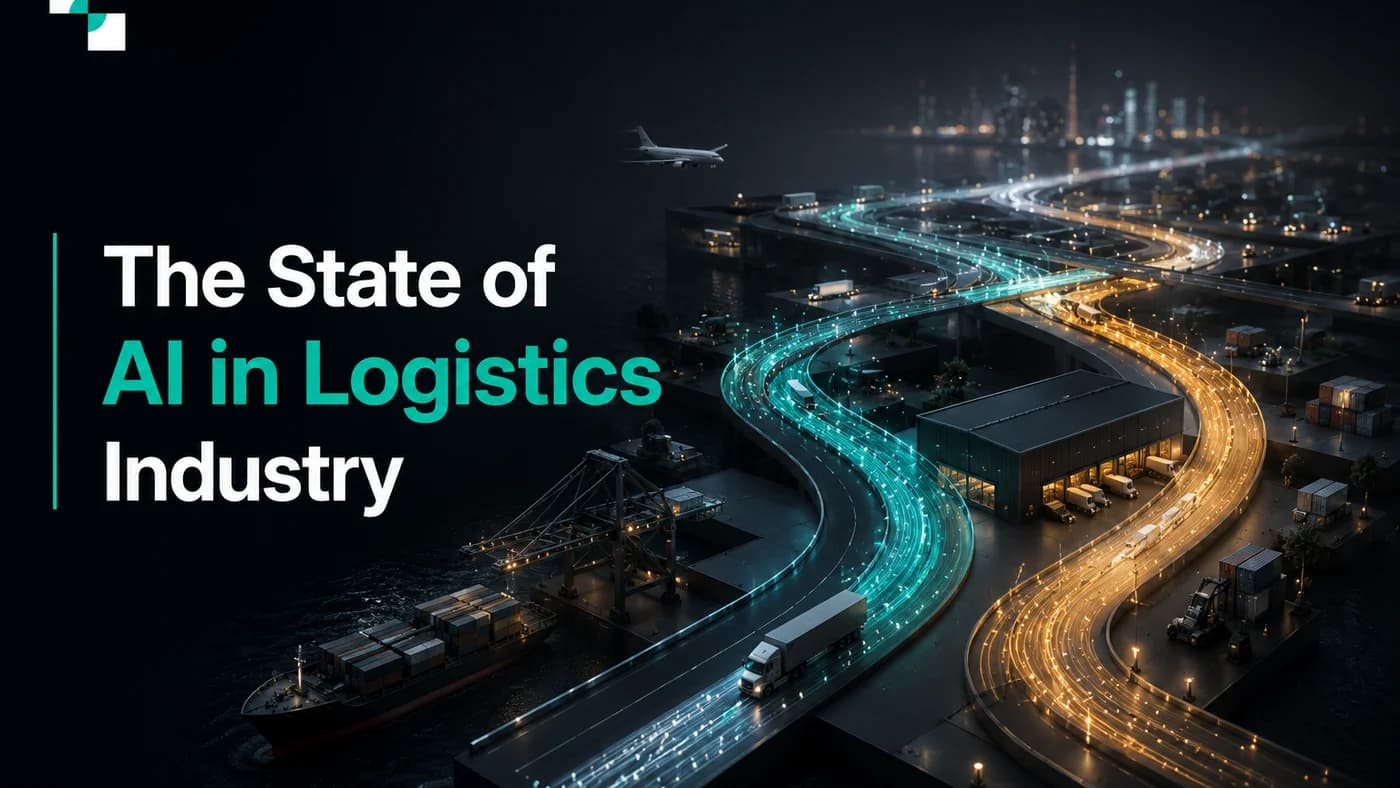
The State of AI in the Logistics Industry: Executive Insights for Business Leaders
Explore AI in logistics with insights into market trends, business value, implementation strategies, industry examples, and the future of supply chains.
 AI Strategy
What the UAE's 50% Agentic Government Mandate Means for Enterprises?
Discover what the UAE's 50% Agentic AI strategy reveals about the future of enterprise AI. Learn why governance, organizational readiness, and execution matter more than AI adoption alone.
 AI Architecture
RAG vs. Fine-Tuning: A Strategic Guide for Business Leaders
RAG or Fine-Tuning? Go through this blog post to compare business value, costs, governance, scalability, & more factors and choose the right AI architecture.
Frequently Asked Questions
Start a conversation with Antier
Connect with our consulting and engineering leads to scope your digital transformation from architecture review to production deployment.