
AI Game Development Company
Build games that play smarter, resist cheating, and hold players longer with our AI game development services covering NPC behavior, procedural content, player analytics, and live-ops personalization built around your studio's roadmap.
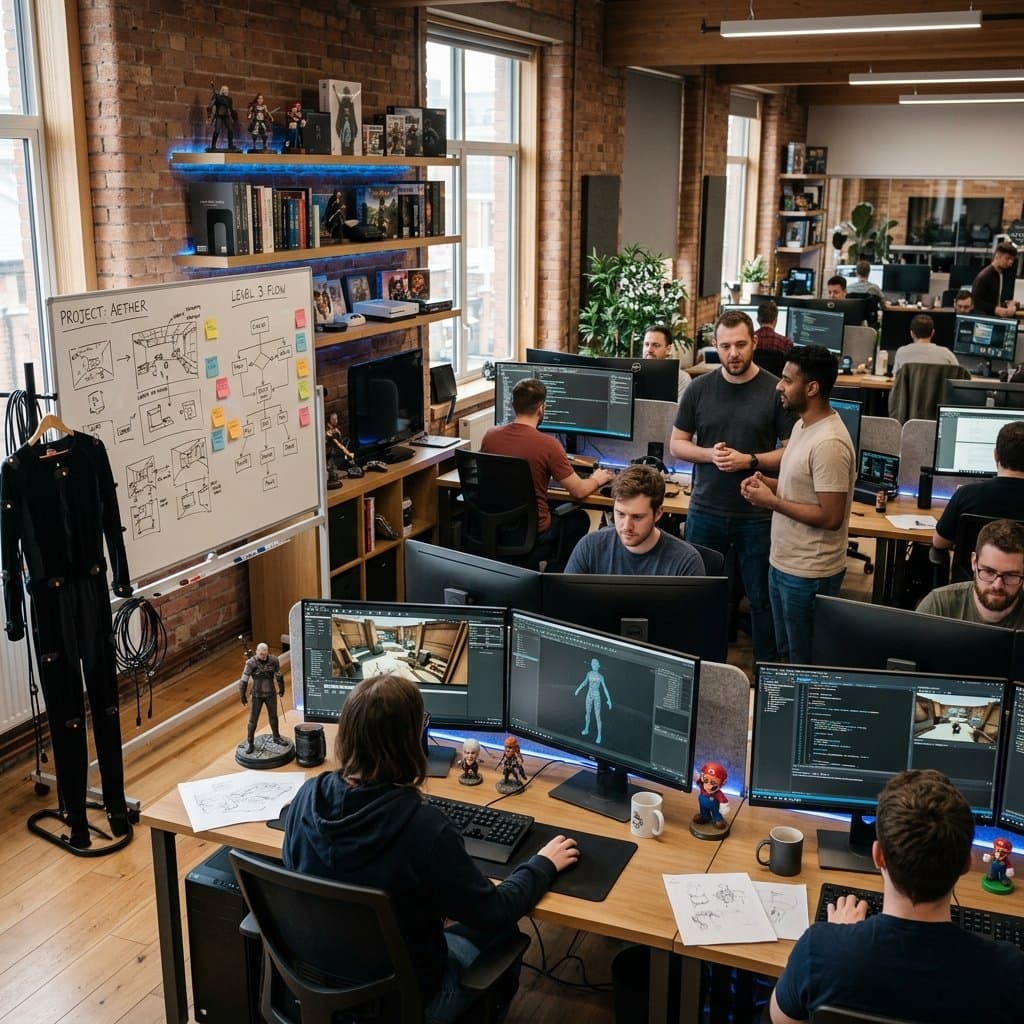
Antier is an AI game development company building AI capabilities for studios, publishers, and platforms across the gaming industry.












Our AI Development Services Built for Game Studios and Publishers
Game studios turn to Antier across a range of engagement types, from early AI strategy through custom model development, generative content tooling, and system integration, wherever their AI game development needs sit today.
Custom AI Model Development for Games
We fine-tune and train AI models on your studio's own game data, player behavior, and content style, rather than relying on generic, off-the-shelf models. This work grounds every other AI system in your game, from NPC behavior to matchmaking, in your actual player base.
Gaming AI Consulting
Our AI consulting services help studios identify high-value AI opportunities, assess data and engine readiness, evaluate use cases, and define a practical development plan based on player and business goals.
Generative AI for Game Content
We build generative AI applications trained on your game's narrative, art, and design references, designed to support your writers, artists, and designers rather than replace them.
AI Agents for Game Operations
We build AI agents that can execute defined tasks across live-ops, moderation, and content workflows. They can retrieve player data, trigger in-game actions, coordinate routine operations, and support studio teams based on set rules.
Game Data Engineering for AI
We build the player telemetry, session, and game data infrastructure that AI applications run on. This work supports downstream systems such as anti-cheat, matchmaking, and player analytics without duplicating any single one of them.
Game Production and Live-Ops Automation
Our AI automation solutions address repetitive tasks across game production and live-ops, including build reporting, QA ticket routing, live-ops event scheduling, and platform certification tracking. This helps studios reduce manual work across development and post-launch operations.
AI Integration Services for Game Platforms
Antier integrates AI applications with existing game engines, backend services, analytics platforms, and player databases. This allows studios to add AI capabilities without rebuilding their current technology setup.
Get a gaming AI solution developed around your studio's roadmap
Discuss Your Requirements ↗How We Apply AI Across Key Gaming Use Cases
Each gaming AI solution below reflects a real production, live-ops, or player-experience problem that studios have brought to us, not a generic capability applied without context.
AI-Powered NPC Behavior and Dialogue
Our AI NPC development creates non-player characters with more natural behavior, memory, and dialogue. These systems can support role-playing games, open-world titles, and multiplayer games that depend on believable characters.
Procedural Content Generation
Our AI solutions generate levels, quests, maps, and in-game assets based on defined rules and player data. These systems can support faster content production and longer replay value across a title's lifecycle.
Player Behavior Analytics and Retention
We develop AI applications that analyze player sessions, in-game actions, and spending patterns to identify engagement trends. These solutions can support retention campaigns, churn alerts, and live-ops decisions.
AI-Driven Anti-Cheat and Fraud Detection
Our AI systems analyze player input, match data, and account activity to flag patterns associated with cheating, bot accounts, and payment fraud. These solutions can support fair-play teams working across competitive titles.
Adaptive Difficulty and Personalization
We build AI applications that adjust game difficulty, rewards, and content recommendations based on individual player skill and behavior. These systems can support single-player and multiplayer titles aiming for longer play sessions.
Automated Game Testing and QA
Our AI-powered testing solutions run through builds using bots that play the game, flag bugs, and check for visual and performance issues. These solutions can support QA teams working across frequent content releases.
In-Game Voice and Conversational AI
We develop voice-enabled AI applications for in-game assistants, character dialogue, and player support. These solutions can support real-time, low-delay conversations within defined character and safety guidelines.
Generative Asset and Content Creation
Our work on generative AI in games covers concept art, texture variations, sound design, and narrative drafts based on studio-approved styles and references. These applications can help art and design teams work through large production backlogs.
Matchmaking and Live-Ops Intelligence
We build AI systems that analyze skill data, connection quality, and player history to support fairer matchmaking and better live-ops decisions. These solutions can support competitive titles and live-service games running ongoing events.
Game Economy and Monetization Intelligence
Our AI applications analyze in-game currency flow, item pricing, and purchase behavior to support balanced economies and pricing decisions. These solutions can help studios manage virtual goods, battle passes, and in-game marketplaces.
Toxicity and Content Moderation Systems
We develop AI moderation systems that review chat, voice, and user-generated content for harassment, hate speech, and policy violations. These solutions can support trust and safety teams working across large player communities.
Predictive Churn and Player Lifecycle Analytics
Our predictive AI solutions analyze player activity across the game lifecycle to identify at-risk players, forecast lifetime value, and support targeted engagement decisions.
Segments of the Gaming Industry We Work With
No two studios run the same way. Genre, business model, and player community all affect what an AI system needs to do. We tailor architecture, latency budgets, and data pipelines to the format your studio ships on.
AAA and Console Game Studios
Antier supports AAA and console studios managing large production teams, complex engines, and demanding player communities. Our AI services can be adapted to the scale of large studio productions.
Mobile Game Developers and Publishers
We work with mobile game developers and publishers running live-service titles with frequent updates, in-app purchases, and large player bases. Our services can be adapted to fast release cycles and app-store requirements.
PC and Multiplayer Game Studios
Our team supports PC and multiplayer studios building competitive and cooperative titles that depend on fair matchmaking, low-delay networking, and active player communities.
Esports and Competitive Gaming Platforms
We support esports organizations and competitive gaming platforms managing tournaments, rankings, and broadcast data. Antier develops AI capabilities suited to their scoring, fairness, and audience-engagement needs.
iGaming and Online Casino Platforms
Our AI services support iGaming operators and online casino platforms managing player data, game fairness, and responsible-gaming requirements across regulated markets.
Web3 and Blockchain Game Studios
We bring blockchain gaming AI expertise to Web3 and blockchain game studios building play-to-earn titles, tokenized economies, and NFT-based game assets, drawing on Antier's direct blockchain game development experience.
Game Engine and Middleware Providers
Antier works with game engine and middleware providers building tools and plugins used by other studios. Our AI capabilities can be adapted to their developer-facing products and technical requirements.
Casual and Hyper-Casual Game Publishers
We support casual and hyper-casual publishers running high-volume game portfolios that depend on fast testing, quick content cycles, and large-scale player data.
Cloud Gaming and Streaming Platforms
Our AI services support cloud gaming and streaming platforms managing large infrastructure, session data, and player experience across varied devices and networks.
Game Testing and QA Service Providers
We work with game testing and QA providers supporting studios across multiple titles and platforms. Antier develops AI capabilities suited to their testing coverage and reporting needs.
Building for a Specific Platform or Genre?
Discuss your use case ↗Platforms and Storefronts We Build For
Game studios release and support titles across different storefronts and hardware platforms, and each one carries its own certification, content, and disclosure requirements. Antier builds gaming AI solutions with these platform requirements in mind from the start.
Steam and PC Storefronts
We build AI features for PC titles distributed through Steam and other PC storefronts, with attention to disclosure requirements such as Steam's labeling policy for generative AI content.
PlayStation and Xbox Console Platforms
Our team develops AI capabilities for console titles with attention to first-party certification processes and platform-specific content and performance requirements.
Epic Games Store and Other PC Platforms
We support AI development for titles distributed through Epic Games Store and other PC platforms, each with its own submission and content requirements.
Apple App Store and Google Play
Our AI solutions for mobile titles are built with Apple App Store and Google Play requirements in mind, including data collection rules, age ratings, and in-app purchase policies.
Cloud and Streaming Platforms
We develop AI capabilities for titles delivered through cloud gaming and streaming services, where session data and device variability affect how AI features perform.
AI and Web3 Gaming Convergence
Some gaming studios build on top of blockchain networks, token economies, and NFT-based assets. For studios already working with us as Web3 and blockchain game studios, our combination of AI and blockchain game development experience carries directly into how we approach token economies, on-chain assets, and play-to-earn systems.
AI for Token Economy Management
We develop AI applications that monitor in-game token flow, item supply, and player spending to support balanced play-to-earn and token-based economies.
AI-Driven NFT Pricing and Authenticity
Our AI solutions analyze NFT game asset data to support pricing signals, rarity assessment, and detection of duplicated or manipulated assets.
Fraud Detection for On-Chain Assets
We build AI systems that monitor wallet activity and transaction patterns connected to in-game assets to flag suspicious behavior across blockchain-based titles.
AI Agents for Play-to-Earn Mechanics
Our AI agents can support reward distribution logic, player verification, and anti-bot checks within play-to-earn and token-based game systems.
Combine AI and Blockchain Expertise for Your Game
Get in touch ↗AI Adoption Data Across the Gaming Industry
AI in gaming has moved past early pilots and into everyday production, live-ops, and player-facing systems, with market growth, generative AI use, and NPC-focused research all accelerating at once.
Projected value of the global AI in gaming market by 2033
Projected value of the global AI in gaming market by 2033, up from USD 3,280.9 million in 2024, growing at a CAGR of 36.1 percent from 2025 to 2033.
Source: Grand View Research, AI in Gaming Market Report
Share of the AI in gaming market held by NPC behavior modeling applications in 2024
Share of the AI in gaming market held by NPC behavior modeling applications in 2024, the largest single application segment tracked in the report.
Source: Grand View Research, AI in Gaming Market Report
Increase in the number of Steam games disclosing generative AI use during 2025 compared to 2024
Increase in the number of Steam games disclosing generative AI use during 2025 compared to 2024, with close to 20 percent of new 2025 releases carrying a generative AI disclosure.
Source: Video Games Chronicle
Numbers That Set Antier Apart in AI Game Development
Years of Experience
AI & Tech Experts
Global Clients
Projects Delivered
Our AI Development Portfolio
Our portfolio reflects work across different AI use cases and studio needs. We use this experience to approach gaming AI projects with a focus on practical builds and player outcomes.

Contact us to know where AI can add value across your game
Get in touch ↗Our AI Expertise Backed by Client Trust
The feedback below reflects specific studio engagements. It's what clients told us about working through their production and player-experience challenges with our team.
Antier took the time to understand our game and our players before starting the AI development process. The team kept the project focused on our production goals and stayed in close contact throughout.
The Antier team understood our matchmaking and anti-cheat needs and helped us define an AI approach suited to our competitive title. Their technical grasp of live game data made the engagement straightforward.
The team understood the pace of our content pipeline and worked with us to define an AI solution that fit how our writers and artists actually work.
How We Build AI Solutions With Game Studios
A gaming AI project moves through eight stages with us, starting from an early idea and ending with ongoing improvement after launch.
Step 1: Understand Your Studio's Requirements
We begin by understanding your game, genre, player base, existing engine, and the specific challenge you want AI to address.
Step 2: Identify and Define the AI Use Case
Antier reviews the challenge to determine where AI can add real value. We define the use case, expected outcomes, players affected, and functional requirements.
Step 3: Assess Game Data and Technical Requirements
Our team reviews available player data, telemetry, engine setup, backend services, and other technical factors that can affect the AI solution.
Step 4: Define the AI Architecture and Technology Approach
We select the AI models, technologies, and development approach based on the use case, platform, and performance requirements of your game.
Step 5: Develop and Train the AI Solution
Antier develops the solution, prepares data pipelines, trains or configures AI models, and builds the application around your game's actual systems.
Step 6: Test and Validate In-Game Performance
We test the solution for accuracy, response time, and reliability inside the live game environment before it moves toward release.
Step 7: Connect With Your Game Systems and Deploy
Once validated, we connect the AI solution with your game engine, backend, and player-facing systems, then deploy it to your target environment.
Step 8: Monitor and Improve
After release, we track the solution's performance and player response, identify areas that need attention, and refine the system based on new data and player feedback.
Compliance Standards Behind Our Gaming AI Development
Content ratings, player data privacy, fair-play rules, and responsible AI practices all factor into how we build for games.
ESRB (Entertainment Software Rating Board)
For games released in the United States and Canada, we consider ESRB rating requirements and ESRB Privacy Certified guidance when AI features touch player data collection or in-game content.
PEGI (Pan European Game Information)
For titles released across Europe, we consider PEGI age-rating requirements, including current rules around paid random items, when AI systems affect in-game rewards or purchases.
IARC (International Age Rating Coalition)
We consider IARC guidance when a title needs a single age-rating process across multiple storefronts and regions, including how AI-generated or AI-driven content gets classified.
COPPA (Children's Online Privacy Protection Act)
For games with players under 13 in the United States, we consider applicable COPPA requirements around data collection, parental consent, and communication with younger players.
GDPR (General Data Protection Regulation)
For games processing player data from the European Union, we consider applicable GDPR requirements for consent, data minimization, and player rights over their information.
GLI Standards (Gaming Laboratories International)
For iGaming, online casino, and real-money gaming platforms, we consider GLI testing standards for random number generation and game fairness when AI systems touch game outcomes.
NIST AI Risk Management Framework
We consider the NIST AI Risk Management Framework to address AI-related risks across the design, development, deployment, and use of AI systems within a game. NIST describes the framework as voluntary and applicable across sectors.
ISO/IEC 42001
We consider ISO/IEC 42001 for AI management and governance practices. The standard sets requirements for building, maintaining, and improving an AI management system within a studio or organization.
Develop AI Solutions Around the Right Gaming Standards and Guidelines
Contact Us ↗Tools and Platforms Behind Our Gaming AI Development
Generative AI and Foundation Models
AI Agents and Agentic Frameworks
NPC and Conversational AI
Reinforcement Learning and Game AI
Computer Vision and Anti-Cheat
RAG and Knowledge Intelligence
Machine Learning and Predictive Analytics
Game Engines and Platforms
Cloud and AI Infrastructure
Data Engineering and Player Analytics
What Studios Get When They Work With Antier
Studio teams bring us specific game, data, and player-base requirements, and we build around those directly rather than adapting a fixed product. That approach, combined with gaming-focused experience and flexible engagement models, is what studios tell us matters most.
Gaming-Focused Expertise
Our team brings experience across AI technologies and gaming use cases, with solutions built around specific genres, player data, and studio goals.
Advanced AI R&D
We work with new AI technologies across generative AI, machine learning, AI agents, NLP, computer vision, and predictive analytics to address a wide range of gaming needs.
Transparency
We maintain clear communication, defined project milestones, and regular updates throughout the engagement, keeping stakeholders informed about progress and key decisions.
Confidentiality and Security
We follow secure development practices and controlled access measures to protect sensitive studio information, player data, and unreleased game content throughout the project.
Flexible Engagement Models
Our engagement models can be adapted to different project sizes, team requirements, production stages, and studio goals.
Enterprise-Ready Development
We develop AI applications with attention to existing engines, backend platforms, analytics tools, and cloud setups already used by your studio.
Identify AI Opportunities Across Your Game
Start a Conversation ↗Spotlight on Insights
Our insights cover gaming AI trends, generative AI in game production, player-experience technologies, and the systems used to build and run modern games.
 FinTech AI
The Fintech AI Integration Gap: Why AI Adoption Isn't Turning Into Profit
A maturity framework — Bolted-On, Wired-In, Compounding — for turning AI spend into compounding returns in financial services. Why 80%+ adoption still leaves most firms without a profitability gain.
 AI Governance
The Rise of Shadow AI Agents: What CIOs Need to Control Before They Scale
Shadow AI agents can act across enterprise systems without central oversight. Learn what CIOs need to discover, govern, secure, and monitor before agentic AI scales.
 Agentic AI
The UAE Is Moving From AI Assistants to AI Agents: What Business Leaders Need to Prepare For
The UAE is moving beyond AI assistants toward AI agents that reason, plan, and execute tasks. Learn where AI agents fit and what business leaders need to prepare for.
FAQs
Start a conversation with Antier
Connect with our consulting and engineering leads to scope your digital transformation from architecture review to production deployment.