
AI Solutions for IoT Industry
Turn IoT sensor data into predictive insights that help anticipate equipment failures, detect anomalies, and support proactive operational decisions. We help businesses reduce unplanned downtime, improve asset reliability, and maintain operational continuity across connected environments with our AI-powered IoT solutions.

Antier partners with device manufacturers and IoT platform providers to turn sensor data into real-time insights, predict equipment failures, and improve visibility across connected asset fleets.





Our AI Development Services for the IoT Industry
We help businesses apply AI across the IoT lifecycle, from assessing sensor data and selecting deployment architectures to developing models and connecting them with existing device platforms.
Custom AI Development for IoT
Antier develops machine learning models tailored to business objectives, available datasets, and deployment requirements. We account for the characteristics of sensor data, device telemetry, and connected systems throughout the model development process.
AI Consulting for IoT
Our AI consulting services help device makers and platform teams decide which workloads belong on the device, the gateway, or the cloud, assess sensor data readiness, and define a practical build plan around hardware limits, connectivity, and business goals.
Generative AI Development for IoT
Antier develops generative AI solutions for businesses working with connected products and IoT platforms. We support model selection, domain-specific knowledge preparation, application architecture, and development based on the intended business use.
Sensor Data Engineering
Antier builds data pipelines for collecting, processing, validating, and organizing sensor readings and device telemetry. This establishes a reliable data foundation for AI-powered IoT solutions and supports the data requirements of model development.
AI Integration for IoT Platforms
We connect AI models and applications with existing IoT platforms, enterprise software, data environments, and device management systems. Our AI and IoT integration services help businesses introduce AI capabilities within their established technology architecture while retaining their existing systems where appropriate.
AI Agent Development for IoT
We develop AI agents for organizations seeking to incorporate agent-based capabilities into their IoT software and connected business systems. Our work covers agent architecture, model selection, tool connectivity, and the development of systems governed by defined business rules.
Embedded and Edge AI Engineering
We develop and adapt AI models for embedded systems, microcontrollers, and edge computing environments. Our engineers account for processor capabilities, memory constraints, power consumption, and latency requirements when preparing models for deployment.
IoT Workflow Automation
Our AI automation solutions handle repetitive device lifecycle tasks, including provisioning checks, alert routing, firmware rollout approvals, and warranty and returns triage. This reduces manual work for the teams that operate connected products.
Ready to put AI on your connected devices?
Discuss Your Requirements ↗IoT Device Categories We Support with AI Development
We work with businesses across diverse IoT device categories, each with distinct hardware specifications, connectivity requirements, and data processing needs. Our development approach accounts for these differences when building AI capabilities for connected products and device ecosystems.
Industrial Sensors, Controllers, and Gateways
Antier supports manufacturers developing industrial sensors, programmable controllers, and IoT gateways, with AI requirements shaped by hardware capacity, industrial protocols, and operating environments.
Smart Building and Facility Devices
Our work covers connected occupancy sensors, air quality monitors, access controllers, and building management hardware designed for commercial buildings and facility networks.
Wearables and Connected Health Devices
We support developers of wearable electronics, fitness trackers, remote monitoring devices, and home healthcare equipment, accounting for battery limits, sensor characteristics, and data privacy requirements.
Smart Home and Consumer Electronics
We work with consumer electronics manufacturers developing smart appliances, connected home devices, voice-enabled products, and other consumer hardware with limited memory and processing capacity.
Connected Cameras and Vision Sensors
Antier supports camera manufacturers and hardware developers building connected cameras, vision sensors, and embedded imaging systems with requirements for local image processing and device-level computing.
Asset Trackers and Telematics Units
Our team works with manufacturers of GPS trackers, vehicle telematics units, fleet monitoring hardware, and industrial tracking devices designed to operate across different connectivity and power conditions.
Environmental and Agricultural Sensors
We support developers of soil moisture sensors, weather stations, water quality monitors, air quality sensors, and agricultural monitoring devices deployed across indoor and outdoor environments.
Smart City Infrastructure Devices
Antier works with hardware providers developing connected streetlights, parking sensors, traffic controllers, waste monitoring devices, and other equipment used in urban infrastructure networks.
Embedded Modules and Connectivity Hardware
We support manufacturers of embedded computing modules, wireless communication modules, and connectivity hardware seeking to incorporate AI capabilities into their device offerings.
IoT Platforms and Device Management Systems
Our team works with IoT platform providers and device management vendors developing software environments for device onboarding, configuration, connectivity management, and fleet administration.
AI Solutions We Develop for Smarter IoT Operations
We help businesses apply AI to connected environments where device data supports better operational decisions, asset management, and risk detection. Our solutions address specific challenges across industrial operations, smart infrastructure, connected products, and asset-intensive industries.
Predictive Maintenance for Industrial Equipment
Antier develops AI solutions that analyze equipment telemetry, operating conditions, and maintenance history to estimate failure risks. These insights help industrial teams plan maintenance before unexpected breakdowns occur.
AI-Based Quality Inspection for Manufacturing
We build AI solutions that analyze images and production data from connected inspection systems to identify product defects, quality deviations, and recurring production issues.
Smart Building Operations
Our AI solutions analyze occupancy, temperature, air quality, and energy consumption data to help building operators manage indoor conditions and understand how spaces and building systems are used.
Connected Device Fleet Management
Antier applies AI to device health records, connectivity data, battery status, and error logs across distributed fleets. This helps teams identify recurring problems and prioritize device maintenance.
AI-Powered Asset Tracking
We develop AI solutions that interpret location and movement data from connected tracking devices to identify movement patterns, detect unexpected activity, and improve asset visibility across supply chains and facilities.
IoT Security and Threat Detection
Our solutions analyze device communication patterns and network activity to identify suspicious behavior, potential unauthorized access, and deviations from expected device activity.
Connected Healthcare and Wearable Analytics
Antier develops AI applications that analyze data from wearable and connected healthcare devices to identify patterns in physiological signals and support monitoring workflows, subject to clinical validation and applicable privacy requirements.
Energy Consumption Intelligence
We apply AI to energy meter readings, equipment usage, and consumption patterns to identify unusual energy use, forecast demand, and help businesses identify opportunities to reduce energy costs.
AI-Based Device Diagnostics
Our AI solutions interpret device logs, error codes, and technical documentation to help support teams investigate product faults, identify likely causes, and guide troubleshooting.
Connected Product Usage Intelligence
Antier develops AI applications that analyze device interactions, usage frequency, and feature adoption to help product teams understand customer behavior, identify usage patterns, and make informed product development decisions.
Where We Deploy AI Across the IoT Stack
The layer where an AI model runs is as important as the model itself. We deploy AI across IoT layers based on processing speed, device capabilities, bandwidth, and privacy requirements.
Device and Microcontroller Layer
We fit compact models onto microcontrollers for always-on sensing tasks that need to run for months on a battery and respond without a network connection.
Edge Gateway Layer
Our gateway deployments run mid-sized models on embedded Linux hardware that aggregates several sensors, buffers data when the uplink fails, and forwards only what the cloud needs.
On-Premises Edge Server Layer
For vision and multi-device analytics, we deploy models on site-level servers so raw video and sensor data stay inside the facility.
Connectivity and Messaging Layer
We design what travels over the link, sending features, summaries, and exceptions instead of raw streams, to fit cellular, LoRaWAN, and satellite bandwidth limits.
Cloud and Data Platform Layer
We run fleet-wide training, forecasting, and generative AI workloads in the cloud, using data collected from every device to improve the models that run at the edge.
Device Management and Update Layer
We build the model versioning, staged rollout, and rollback process that gets updated models onto devices in the field without bricking them.
Protocols and Platforms Our IoT AI Solutions Connect To
Sensor data arrives in many formats over many protocols. We build around the ones your devices already speak, so AI applications read from existing data paths instead of requiring a parallel system.
MQTT and Message Brokers
We connect AI applications to MQTT brokers and streaming layers to consume device telemetry and publish model results back to devices, using the topic structure and security setup you already run.
OPC UA and Modbus
For industrial devices, we read from OPC UA servers and Modbus registers so models work with the same tags and units that operators and controllers already use.
Bluetooth Low Energy, Zigbee, Thread, and Matter
We build AI for short-range device networks and smart home ecosystems, working within the pairing, bandwidth, and interoperability rules these standards set.
LoRaWAN, NB-IoT, and LTE-M
We build for low-power wide-area devices that send small payloads infrequently, limiting what the model needs to run on a few bytes at a time.
CoAP, LwM2M, and oneM2M
We work with lightweight device management and interoperability protocols so AI features can be configured, updated, and monitored through the same channels as the rest of the device.
Cloud IoT Platforms and Device Registries
We connect to cloud IoT platforms for device registries, shadows or twins, rules engines, and routing, keeping AI services consistent with how your devices are already identified and managed.
Time-Series Databases and Historians
We build on existing time-series stores and industrial historians for training data and live feature lookups, rather than moving data into a second system of record.
Connect AI to the protocols and platforms your devices already use
Start a Conversation ↗What the Numbers Say About AIoT Growth
The figures below point to connected devices moving from simple data collection toward decisions made at the source. AIoT, the pairing of AI with connected devices, is now a market of its own. Estimates differ by research firm because each defines the market and edge AI scope differently.
Projected value of the global AIoT market by 2030, up from USD 25.44 billion in 2025, growing at a CAGR of 26.1 percent.
Source: MarketsandMarkets, AIoT Market Report
Connected IoT devices that IoT Analytics forecasts worldwide by 2030, up from 21.1 billion at the end of 2025, a growing base of devices producing data worth analyzing at the source.
Source: IoT Analytics, State of IoT: Number of Connected IoT Devices
Projected value of the global edge AI market by 2030, up from USD 11.8 billion in 2025, growing at a CAGR of 36.9 percent, according to BCC Research.
Source: BCC Research,
Numbers That Set Antier Apart in AIoT Development
Years of Experience
AI & Tech Experts
Global Clients
Projects Delivered
Our AI Development Portfolio
Our portfolio reflects work across different AI use cases and business needs. We bring that experience to IoT AI projects with a focus on practical builds that run on real hardware and real connections.
 Sales AI
Turn Every Sales Conversation into Closure
An AI-powered Lead-to-Closure platform that supports sales teams before, during, and after every call, turning conversations into tasks, proposals, MoMs, and CRM updates in real time.
Read more ↗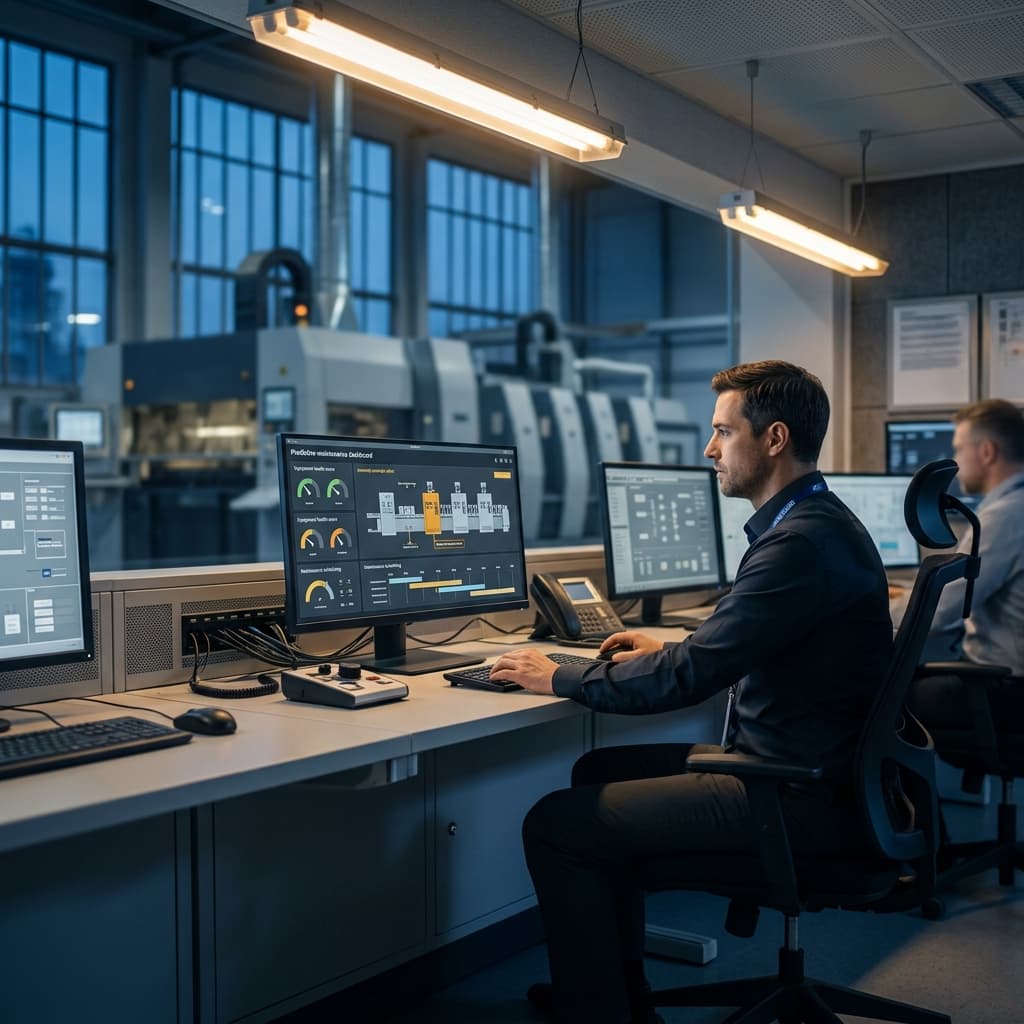 Manufacturing
AI-Powered Predictive Maintenance Solution for the Manufacturing Industry
The manufacturing industry faces unexpected equipment failures and costly downtime. This case study covers an AI-powered predictive maintenance solution.
Read more ↗ Education
Conversational AI Voice Agent for Mishkat Metaverse
Antier engineered a bilingual conversational AI Voice Agent for Mishkat Metaverse, an immersive education platform commissioned by King Abdullah City for Atomic and Renewable Energy, supporting AI-powered learning at a national scale.
Read more ↗Feedback From Teams Building Connected Products With Antier
The feedback below reflects specific client engagements. It is what these teams told us about working through their sensor data, edge deployment, and device fleet challenges.
Antier started with our occupancy, air quality, and access sensor feeds before proposing any models. The team worked around the gaps and clock drift we deal with in real buildings and kept us informed through each sprint.
The team understood our gateway limits, including small memory and unreliable uplinks, and built an anomaly model that runs locally and syncs only exceptions. Their handling of model updates across a mixed gateway fleet made rollout straightforward.
Antier worked closely with our firmware team to fit the model onto our existing microcontroller and deliver it through our OTA process. They understood our power budget and our device fleet from the first conversation.
Hire an IoT AI Development Partner That Understands Your Devices
Contact Our Experts ↗Our Eight-Step Process for IoT AI Development
We follow a structured eight-step process to develop AI solutions for IoT environments, from understanding device requirements and preparing sensor data to deploying models and monitoring their performance across connected devices.
Step 1. Assess IoT Devices, Data, and Connectivity
We assess your device hardware, sensors, communication protocols, available data sources, and network constraints to understand the technical environment and define project requirements.
Step 2. Define AI Use Cases and Deployment Requirements
Antier identifies suitable AI applications based on your business objectives and technical requirements. We establish the project scope, define success criteria, and determine whether models should run on devices, edge gateways, or cloud infrastructure.
Step 3. Evaluate Sensor Data Quality
Our team examines sensor readings and device telemetry for missing values, noise, inconsistencies, and data drift. We also identify labeling requirements and prepare a data strategy for model development.
Step 4. Select AI Models and Target Hardware
We evaluate suitable model architectures, deployment frameworks, and hardware configurations based on the intended application, processing requirements, memory constraints, power consumption, and response times.
Step 5. Develop and Train AI Models
Antier develops data pipelines, prepares training datasets, and builds AI models around your use case. We adapt models to the target hardware and software environment to support deployment within your IoT ecosystem.
Step 6. Validate Models on Real Devices
We test model accuracy, processing latency, memory usage, and power consumption on target devices. Our team evaluates performance under representative operating conditions before preparing the solution for deployment.
Step 7. Deploy AI Models and Connect IoT Systems
We deploy validated models to the selected environment and connect them with your IoT platforms and existing systems. Where supported, we configure staged releases and rollback procedures to help manage updates across deployed devices.
Step 8. Monitor Performance and Update Models
After deployment, we monitor model performance, data drift, and changes in device behavior. Antier uses operational feedback and new data to identify when models require adjustment, retraining, or further validation.
Security Standards and Regulations Behind Our AIoT Builds
We consider relevant cybersecurity standards, privacy regulations, and data access requirements when developing AIoT solutions. Our approach accounts for the product type, target market, intended users, and data processed by connected devices.
EU Cyber Resilience Act
The EU Cyber Resilience Act establishes cybersecurity requirements for products with digital elements sold in the European Union. Antier considers relevant requirements for vulnerability management, security updates, and protection of AI-enabled IoT products.
ETSI EN 303 645
ETSI EN 303 645 defines baseline cybersecurity requirements for consumer IoT devices. We consider its guidance on secure authentication, communications, and vulnerability management.
NIST IR 8259
NIST IR 8259 provides cybersecurity guidance for IoT device manufacturers. Our approach considers device security planning and ongoing product support.
ISA/IEC 62443
The ISA/IEC 62443 series addresses cybersecurity for industrial automation and control systems. We consider relevant standards when developing AI solutions for connected industrial equipment.
US Cyber Trust Mark
The US Cyber Trust Mark is a voluntary cybersecurity labeling program for eligible consumer IoT products. Antier considers relevant cybersecurity criteria for products targeting the US market.
EU Data Act
The EU Data Act establishes rules for accessing and using data generated by connected products and related services. We account for applicable data access and sharing requirements when designing IoT data architectures.
GDPR for IoT Device Data
The General Data Protection Regulation sets rules for processing personal data in the EU. We consider data minimization, access controls, and privacy requirements when AI applications process personal data from connected devices.
NIST AI Risk Management Framework
The NIST AI Risk Management Framework provides voluntary guidance for identifying and managing AI-related risks. Our team considers risk assessment and monitoring throughout AI development and deployment.
Build IoT AI around the standards your devices must meet
Discuss Your Requirements ↗How We Keep IoT AI Devices Secure and Reliable
We build safeguards into IoT AI systems to protect models, limit unnecessary data sharing, and support predictable device behavior in changing operating conditions.
Secure Model Updates
Antier uses model verification and secure update processes to help prevent unauthorized or tampered models from running on connected devices.
Privacy Through Local Processing
We process sensitive audio, video, and sensor data locally where suitable, limiting the transfer of raw data to external systems.
Safe Operation During Connectivity Loss
Our solutions support defined fallback behavior when network connections fail, helping devices continue essential functions and synchronize data when connectivity returns.
Human Control Over Physical Actions
We design appropriate safeguards, operating limits, and manual override options for AI systems that can trigger physical actions, such as controlling valves or locking doors.
Monitoring Model Performance Across Devices
Antier monitors model behavior across device types, firmware versions, and operating environments to identify performance changes and determine when updates or retraining may be needed.
The Technology Stack Behind Our IoT AI Builds
Generative AI and Language Models
Small Language Models for the Edge
Edge AI Runtimes and Frameworks
Edge Hardware and Accelerators
TinyML and Embedded Development
IoT Cloud Platforms
Messaging and Connectivity
Time Series and Stream Processing
Digital Twin Platforms
Predictive Analytics and Machine Learning
AI Agents and Agentic Frameworks
Device Management and Security
What IoT Teams Gain by Working With Antier
IoT teams choose Antier for our AI development experience, hardware-aware engineering, flexible engagement models, and approach to building solutions around specific device and connectivity needs.
Hardware-Aware Engineering
Our team brings experience across AI technologies and IoT use cases, with models sized for the memory, power, and latency limits of your actual devices.
Edge-to-Cloud Coverage
We work across microcontrollers, gateways, and cloud platforms, so one team can place each workload where it runs best.
Advanced AI Research and Development
We work with new AI technologies across generative AI, machine learning, AI agents, computer vision, and TinyML to address a wide range of IoT needs.
Transparency
We maintain clear communication, defined project milestones, and regular updates throughout the engagement, keeping stakeholders informed about progress and key decisions.
Confidentiality and Security
We follow secure development practices and controlled access measures to protect firmware, model files, device telemetry, and customer data throughout the project.
Flexible Engagement Models
Our engagement models can be adapted to different project sizes, team requirements, fleet scale, and business goals.
Find where AI can add value across your devices and sensor data
Start a Conversation ↗Spotlight on Insights
Our insights cover IoT AI trends, edge AI deployment, device fleet analytics, and the systems used to run modern connected products.
 FinTech AI
The Fintech AI Integration Gap: Why AI Adoption Isn't Turning Into Profit
A maturity framework — Bolted-On, Wired-In, Compounding — for turning AI spend into compounding returns in financial services. Why 80%+ adoption still leaves most firms without a profitability gain.
 AI in Logistics
: How Can Businesses Resolve Shipment Delays Faster?
Learn how AI shipment tracking can detect logistics exceptions, assess impact, recommend recovery actions, and resolve routine disruptions.
 AI Governance
The Rise of Shadow AI Agents: What CIOs Need to Control Before They Scale
Shadow AI agents can act across enterprise systems without central oversight. Learn what CIOs need to discover, govern, secure, and monitor before agentic AI scales.
FAQs
Start a conversation with Antier
Connect with our consulting and engineering leads to scope your digital transformation from architecture review to production deployment.