
Logistics & Supply Chain AI Development Company
We build AI systems that give logistics and supply chain leaders real-time visibility, predictive control, and measurable efficiency gains across freight, warehousing, and fleet operations.
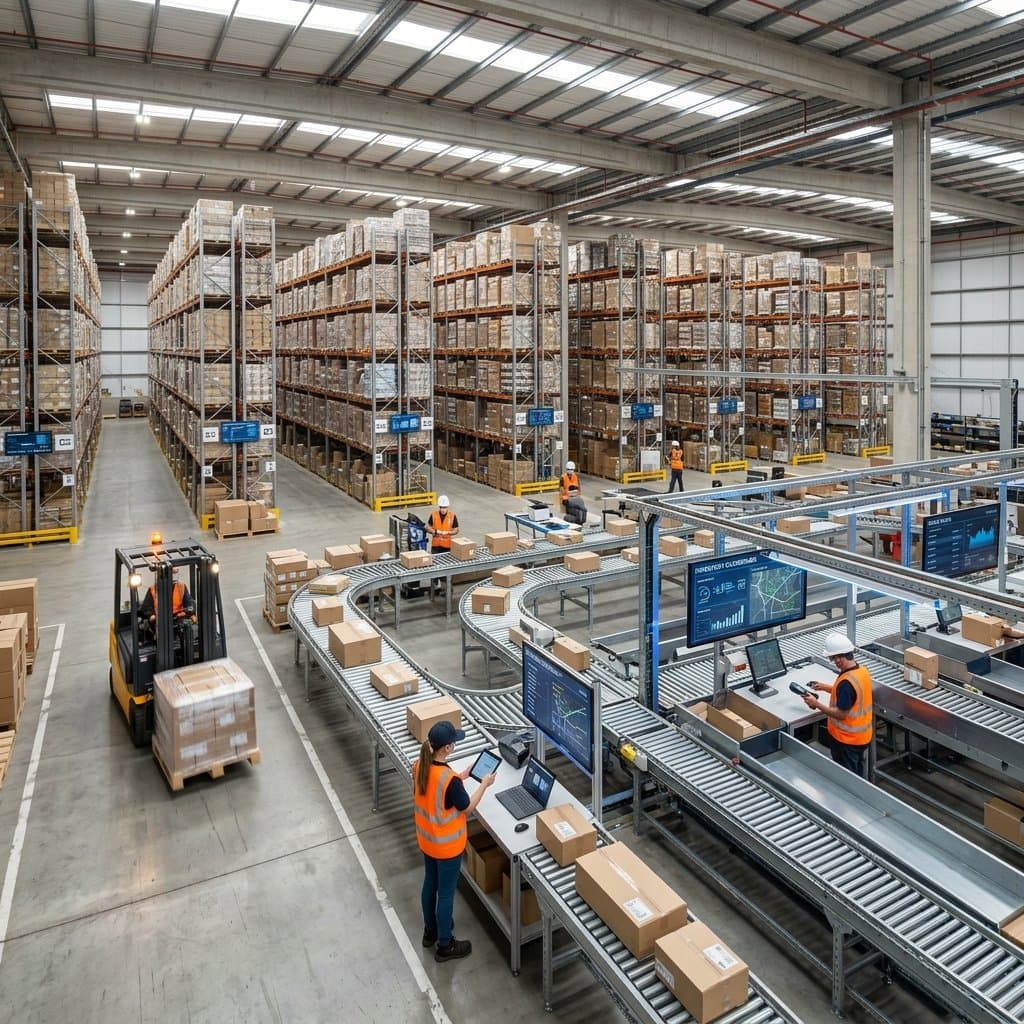
Trusted by logistics providers, freight carriers, and supply chain teams worldwide, Antier delivers AI development services built for the operational realities of modern logistics.












AI Development Services for Logistics & Supply Chain Operations
From network-level route optimization to warehouse robotics coordination, we deliver end-to-end AI development services built around the operational realities of freight, fulfillment, and fleet management.
Route & Network Optimization
We build AI models that plan and continuously re-plan delivery routes, load consolidation, and network flows based on traffic, fuel cost, delivery windows, and vehicle capacity. These systems help fleets reduce empty miles, tighten delivery windows, and adapt routes in real time as conditions change.
Demand & Inventory Forecasting
Our AI forecasting models combine historical sales data, seasonality, promotions, and external signals such as weather and market trends to predict demand at the SKU and location level. This helps supply chain teams reduce stockouts and overstock while improving inventory turns across distribution networks.
Warehouse Automation & Robotics Coordination
We develop orchestration layers that connect AI models with warehouse management systems, robotics fleets, and pick-and-pack operations. From slotting optimization to computer vision-based quality checks, these solutions help warehouses increase throughput without proportional increases in labor cost.
Fleet Intelligence & Predictive Maintenance
Using telematics and sensor data, we build predictive maintenance models that flag component wear and potential failures before they cause breakdowns. Fleet operators use these insights to schedule maintenance during planned downtime rather than reacting to costly roadside failures.
Predictive ETAs & Shipment Visibility
Our AI-powered ETA models combine GPS data, traffic patterns, historical transit times, and weather conditions to generate accurate, continuously updated delivery estimates. This gives shippers, carriers, and customers a shared, reliable view of when freight will actually arrive.
Supply Chain Risk Monitoring
We build AI systems that monitor supplier performance, geopolitical events, weather disruptions, and port congestion to flag risks to your supply chain before they escalate. Early visibility into disruptions gives operations teams time to reroute, resource, or communicate proactively.
Freight Matching & Pricing Optimization
For carriers, brokers, and shippers, we develop AI-driven freight matching platforms and dynamic pricing engines that match loads to capacity and price freight based on real-time market conditions, lane history, and demand patterns.
Ready to Bring AI-Driven Intelligence to Your Supply Chain?
Talk to Our AI Team ↗AI Across the Supply Chain Lifecycle
Supply chain operations span procurement, warehousing, transportation, and returns, each with distinct data, decisions, and failure points. We build AI solutions mapped to the specific challenges at each stage.
Procurement & Supplier Intelligence
AI models assess supplier reliability, lead time variability, and pricing trends to help procurement teams make more informed sourcing decisions. This reduces exposure to underperforming suppliers and supports more resilient purchasing strategies.
Warehousing & Fulfillment
From inbound receiving to outbound shipping, AI supports slotting decisions, pick-path optimization, labor forecasting, and order batching. These models help fulfillment centers process higher volumes without sacrificing accuracy or turnaround time.
Transportation & Line-Haul
AI-driven load planning and route optimization help transportation teams reduce empty miles, improve trailer utilization, and meet delivery commitments across multi-stop and multi-modal networks.
Last-Mile Delivery
Last-mile operations benefit from dynamic route sequencing, delivery window prediction, and real-time driver dispatch adjustments that account for traffic, weather, and delivery density changes throughout the day.
Reverse Logistics & Returns
AI models help classify, route, and triage returned goods, predict return volumes by category, and identify patterns that inform product quality or fulfillment process improvements.
Control Tower & End-to-End Visibility
We build AI-powered control tower solutions that aggregate data across carriers, warehouses, and systems into a single view, flagging exceptions and delays before they affect downstream operations.
Where Supply Chain AI Investment Is Heading
Logistics and supply chain organizations are moving from isolated pilots to broader AI adoption across planning, transportation, and warehouse operations.
of supply chain organizations plan to increase investment in AI and advanced analytics over the coming years
reduction in transportation costs commonly reported from AI-driven route and load optimization
reduction in forecast errors achievable with AI-driven demand forecasting compared to traditional statistical methods
of large enterprises are expected to use some form of AI across supply chain and logistics operations in the near term
Systems & Platforms We Build AI Into
Supply chain AI only creates value when it works inside the systems your teams already rely on. We integrate AI capabilities directly into the platforms that run daily operations.
Transportation Management Systems (TMS)
We embed AI-driven route optimization, load planning, and carrier selection directly into TMS platforms, helping transportation teams make faster, better-informed decisions without switching between systems.
Warehouse Management Systems (WMS)
Our AI integrations connect with WMS platforms to optimize slotting, labor allocation, and pick sequencing, using live inventory and order data to continuously adjust warehouse operations.
Fleet Telematics & IoT Platforms
We connect AI models to telematics devices, sensors, and IoT platforms to process vehicle, engine, and cargo data in near real time, powering predictive maintenance and fleet performance monitoring.
ERP & Enterprise Systems
AI-driven demand forecasting and inventory optimization models integrate with ERP systems to align supply chain planning with financial, procurement, and sales data across the business.
Carrier & Customer Portals
We build AI-powered visibility features into carrier and customer-facing portals, giving external partners self-service access to shipment status, predictive ETAs, and exception alerts.
Mobile Apps for Drivers & Warehouse Staff
Our mobile-first AI integrations deliver route guidance, task prioritization, and real-time alerts directly to drivers and warehouse staff, keeping frontline teams aligned with AI-driven planning decisions.
Looking to Modernize Your Logistics Technology Stack with AI?
Discuss Your Use Case ↗Logistics Segments We Build AI Solutions For
Every logistics segment has its own operational pressures, data sources, and margin structures. We tailor AI solutions to the specific dynamics of your part of the supply chain.
Freight Forwarding & Customs Brokerage
We build AI solutions that support rate management, documentation automation, and shipment tracking across ocean, air, and land freight, helping forwarders manage complex multi-carrier, multi-country shipments.
Third-Party & Fourth-Party Logistics (3PL/4PL)
Our AI solutions help 3PL and 4PL providers optimize resource allocation across multiple client operations, forecast capacity needs, and deliver the visibility that shippers increasingly expect from their logistics partners.
Last-Mile & Parcel Delivery
We develop AI-driven dispatch, routing, and delivery prediction systems built for the density and time-sensitivity of last-mile and parcel operations, where small efficiency gains compound across thousands of daily stops.
Cold Chain & Temperature-Controlled Logistics
For cold chain operators, we build AI models that monitor temperature and condition data in transit, predict spoilage risk, and optimize routing to protect perishable and pharmaceutical shipments.
Retail & E-Commerce Fulfillment
Our AI solutions help retail and e-commerce fulfillment operations forecast demand spikes, optimize inventory placement across distribution centers, and manage the volume swings that come with promotional and seasonal peaks.
Manufacturing & Industrial Supply Chains
We build AI systems that align production schedules with inbound material availability and outbound distribution, helping manufacturers reduce line stoppages and better coordinate just-in-time delivery requirements.
Ocean, Air & Rail Freight Carriers
Our AI development services help carriers optimize vessel, aircraft, and rail capacity utilization, predict transit delays, and manage the scheduling complexity of multi-leg freight movements.
Distribution & Wholesale Networks
We develop AI solutions that optimize inventory positioning and replenishment across multi-echelon distribution networks, helping wholesalers balance service levels against carrying costs.
What Sets Antier Apart as a Logistics AI Development Partner
Years of Experience
AI & Tech Experts
Global Clients
Projects Delivered
AI Implementations Driving Results Across Logistics Operations
Our case studies show how logistics and supply chain organizations have used our AI development services to improve efficiency, reduce operational costs, and gain real-time visibility across their networks.

AI Capabilities Built for Supply Chain Operations
Being a logistics AI development company, we build solutions that combine predictive intelligence, operational automation, and enterprise-grade infrastructure to support supply chains that run continuously and at scale.
Real-Time Shipment Tracking
Provides continuously updated location and status data for shipments across carriers, modes, and regions.
Predictive ETA Modeling
Generates accurate delivery time estimates using live traffic, weather, and historical transit data.
Demand Sensing
Detects near-term shifts in demand using recent sales, market, and external signal data.
Risk & Disruption Monitoring
Flags supplier, weather, and geopolitical risks that could affect supply chain continuity.
Inventory Optimization
Balances stock levels across locations to reduce both stockouts and excess inventory.
Multi-Echelon Network Visibility
Connects data across suppliers, warehouses, and distribution tiers into a unified operational view.
Dynamic Route Optimization
Continuously recalculates delivery routes based on real-time traffic and operational conditions.
Load & Capacity Planning
Matches freight volume to available vehicle and trailer capacity to reduce wasted space.
Warehouse Robotics Orchestration
Coordinates robotics, conveyor systems, and human pickers within a single operational workflow.
Automated Freight Matching
Pairs available loads with carrier capacity based on lane history and pricing data.
Yard & Dock Scheduling
Optimizes appointment scheduling to reduce dwell time and dock congestion.
Exception Management Automation
Flags and routes shipment exceptions to the right team for faster resolution.
System Integration
Connects AI models with TMS, WMS, ERP, and telematics platforms already in use across your operations.
Data Security & Access Controls
Protects sensitive shipment, customer, and partner data through secure handling practices and role-based access.
Scalable Cloud Infrastructure
Supports growing shipment volumes and data loads without compromising system performance.
Edge & IoT Data Processing
Processes sensor and telematics data close to its source to support near real-time decision-making.
Model Monitoring & Retraining
Tracks model performance over time and retrains models as operational patterns shift.
Enterprise Reliability
Designed to support continuous operations with dependable uptime and performance.
Build a Logistics AI Solution That Scales With Your Network
Get in Touch ↗Our Approach to Logistics AI Development
Logistics AI projects succeed or fail based on data quality, system integration, and operational buy-in. Our process is built to address all three from day one.
- 1
Discovery & Operational Assessment
We start by understanding your network structure, current systems, data sources, and the specific operational bottlenecks you're trying to solve, whether that's route inefficiency, forecast accuracy, or fleet downtime.
- 2
Data Audit & Integration Planning
We assess the quality, completeness, and accessibility of your operational data across TMS, WMS, ERP, and telematics systems, and define what integration and data preparation work is needed.
- 3
Solution Architecture & Model Selection
Our team defines the AI approach, whether that's optimization algorithms, forecasting models, computer vision, or a combination, based on your specific use case and data landscape.
- 4
AI Model Development & Training
We build and train models using your historical operational data, validating performance against real-world scenarios before moving toward deployment.
- 5
System Integration
We connect the AI solution with your TMS, WMS, ERP, telematics, and partner-facing systems so predictions and recommendations flow directly into existing workflows.
- 6
Testing & Simulation
Before go-live, we test models against historical data and simulated scenarios to validate accuracy, reliability, and performance under peak load conditions.
- 7
Deployment & Change Management
We support phased rollouts and provide the training and documentation operations teams need to adopt AI-driven recommendations into daily decision-making.
- 8
Continuous Monitoring & Optimization
After deployment, we monitor model performance, retrain models as operational patterns evolve, and refine the solution as your network grows and changes.
Traditional Supply Chain Operations vs AI-Optimized Operations
AI shifts supply chain decision-making from periodic, reactive processes to continuous, predictive ones.
| Comparison Factors | Traditional Approach | AI-Optimized Approach |
|---|---|---|
| Route Planning | Static routes planned manually or with rule-based systems, updated infrequently | Routes recalculated continuously based on live traffic, weather, and delivery data |
| Demand Forecasting | Forecasts based on historical averages and manual adjustments | Forecasts generated from multiple data signals and updated as new information arrives |
| Fleet Maintenance | Maintenance scheduled on fixed intervals or after breakdowns occur | Maintenance predicted from sensor data before failures happen |
| Shipment Visibility | Status updates depend on manual check calls and periodic reporting | Continuous, automated tracking with predictive ETA updates |
| Freight Pricing | Rates set periodically based on historical benchmarks | Pricing adjusted dynamically based on real-time market and capacity data |
| Exception Handling | Issues identified after they impact delivery or customer experience | Risks flagged early enough for teams to act before impact occurs |
Why Supply Chain Leaders Choose Antier
Global logistics and supply chain organizations choose Antier for AI development because of our operational domain expertise, integration-first engineering approach, and enterprise-grade delivery standards.
Deep Logistics Domain Expertise
Our team understands the operational realities of freight, warehousing, and fleet management, not just the underlying AI technology. This means solutions are designed around how your operations actually run.
Integration-First Engineering
We build AI solutions to work inside your existing TMS, WMS, ERP, and telematics systems rather than requiring teams to adopt entirely new platforms.
Real-Time Data Engineering at Scale
Supply chain AI depends on processing continuous streams of location, sensor, and transaction data. Our infrastructure is built to handle this volume and velocity reliably.
Security & Data Protection
We follow secure development practices and data protection standards to safeguard sensitive shipment, customer, and partner information across every deployment.
Transparent Development Process
Every engagement includes structured communication, milestone-based delivery, and clear visibility into progress, so stakeholders stay informed throughout the project.
Competitive & Flexible Engagement Models
Our AI development services accommodate businesses of different sizes and operational complexity, with engagement models designed to control cost while meeting project goals.
Need a Logistics AI Development Partner You Can Trust?
Schedule a Consultation ↗What Influences Logistics AI Development Cost
The cost of building AI for logistics and supply chain operations depends on your data landscape, integration requirements, and the complexity of the operational decisions you want AI to support. We evaluate these factors before scoping any engagement.
Data Readiness & System Landscape
The number of systems involved, the quality of historical data, and how much preparation is needed before models can be trained all affect project scope and timeline.
Real-Time Infrastructure Requirements
Solutions that depend on continuous telematics, GPS, or sensor data streams require more infrastructure investment than models built on periodic batch data.
Model Complexity & AI Capabilities
Forecasting models, optimization algorithms, and computer vision systems each carry different development requirements depending on the accuracy and responsiveness your operations need.
Integration Scope
The number of systems you need connected, including TMS, WMS, ERP, telematics, and partner portals, directly affects integration effort and cost.
Fleet & Warehouse Hardware Integration
Projects involving IoT sensors, robotics coordination, or vehicle telematics devices may require additional hardware integration and testing work.
Compliance & Security Requirements
Operations involving regulated freight, cross-border shipments, or sensitive customer data may require additional security controls and compliance measures.
Ongoing Support & Model Retraining
Many organizations choose ongoing services that include model monitoring, retraining, and performance tuning to keep AI accuracy aligned with changing operational patterns.
Technologies Powering Our Logistics AI Solutions
Our logistics AI development services are backed by a technology stack built for real-time data processing, optimization at scale, and reliable integration with enterprise systems.
AI & Optimization Frameworks
LLM & Generative AI
Backend Technologies
Databases
IoT & Telematics
Cloud Platforms
Streaming & Data Pipelines
DevOps & Deployment
Monitoring & Analytics
What Operations Leaders Say About AI-Driven Supply Chains
Feedback from supply chain and logistics leaders reflects the operational shifts that AI-driven visibility and automation bring to daily decision-making.
Predictive ETAs changed how our customer service team operates. Instead of chasing carriers for updates, they're proactively managing exceptions before customers even notice a delay.
Route optimization gave us back hours of planning time every day, and the routes it generates account for constraints our dispatchers simply didn't have time to factor in manually.
Once we had real forecasting instead of spreadsheet averages, our safety stock levels came down and our fill rates went up at the same time.
Security, Compliance & Enterprise Standards Behind Our Logistics AI Solutions
Antier follows recognized security, privacy, and regulatory frameworks relevant to logistics and supply chain operations, helping organizations deploy AI solutions that meet industry and enterprise expectations.
C-TPAT & Supply Chain Security Alignment
For cross-border logistics operations, we support architectures designed with supply chain security practices in mind, consistent with programs such as the Customs-Trade Partnership Against Terrorism.
FMCSA & Transportation Compliance Awareness
Our fleet intelligence solutions are built with awareness of transportation regulatory requirements around hours-of-service, driver safety, and vehicle maintenance record-keeping.
ISO 28000 Supply Chain Security Practices
We follow security-focused development practices inspired by internationally recognized supply chain security management standards.
GDPR & Data Privacy Compliance
Our development practices support privacy-focused data handling, consent management, and access controls to help organizations align with data protection requirements across the regions they operate in.
SOC 2 & ISO/IEC 27001 Aligned Practices
We follow operational and development practices inspired by recognized information security management standards to help protect sensitive shipment, customer, and partner data.
NIST AI Risk Management Framework
Our team incorporates risk-aware development practices that support AI governance, transparency, and responsible deployment across enterprise logistics environments.
Spotlight on Insights
Antier's AI insights help logistics and supply chain leaders understand emerging technology trends, automation strategies, and the evolving role of AI in operations.
 AI Strategy
The State of AI in the Logistics Industry: Executive Insights for Business Leaders
Explore AI in logistics with insights into market trends, business value, implementation strategies, industry examples, and the future of supply chains.
 AI Strategy
What the UAE's 50% Agentic Government Mandate Means for Enterprises?
Discover what the UAE's 50% Agentic AI strategy reveals about the future of enterprise AI. Learn why governance, organizational readiness, and execution matter more than AI adoption alone.
 AI Architecture
RAG vs. Fine-Tuning: A Strategic Guide for Business Leaders
RAG or Fine-Tuning? Go through this blog post to compare business value, costs, governance, scalability, & more factors and choose the right AI architecture.
Frequently Asked Questions
Start a conversation with Antier
Connect with our consulting and engineering leads to scope your digital transformation from architecture review to production deployment.