
RAG Development Company
Ground your large language models in proprietary data with production-grade Retrieval-Augmented Generation systems that deliver accurate, source-attributed answers instead of confident guesses.
Antier is a trusted RAG development partner for enterprises building internal and customer-facing knowledge assistants grounded in real business data.












Our RAG Development Services
From architecture strategy and retrieval engineering to evaluation, citation, and production deployment, our RAG development services cover the full lifecycle of building knowledge assistants grounded in your proprietary data.
RAG Architecture Design
We design end-to-end Retrieval-Augmented Generation architectures that connect large language models to your proprietary knowledge base without retraining the underlying model. Our architecture decisions cover retrieval strategy, indexing approach, orchestration layer, and how retrieved context is assembled into prompts. The result is a system that stays current as your data changes, rather than one frozen at training time.
RAG vs Fine-Tuning Consulting
Choosing between RAG, fine-tuning, or a hybrid approach depends on how frequently your data changes, how much proprietary knowledge you need to inject, and your accuracy and cost constraints. We assess your use case against both approaches and recommend the architecture that best balances development cost, latency, and update frequency. In many enterprise deployments, we combine lightweight fine-tuning for tone and format with RAG for factual grounding.
RAG Proof of Concept & Feasibility Assessment
Before committing to a full build, we run a scoped proof of concept against a representative slice of your documents to validate retrieval accuracy, latency, and answer quality. This lets stakeholders see real output on real content before signing off on production investment. We use the POC to surface data quality issues and architecture decisions early, when they are cheapest to correct.
Document Ingestion & Preprocessing
We build ingestion pipelines that pull content from document repositories, wikis, ticketing systems, CRMs, and file shares, then normalize it into a consistent, retrievable format. Preprocessing handles OCR for scanned documents, table extraction, metadata tagging, and deduplication so retrieval quality isn't undermined by messy source data. Pipelines are designed to run incrementally, so new and updated content is reflected without full reindexing.
Chunking Strategy Design
Chunk size and boundary decisions have an outsized effect on retrieval accuracy, and there is no universal setting that works across document types. We evaluate fixed-size, recursive, semantic, and structure-aware chunking approaches against your actual content, tuning overlap and boundaries to preserve context without diluting relevance. For structured documents like contracts or technical manuals, we chunk along logical sections rather than arbitrary token counts.
Embedding Model Selection & Fine-Tuning
We evaluate embedding models across accuracy, latency, dimensionality, and cost, weighing general-purpose models against domain-tuned alternatives for specialized vocabulary such as legal, medical, or technical content. Where off-the-shelf embeddings underperform on domain-specific terminology, we fine-tune embedding models on your own query-document pairs to improve retrieval precision. Model selection also accounts for whether embeddings need to run on-premises for data residency requirements.
Vector Database Architecture
Selecting and architecting the right vector database is one of the highest-leverage decisions in a RAG system, affecting query latency, indexing cost, filtering capability, and scale ceiling. We evaluate options including Pinecone, Weaviate, Milvus, Qdrant, and pgvector against your data volume, metadata filtering needs, hosting preferences, and existing infrastructure. Beyond selection, we design the index structure, sharding strategy, and metadata schema needed to support fast, filtered retrieval as your knowledge base grows.
Hybrid Search Implementation
Pure semantic search misses exact matches on product codes, names, and rare terms, while pure keyword search misses paraphrased queries. We implement hybrid retrieval that combines dense vector search with sparse keyword methods like BM25, then fuses and re-ranks results to capture the strengths of both approaches. Re-ranking models are tuned to your domain so the most relevant passages surface first, not just the most similar ones.
Retrieval Quality Evaluation
We establish evaluation frameworks that measure retrieval precision, recall, and relevance against curated test sets built from real user queries. Metrics like context precision, context recall, and answer faithfulness are tracked continuously so regressions are caught before they reach users. This evaluation layer also guides chunking, embedding, and re-ranking decisions with measurable evidence rather than guesswork.
Citation & Source Attribution
Enterprise users need to trust and verify AI-generated answers, so we build citation and source attribution directly into the retrieval and generation pipeline. Every answer can be traced back to the specific document, page, or passage it was grounded in, giving users a way to confirm accuracy and giving compliance teams an audit trail. This traceability also makes it far easier to diagnose and correct answers when retrieval or generation goes wrong.
Hallucination Reduction & Grounding
We design prompting, retrieval, and validation layers that constrain the model to answer only from retrieved context, reducing the fabricated or unsupported claims that damage user trust. Techniques include grounding checks that verify generated claims against retrieved passages, confidence thresholds that trigger fallback behavior, and explicit not-found responses when retrieval comes up empty. The goal is a system that says it doesn't know rather than inventing an answer.
Guardrails & Response Validation
Production RAG systems need safeguards against prompt injection embedded in retrieved documents, off-topic queries, and responses that leak sensitive information. We implement input validation, output filtering, and content policy enforcement layered around the core retrieval and generation flow. These guardrails are tuned to your risk tolerance, whether the assistant is used internally by employees or exposed to external customers.
Production RAG Pipeline Development
We build production-grade RAG pipelines that handle ingestion, indexing, retrieval, generation, and response delivery as a resilient, observable system rather than a notebook prototype. Pipeline components are designed to scale independently, support caching, and degrade gracefully under load or partial failure. Deployment targets include cloud-managed infrastructure, containerized environments, and on-premises setups for organizations with strict data residency requirements.
RAG Observability & Monitoring
Once live, we instrument RAG systems with monitoring that tracks retrieval latency, answer quality, citation accuracy, and user feedback signals over time. Dashboards and alerting flag drift in retrieval performance as your document corpus and query patterns evolve. This observability layer turns RAG from a one-time build into a system that can be continuously tuned based on real usage data.
RAG Scaling & Performance Optimization
As document volume, user concurrency, and query complexity grow, we optimize indexing strategy, caching layers, and query routing to keep latency and cost predictable. This includes tuning vector database sharding, batching embedding generation, and introducing tiered retrieval that routes simple queries through lighter-weight paths. The result is a system that scales from a pilot with a few hundred documents to an enterprise deployment spanning millions.
Internal Knowledge Assistant Development
We build internal knowledge assistants that let employees query policies, technical documentation, product specs, and institutional knowledge in natural language instead of searching across scattered systems. These assistants are grounded in your actual internal content, respect existing access permissions, and reduce the time employees spend hunting for answers that already exist somewhere in the organization.
Customer-Facing RAG Chatbots
For customer-facing use cases, we build RAG-powered assistants that answer product, support, and account questions grounded in your documentation, help center, and knowledge base rather than the model's general training data. Citation and confidence handling ensure the assistant escalates to a human when it can't answer reliably, protecting customer trust and reducing support ticket volume for well-documented issues.
Multi-Source RAG Integration
Enterprise knowledge rarely lives in one place, so we build RAG systems that retrieve across documents, structured databases, APIs, and SaaS platforms within a single query interface. This often involves combining vector retrieval for unstructured content with structured query generation for databases, then merging both into a coherent, cited answer.
Ready to ground your LLM in your organization's own data?
Talk to Our RAG Experts ↗Why Antier is the Right RAG Development Partner
Years of Experience
AI & Tech Experts
Global Clients
Projects Delivered
RAG Success Stories That Delivered Measurable Impact
Our case studies show how organizations have moved from AI experimentation to production knowledge assistants grounded in their own proprietary data.
 Sales AI
Turn Every Sales Conversation into Closure
An AI-powered Lead-to-Closure platform that supports sales teams before, during, and after every call, turning conversations into tasks, proposals, MoMs, and CRM updates in real time.
Read more ↗ Manufacturing
AI-Powered Predictive Maintenance Solution for the Manufacturing Industry
The manufacturing industry faces unexpected equipment failures and costly downtime. This case study covers an AI-powered predictive maintenance solution.
Read more ↗ Education
Conversational AI Voice Agent for Mishkat Metaverse
Antier engineered a bilingual conversational AI Voice Agent for Mishkat Metaverse, an immersive education platform commissioned by King Abdullah City for Atomic and Renewable Energy, supporting AI-powered learning at a national scale.
Read more ↗What Our Clients Say About Working with Antier on RAG Projects
Client feedback reflects our focus on retrieval accuracy, measurable evaluation, and answers that teams can actually trust and verify.
Antier helped us build an internal knowledge assistant that finally made our documentation searchable in plain language. The retrieval accuracy and citation trail gave our compliance team the confidence to approve it for company-wide rollout.
We needed a RAG system that could ground answers in constantly changing product documentation without retraining a model every release. Antier's approach to chunking and hybrid search made a measurable difference in answer relevance.
The team's evaluation-driven process meant we could actually measure retrieval quality before launch instead of guessing. That rigor is what convinced our leadership to move from pilot to production.
Partner with a RAG development company that treats retrieval quality as measurable, not assumed
Schedule a Consultation ↗RAG & Enterprise Knowledge AI: Market Trends and Adoption Signals
Growing investment in retrieval-grounded AI reflects a broader enterprise shift away from ungrounded chatbots toward systems that can prove where their answers came from.
RAG & Enterprise Knowledge AI Market by 2030
The market for RAG and enterprise knowledge intelligence solutions is projected to grow from nearly USD 2 billion in 2025 to approximately USD 10 billion by 2030 as organizations seek more accurate, context-aware AI systems grounded in enterprise data.
Source: MarketsandMarkets
Vector Database Market Growth Through 2030
The global vector database market is projected to grow at a compound annual rate of over 20% through 2030, driven by enterprise adoption of RAG, semantic search, and AI-powered knowledge retrieval systems that need infrastructure purpose-built for embedding-based search.
Source: Grand View Research
of Enterprises Use Generative AI in at Least One Business Function
Industry research shows a majority of enterprises have moved past experimentation and now use generative AI in at least one business function, with knowledge-grounded approaches like RAG increasingly preferred for use cases where factual accuracy and auditability matter.
Source: McKinsey
Named the Top Barrier to Scaling Enterprise Generative AI
Surveys of enterprise AI leaders consistently identify accuracy, hallucination risk, and trust as the leading barriers to moving generative AI from pilot to production, reinforcing why retrieval-grounded architectures are becoming the default choice for knowledge-intensive use cases.
Source: Deloitte
Industries We Build RAG Systems For
As a RAG development company, Antier builds retrieval-grounded knowledge assistants tailored to the documentation, compliance requirements, and operational realities of different industries.

Financial Services
Financial institutions hold vast repositories of policy documents, regulatory filings, and research that employees and customers need answered accurately. Our RAG development services help financial firms build knowledge assistants that ground answers in current policy and compliance documents, reducing the risk of outdated or incorrect guidance.
Healthcare
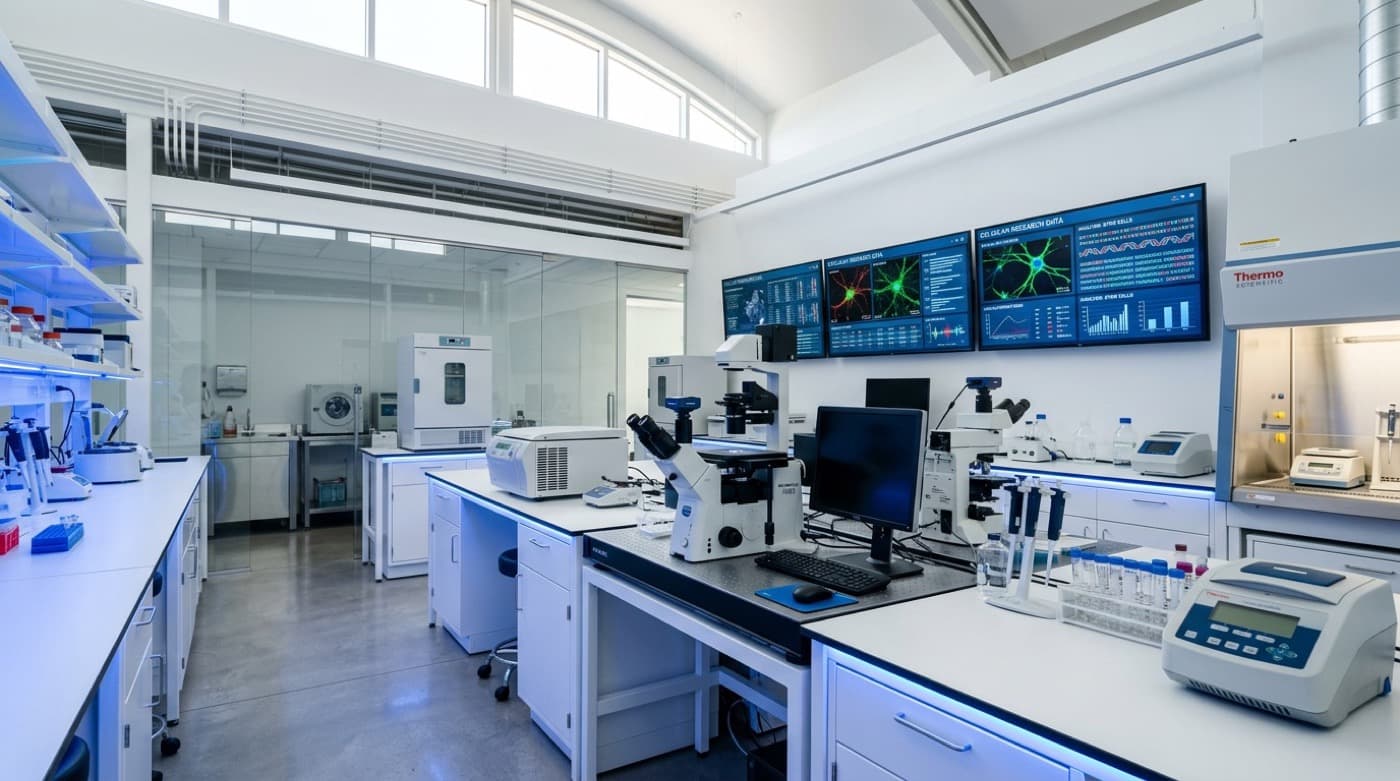
Clinical and administrative staff need fast, accurate answers grounded in clinical guidelines, formularies, and internal protocols, where a wrong answer carries real consequences. We build RAG systems that retrieve from vetted clinical and administrative sources with citation trails that support review and accountability.

Legal & Professional Services
Legal and professional services firms manage large volumes of contracts, case law, and precedent that are difficult to search with keyword tools alone. Our RAG development services help firms build research assistants that retrieve relevant clauses, precedents, and internal work product with source attribution built in.
Technology & SaaS
SaaS companies use RAG to power product documentation assistants, developer support bots, and customer self-service tools grounded in changing product documentation. We help technology teams build retrieval systems that stay current as documentation and product features evolve, without retraining a model.
Manufacturing
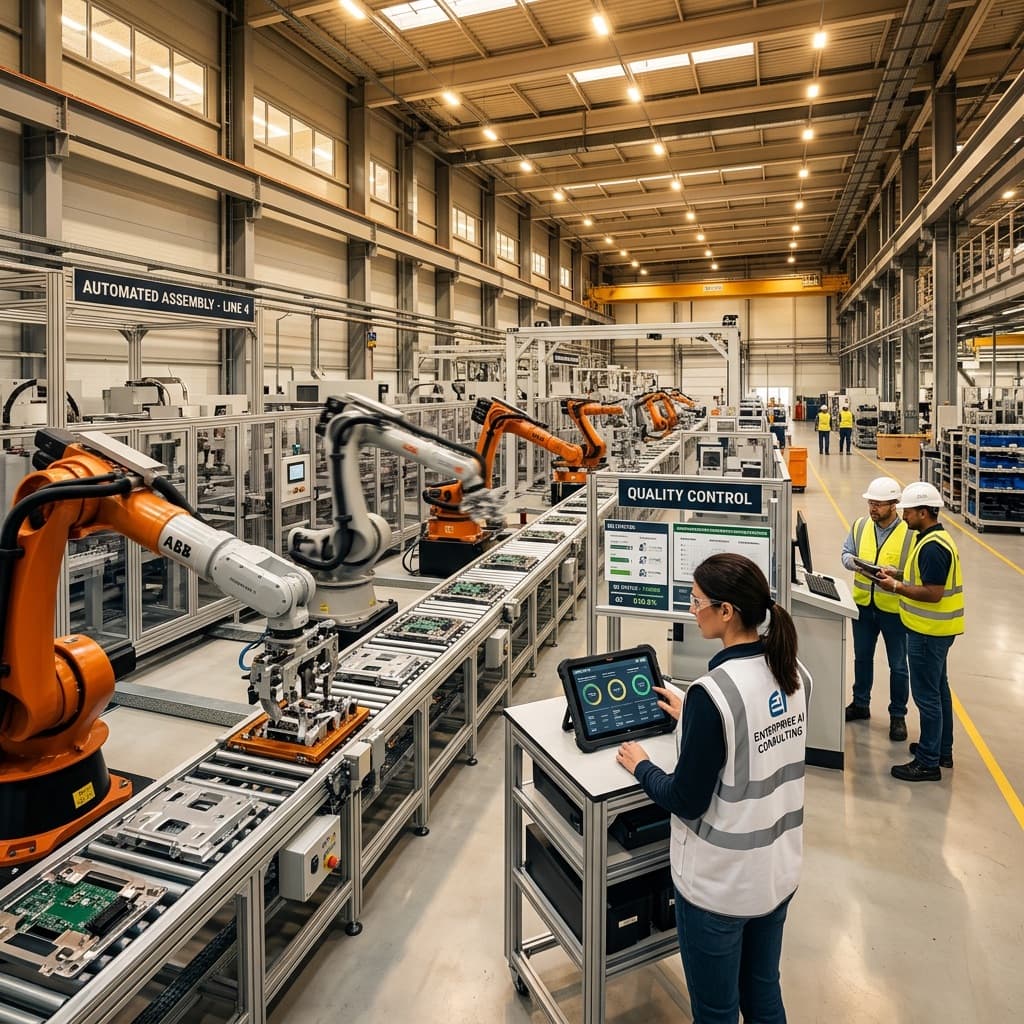
Manufacturers rely on technical manuals, equipment specifications, and maintenance records that are difficult to search manually on the shop floor. Our RAG systems give technicians and engineers natural-language access to equipment documentation, reducing downtime caused by searching for the right procedure.

Insurance
Insurance carriers manage policy documents, underwriting guidelines, and claims history that vary by product and jurisdiction. We build RAG-powered assistants that help underwriters and claims adjusters retrieve accurate, current policy language instead of relying on memory or outdated references.

Public Sector & Government
Government agencies manage large volumes of regulations, procedures, and citizen-facing documentation that benefit from natural-language access. Our RAG development services help agencies build citizen service assistants and internal knowledge tools grounded in official, current documentation.

Retail & Ecommerce
Retail organizations use RAG to power product knowledge assistants and customer support tools that stay accurate as catalogs, policies, and promotions change frequently. We build retrieval systems that reflect the latest product and policy data without requiring constant model retraining.
Our RAG Development Process: From Discovery to Production
Antier follows a structured RAG development process that moves from data discovery and architecture design through evaluation, deployment, and continuous optimization.
- 1
Discovery & Data Audit
We start by cataloging your knowledge sources, documents, and data systems, assessing data quality, access permissions, update frequency, and gaps that will affect retrieval accuracy.
- 2
Use Case & Architecture Definition
Based on discovery findings, we define the target use case, retrieval strategy, and system architecture, including whether RAG, fine-tuning, or a hybrid approach best fits your requirements.
- 3
Ingestion & Chunking Pipeline Design
We build ingestion pipelines and design chunking strategies tailored to your document types and structure, balancing context preservation with retrieval precision.
- 4
Embedding & Vector Database Setup
We select and configure embedding models and vector database infrastructure, designing the index schema and metadata structure needed to support fast, filtered retrieval.
- 5
Hybrid Retrieval & Re-ranking Implementation
We implement hybrid search combining semantic and keyword retrieval, then tune re-ranking models to surface the most relevant passages for each query.
- 6
Evaluation Framework & Testing
We build evaluation test sets from real queries and measure retrieval precision, recall, and answer faithfulness, iterating on chunking and retrieval parameters based on results.
- 7
Citation, Guardrails & Grounding
We implement source attribution, hallucination-reduction techniques, and guardrails so answers are traceable, accurate, and safe for your intended audience.
- 8
Integration & Deployment
The RAG system is integrated with your applications, enterprise systems, and access controls, then deployed to production infrastructure aligned with your security requirements.
- 9
Monitoring & Continuous Optimization
After launch, we monitor retrieval quality, latency, and user feedback, continuously refining chunking, embeddings, and re-ranking as your document corpus and usage patterns evolve.
Ready to move your RAG initiative from pilot to production?
Schedule a RAG Consultation ↗Why Businesses Choose Antier for RAG Development
Organizations partner with Antier for RAG development because we treat retrieval quality as an engineering discipline, not a one-time integration on top of a vector database.
Transparency
Our RAG development engagements are guided by clear milestones, defined evaluation criteria, and visibility into retrieval performance at every stage, so stakeholders can see measurable progress rather than a black-box build.
Deep RAG & Retrieval Engineering Expertise
From chunking strategy and embedding selection to hybrid search and re-ranking, our team brings hands-on experience across the full retrieval stack, not just prompt engineering layered on top of an out-of-the-box vector database.
Evaluation-Driven Development
We treat retrieval quality as something to be measured, not assumed, building evaluation frameworks that quantify precision, recall, and faithfulness so architecture decisions are backed by evidence.
Confidentiality & Security
RAG systems often touch an organization's most sensitive internal knowledge, so our engagements operate within NDA-backed environments with access-aware retrieval, secure infrastructure, and controlled development practices.
RAG vs Fine-Tuning: Choosing the Right Approach
RAG and fine-tuning solve different problems, and the right choice depends on how your knowledge changes, how much traceability you need, and what you're actually trying to adapt.
| Comparison Factors | RAG | Fine-Tuning |
|---|---|---|
| Data Freshness | Answers reflect the latest documents in your knowledge base as soon as they're indexed, with no retraining required. | Knowledge is frozen at training time; new or changed information requires retraining or additional fine-tuning runs. |
| Time & Cost to Deploy | Faster to stand up initially since it works with an existing base model plus a retrieval layer. | Requires curated training data, compute for training runs, and more iteration before reaching production quality. |
| Domain Adaptation | Effective at injecting factual knowledge and proprietary content into responses. | Better suited for adapting tone, format, and task-specific behavior rather than injecting large volumes of facts. |
| Explainability & Citations | Answers can be traced back to specific source documents, supporting verification and audit requirements. | Answers come from model weights with no inherent way to trace a claim back to a specific source. |
| Hallucination Risk | Grounding in retrieved context reduces, though doesn't eliminate, fabricated answers, especially with validation layers in place. | Without grounding, models remain prone to generating plausible-sounding but incorrect information. |
| Ongoing Maintenance | Maintenance centers on keeping the knowledge base and retrieval pipeline current, which is generally lower-effort than retraining. | Keeping the model current requires periodic retraining cycles as knowledge and requirements evolve. |
| Best Fit | Knowledge assistants, document Q&A, customer support, and any use case requiring current, citable, factual answers. | Style transfer, structured output formatting, and narrow tasks where consistent behavior matters more than fresh facts. |
Challenges We Solve Through RAG Development
Organizations exploring RAG often run into the same set of technical and trust challenges. Our RAG development services are built around solving these directly.
What Influences the Cost of a RAG System
As a RAG development company, Antier focuses on the key factors that influence the cost and timeline of building a production-ready retrieval-augmented generation system.
Corpus Size & Document Complexity
The volume, format diversity, and structural complexity of your source documents affect ingestion and chunking effort. A corpus of well-structured text requires far less preprocessing work than one full of scanned PDFs, tables, and inconsistent formatting.
Chunking & Embedding Customization
Off-the-shelf chunking and embedding configurations can work for straightforward use cases, but domain-specific content often requires custom chunking logic and fine-tuned embedding models, which adds development effort and cost.
Vector Database Selection & Hosting
Managed vector database services simplify operations but carry ongoing subscription costs, while self-hosted options require more infrastructure investment upfront. The right choice depends on data volume, query patterns, and data residency requirements.
Hybrid Search & Re-ranking Sophistication
Basic semantic search is cheaper to implement than a tuned hybrid search and re-ranking pipeline, but the investment in re-ranking typically pays back in materially better answer relevance for complex queries.
Evaluation & Quality Assurance
Building a proper evaluation framework with curated test sets and continuous quality tracking adds upfront cost but significantly reduces the risk of shipping a system that performs well in testing but poorly on real user queries.
Enterprise Integration Requirements
Connecting a RAG system to existing permission systems, business applications, and multiple data sources adds integration complexity that scales with the number and diversity of systems involved.
Security, Compliance & Access Control
Regulated industries or systems handling sensitive data require additional investment in access-aware retrieval, data residency controls, and audit logging to meet compliance requirements.
Ongoing Monitoring & Optimization
Retrieval quality isn't static. As your document corpus grows and query patterns shift, ongoing monitoring and tuning are needed to maintain performance, which should be budgeted as part of the total cost of ownership.
Consult us for an accurate cost estimate for your RAG project
Get a Quote ↗RAG Technologies, Vector Databases, and Frameworks We Work With
From vector databases and embedding models to orchestration frameworks and evaluation tooling, we help organizations build RAG systems using technologies aligned with their data environment, scale, and deployment requirements.
Vector Databases
Embedding Models
RAG Orchestration Frameworks
Hybrid Search & Re-ranking
LLMs for Generation
Evaluation & Observability
Enterprise Data Connectors
Looking for the right vector database and retrieval stack for your data?
Talk to Our RAG Experts ↗Security, Governance & Compliance in RAG Systems
RAG systems retrieve from your most sensitive internal knowledge, so our development practices are built around access control, data protection, and auditability from the start.
Access-Aware Retrieval
We design retrieval layers that respect existing document-level and role-based permissions, so the system never surfaces content a given user isn't authorized to see, even when that content is technically relevant to their query.
Data Residency & Deployment Flexibility
For organizations with data residency or sovereignty requirements, we support on-premises and private-cloud deployment of vector databases and embedding infrastructure alongside standard cloud-managed options.
PII & Sensitive Data Handling
We implement redaction, masking, and filtering controls to prevent personally identifiable or sensitive information from being inadvertently surfaced in retrieved passages or generated answers.
Audit Trails Through Citation
Because every answer is linked back to its source passage, RAG systems built by Antier provide a natural audit trail that supports compliance review and answer verification.
Regulatory Alignment
Our RAG development practices support GDPR-aligned data handling and HIPAA-ready deployments for healthcare organizations, incorporating access controls and data protection measures appropriate to regulated environments.
Spotlight on Insights
Our insights explore retrieval architecture, evaluation methodology, and the technical decisions that separate RAG pilots from production systems.
 AI Strategy
The State of AI in the Logistics Industry: Executive Insights for Business Leaders
Explore AI in logistics with insights into market trends, business value, implementation strategies, industry examples, and the future of supply chains.
 AI Strategy
What the UAE's 50% Agentic Government Mandate Means for Enterprises?
Discover what the UAE's 50% Agentic AI strategy reveals about the future of enterprise AI. Learn why governance, organizational readiness, and execution matter more than AI adoption alone.
 AI Architecture
RAG vs. Fine-Tuning: A Strategic Guide for Business Leaders
RAG or Fine-Tuning? Go through this blog post to compare business value, costs, governance, scalability, & more factors and choose the right AI architecture.
Still evaluating whether RAG, fine-tuning, or a hybrid approach fits your use case?
Talk to Our RAG Consultants ↗Frequently Asked Questions
Start a conversation with Antier
Connect with our consulting and engineering leads to scope your digital transformation from architecture review to production deployment.