
AI Infrastructure & Deployment
We design, provision, and operate the cloud, on-premises, and hybrid infrastructure that keeps enterprise AI systems fast, reliable, and cost-efficient once they reach production.

Antier is a trusted AI infrastructure and deployment partner for enterprises operating large-scale machine learning and generative AI workloads in production.












Our Comprehensive Suite of AI Infrastructure & Deployment Services
Whether you're standing up GPU clusters for model training, hardening production inference pipelines, or building the MLOps foundation your data science team needs to ship faster, our AI infrastructure and deployment services cover the full technology stack that AI systems run on.

GPU Cluster Provisioning & Management
We design and provision GPU clusters sized to your training and inference workloads, from single-node deployments to multi-node clusters spanning hundreds of accelerators. Our infrastructure engineers handle interconnect topology, storage throughput, and driver and firmware management so compute capacity translates into usable training velocity instead of idle hardware.
Cloud AI Infrastructure Setup
We architect AI infrastructure on AWS, Azure, and Google Cloud, selecting compute instances, storage tiers, and networking configurations that match your model size, data volume, and latency requirements. This includes reserved capacity planning and spot or preemptible strategies that reduce training and inference costs without compromising reliability.
On-Premises AI Infrastructure
For organizations with data residency requirements, existing data center investments, or workloads that demand predictable long-term costs, we design on-premises AI infrastructure covering GPU server selection, rack-level power and cooling planning, and network fabric design for distributed training.
Hybrid & Multi-Cloud AI Infrastructure
We build hybrid architectures that keep sensitive data and inference on-premises while bursting training workloads to the cloud, and multi-cloud setups that avoid vendor lock-in and improve GPU availability during capacity shortages.
Model Serving Infrastructure
We deploy and tune model-serving stacks, including Triton Inference Server, TorchServe, KServe, and vLLM, configured for your latency, throughput, and batching requirements. Our team handles autoscaling policies, model warm-up strategies, and multi-model serving so inference infrastructure keeps pace with production traffic.
MLOps Pipeline Development
We build MLOps pipelines that automate the path from data ingestion and feature engineering through training, evaluation, and deployment, replacing manual handoffs between data science and engineering teams with repeatable, auditable workflows.
CI/CD for Machine Learning
Our CI/CD for machine learning services extend traditional software delivery practices to models, automating retraining triggers, validation gates, canary rollouts, and rollback procedures so model updates ship with the same discipline as application code.
Model Versioning & Registry Management
We implement model registries and versioning systems that track lineage from training data through deployed model artifacts, giving teams the traceability needed for reproducibility, audits, and rapid rollback when a model underperforms in production.
Kubernetes for AI Workloads
We design and operate Kubernetes clusters purpose-built for AI workloads, including GPU device plugins, node pools optimized for training versus inference, and scheduling policies that maximize accelerator utilization across teams and projects.
AI Workload Containerization
We containerize training pipelines, inference services, and data processing jobs into portable, reproducible images, eliminating environment drift between development, staging, and production and simplifying deployment across cloud and on-premises targets.
GPU Orchestration & Scheduling
Through tools like Kubernetes device plugins, Slurm, and Ray, we implement GPU scheduling strategies that support multi-tenant workloads, priority queuing, and fractional GPU sharing, so expensive accelerator capacity is never left idle.
AI Infrastructure Scaling
We design autoscaling strategies for both training and inference workloads, from horizontal pod autoscaling for serving endpoints to elastic training clusters that expand and contract based on job queues, keeping performance consistent as usage grows.
AI Cost Optimization & FinOps
Our AI infrastructure cost optimization services analyze GPU utilization, storage spend, and data transfer costs to identify waste, right-size instances, and implement FinOps practices that give engineering and finance teams shared visibility into AI spend.
Inference Optimization & Latency Engineering
We apply quantization, batching, caching, and model compilation techniques to reduce inference latency and serving costs, helping production AI applications meet response-time requirements without over-provisioning hardware.
AI Observability & Monitoring
We instrument AI infrastructure with monitoring for GPU utilization, memory pressure, inference latency, and throughput, giving engineering teams a single view into system health rather than piecing signals together across disconnected tools.
Model Performance Monitoring
Beyond infrastructure metrics, we track model-level signals such as prediction drift, data drift, and output quality, alerting teams before degraded model performance turns into a production incident or a business-impacting decision.
Disaster Recovery & Business Continuity for AI
We design backup, failover, and recovery strategies for training data, model artifacts, and serving infrastructure, so a regional outage or hardware failure doesn't take down AI-dependent business processes.
AI Infrastructure Reliability Engineering
Applying site reliability engineering practices to AI systems, we define SLOs for model-serving endpoints, build incident response runbooks specific to AI failure modes, and establish on-call processes that keep production AI systems available.

AI Infrastructure Security Hardening
We secure AI infrastructure end to end, covering network segmentation, secrets management, container image scanning, and access controls around training data, model weights, and inference endpoints.
AI Governance & Compliance Infrastructure
We implement the technical controls that support AI governance requirements, including audit logging, model access controls, and data lineage tracking that satisfy internal policy and regulatory review.
Data Pipeline Security for AI
We secure the data pipelines feeding training and inference workloads, applying encryption in transit and at rest, access controls, and data masking so sensitive information is protected throughout the AI lifecycle.
Need production-grade infrastructure for your AI workloads?
Talk to Our Infrastructure Team ↗Why Enterprises Trust Antier to Build and Operate Their AI Infrastructure
Years of Experience
AI & Tech Experts
Global Clients
Projects Delivered
AI Infrastructure Success Stories That Delivered Measurable Impact
Our case studies show how enterprises scaled AI infrastructure to support production workloads while controlling cost, improving reliability, and accelerating deployment velocity.
 Sales AI
Turn Every Sales Conversation into Closure
An AI-powered Lead-to-Closure platform that supports sales teams before, during, and after every call, turning conversations into tasks, proposals, MoMs, and CRM updates in real time.
Read more ↗ Manufacturing
AI-Powered Predictive Maintenance Solution for the Manufacturing Industry
The manufacturing industry faces unexpected equipment failures and costly downtime. This case study covers an AI-powered predictive maintenance solution.
Read more ↗ Education
Conversational AI Voice Agent for Mishkat Metaverse
Antier engineered a bilingual conversational AI Voice Agent for Mishkat Metaverse, an immersive education platform commissioned by King Abdullah City for Atomic and Renewable Energy, supporting AI-powered learning at a national scale.
Read more ↗Antier's AI Infrastructure Expertise Validated by Clients and Industry Recognition
The trust we earn from clients is reinforced by verified reviews, successful infrastructure deployments, and long-term operational partnerships across industries.
Antier rebuilt our model-serving infrastructure from the ground up, cutting inference latency significantly while giving our platform team the observability we'd been missing for over a year. Their engineers understood both the machine learning and the infrastructure side, which made the handoffs seamless.
We needed a partner who could stand up GPU infrastructure across cloud and on-premises without disrupting our existing data center operations. Antier's team managed that transition carefully and left us with documentation and runbooks our own engineers could operate independently.
The MLOps pipelines Antier built took our model deployment process from a manual, error-prone routine to something our data science team trusts to run unattended. Their CI/CD approach to machine learning was exactly the discipline we were missing.
Partner with an AI infrastructure team trusted by global enterprises
Talk to Our Team ↗AI Infrastructure Trends & Market Forecast: Why Enterprises Are Investing in AI Infrastructure
Rising GPU costs, growing inference volumes, and production AI adoption are pushing infrastructure and MLOps investment higher across every major industry.
of Worldwide AI Spending Goes to Infrastructure
AI infrastructure, including AI-optimized IaaS, AI-optimized servers, AI network fabric, and AI processing semiconductors, is projected to account for more than 45% of the USD 2.59 trillion in worldwide AI spending Gartner forecasts for 2026, underscoring how much of enterprise AI investment now flows into the systems that train and serve models rather than the models themselves.
Source: Gartner
Global MLOps Market by 2030
The global MLOps market is projected to grow from roughly USD 2.2 billion in 2024 to USD 16.6 billion by 2030, a compound annual growth rate above 40%, as enterprises formalize the pipelines that take models from experimentation into reliable, monitored production.
Source: Grand View Research
Enterprise GPU Infrastructure Market by 2031
The enterprise GPU infrastructure market is projected to grow from roughly USD 374.82 billion in 2026 to USD 917.65 billion by 2031, as buyers shift from small proof-of-concept GPU nodes toward production clusters of 512 GPUs and above.
Source: Mordor Intelligence
of Enterprise AI Projects Fully Deliver on ROI
In a Gartner survey of infrastructure and operations leaders, only 28% of AI use cases fully met ROI expectations while 20% failed outright, a gap that traces back as often to missing infrastructure, observability, and reliability foundations as it does to the models themselves.
Source: Gartner
Industries We Support with AI Infrastructure & Deployment Services
Every industry runs AI on the same underlying building blocks, compute, storage, networking, and orchestration, but the constraints around latency, data residency, and reliability differ sharply from one sector to the next.

Healthcare
Healthcare organizations run AI workloads against protected health information, which means infrastructure decisions carry compliance weight from day one. We help healthcare providers and payers build HIPAA-ready AI infrastructure with strict data segmentation, audit logging, and secure model-serving environments for diagnostic and clinical decision-support systems.

Financial Services
Trading, fraud detection, and risk models depend on infrastructure that delivers consistent low-latency inference and withstands regulatory scrutiny. Our financial services AI infrastructure work focuses on high-availability serving architectures, strict access controls, and audit trails that satisfy risk and compliance teams.

Retail & Ecommerce
Recommendation engines, demand forecasting, and personalization models see highly variable traffic tied to shopping seasons and promotional events. We build AI infrastructure that autoscales through demand spikes and scales back down afterward, so retailers avoid paying for peak capacity year-round.
Manufacturing
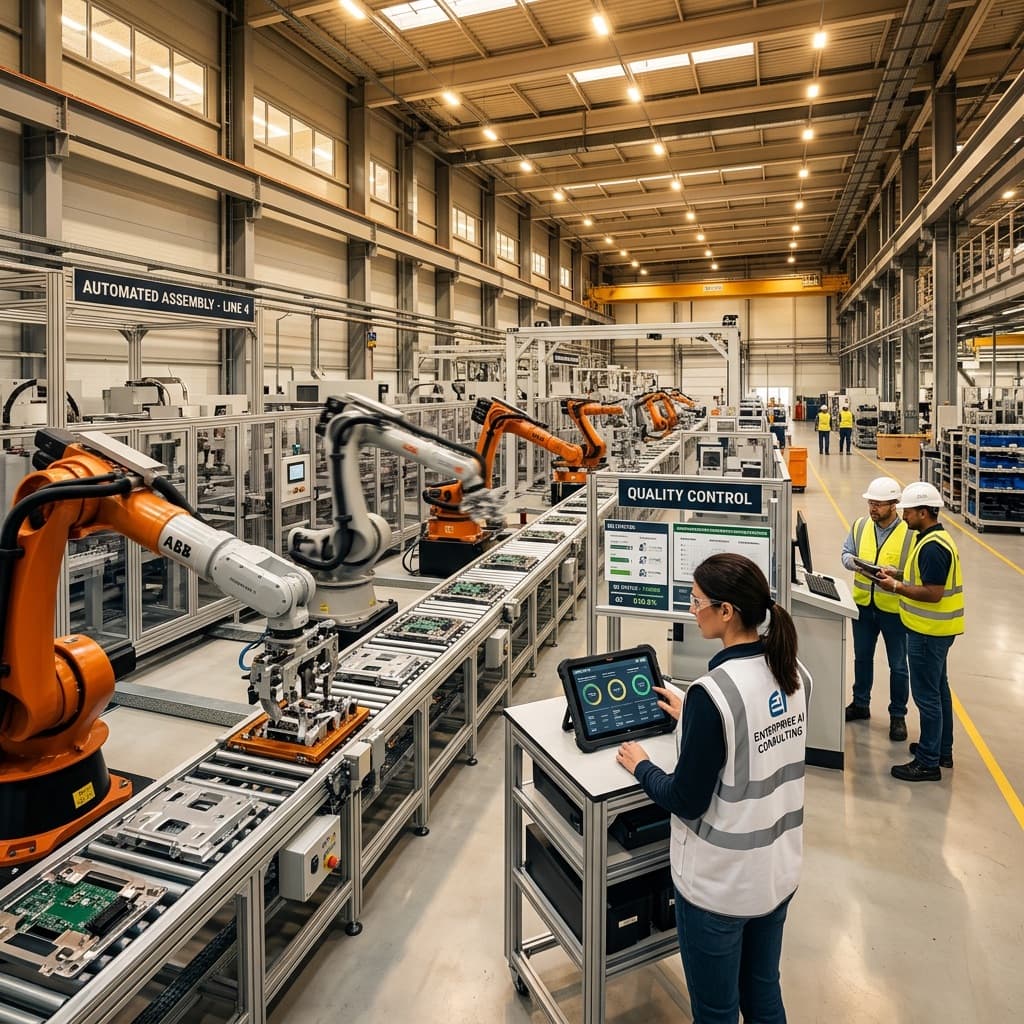
Predictive maintenance and computer vision quality inspection often need to run at the edge, close to the production line, with intermittent connectivity back to central systems. We design edge and hybrid AI infrastructure that keeps inference running locally while synchronizing models and data with central training environments.

Telecom
Telecom providers operate network intelligence and customer service AI at national scale, across distributed data centers and edge locations. Our telecom AI infrastructure work covers multi-region deployment, GPU capacity planning, and observability across geographically distributed inference nodes.

Media & Entertainment
Content generation, recommendation, and personalization workloads in media are GPU-intensive and bursty around content releases and live events. We help media companies provision elastic GPU capacity and optimize inference costs for workloads that spike unpredictably.

Government & Public Sector
Public sector AI deployments must operate within strict data sovereignty, security clearance, and procurement requirements. We build AI infrastructure for government agencies that meets data residency mandates, supports on-premises and sovereign cloud deployment, and satisfies rigorous security accreditation processes.
Logistics & Supply Chain
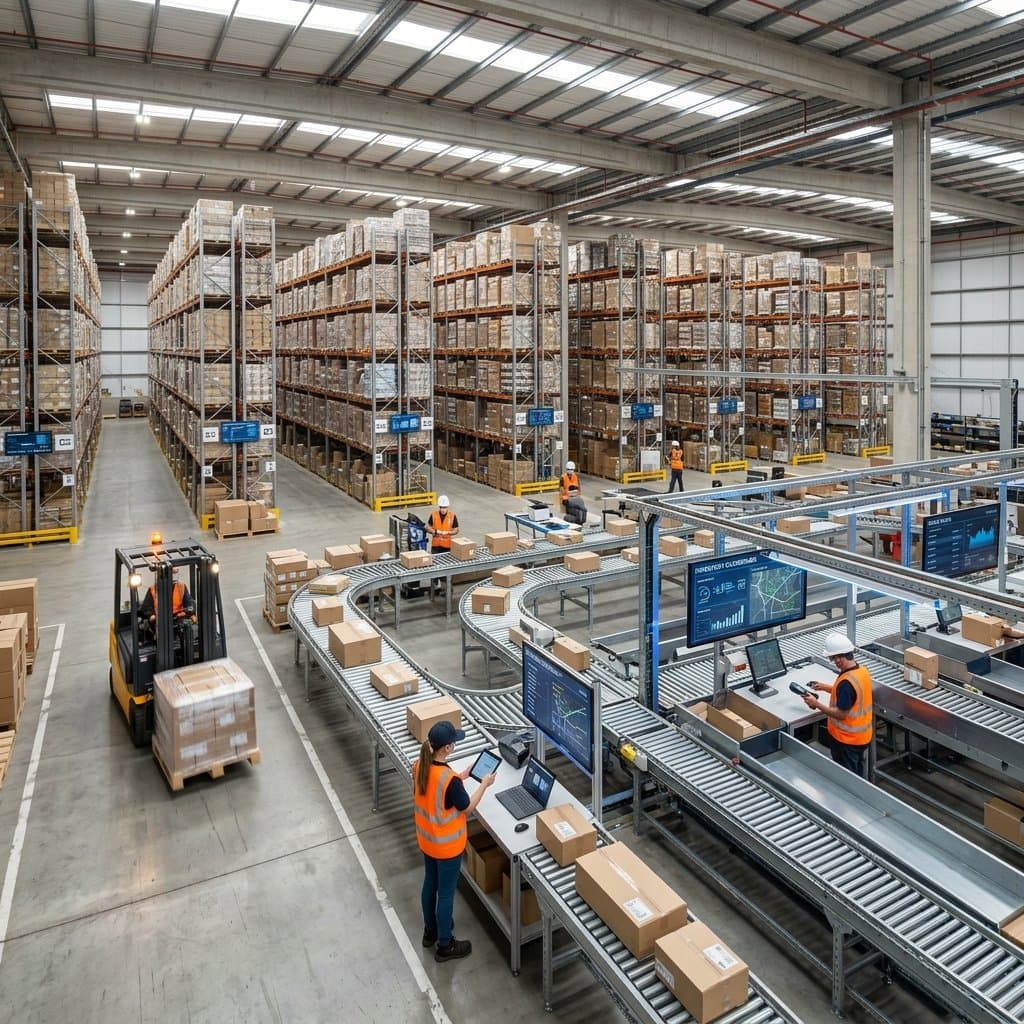
Route optimization, demand forecasting, and warehouse automation models need infrastructure that stays reliable through peak shipping seasons and supply chain disruptions. We design AI infrastructure with the redundancy and scaling headroom logistics operations need when volumes surge unexpectedly.
Our AI Infrastructure Deployment Process: From Assessment to Production
Antier follows a structured process that moves AI infrastructure from assessment and architecture through provisioning, hardening, and long-term operation.
Infrastructure Assessment & Readiness Review
We start by assessing your current infrastructure, existing cloud footprint, data environments, and AI workload requirements to identify gaps between where you are today and what production AI workloads will demand.
Architecture & Capacity Planning
Our team designs the target infrastructure architecture, covering compute selection, GPU capacity planning, storage throughput, and networking, sized to your training and inference workloads rather than generic reference architectures.
Environment Provisioning
We provision cloud, on-premises, or hybrid environments, including GPU clusters, container orchestration platforms, and networking, following infrastructure-as-code practices so environments are reproducible and version-controlled.
MLOps Pipeline Implementation
We build the CI/CD pipelines, model registries, and automated testing frameworks that take models from training through validation and into deployment without manual, error-prone handoffs.
Security & Compliance Hardening
Before workloads go live, we implement access controls, network segmentation, secrets management, and audit logging aligned with your governance and regulatory requirements.
Observability & Monitoring Setup
We instrument the full stack, from GPU utilization and serving latency to model-level drift detection, so your team has visibility into system health before issues affect production.
Load Testing & Reliability Validation
We stress-test serving infrastructure under realistic and peak traffic conditions, validate failover and disaster recovery procedures, and confirm the environment meets defined SLOs before go-live.
Deployment & Knowledge Transfer
Once validated, we deploy to production alongside your team, transferring documentation, runbooks, and operational ownership so your engineers can operate the environment independently.
Ongoing Optimization & Support
After deployment, we continue to monitor cost, performance, and reliability, tuning autoscaling policies, right-sizing infrastructure, and supporting your team as workloads and models evolve.
Ready to move your AI workloads from pilot to production?
Schedule an Infrastructure Consultation ↗Why Businesses Choose Antier for AI Infrastructure & Deployment
Organizations partner with Antier as their trusted AI infrastructure provider for deep technical expertise, dependable delivery, secure engineering practices, and experience operating production AI systems.
Transparency
Our AI infrastructure engagements run on clear milestones, documented architecture decisions, and regular visibility into cost, capacity, and progress, so your engineering leadership always knows the state of the environment we're building.
Competitive Pricing
We offer flexible engagement models, from fixed-scope infrastructure builds to ongoing managed operations, designed to fit the budget realities of both fast-growing AI teams and large enterprise infrastructure programs.
Deep Infrastructure & MLOps Expertise
Our engineers bring hands-on experience across GPU provisioning, Kubernetes, model serving, and MLOps pipelines, so you get infrastructure built by people who have operated production AI systems, not just deployed reference architectures.
Confidentiality & Security
We operate within NDA-backed engagements, secure repositories, and access-controlled environments, protecting your model weights, training data, and infrastructure configuration throughout the engagement.
How We Solve the Infrastructure Challenges That Stall AI Projects
Most AI initiatives don't stall because the model is wrong, they stall because the infrastructure underneath it was never built to support production. Through our AI infrastructure and deployment services, Antier helps organizations remove these barriers.
What Drives the Cost of AI Infrastructure & Deployment?
As an experienced AI infrastructure provider, Antier focuses on the key factors that influence the cost of building, deploying, and operating scalable AI systems.
Compute & GPU Requirements
The type, quantity, and utilization pattern of GPUs needed for training versus inference is typically the largest cost driver, with training clusters and high-throughput inference requiring significantly more capacity than lightweight or batch inference workloads.
Deployment Environment
Cloud, on-premises, and hybrid deployments carry different cost structures. Cloud offers flexibility and lower upfront investment, while on-premises can reduce long-term costs for stable, high-utilization workloads but requires greater capital investment.
Data Volume & Storage Architecture
The volume, velocity, and retention requirements of training and inference data influence storage tier selection, data pipeline complexity, and the infrastructure needed to move data efficiently.
MLOps & Automation Maturity
Building CI/CD pipelines, model registries, and automated testing frameworks requires upfront engineering investment but reduces the ongoing cost of deploying and maintaining models over time.
Observability & Reliability Requirements
The depth of monitoring, alerting, and disaster recovery capability required depends on how business-critical the AI workload is, with mission-critical systems requiring greater investment in redundancy and reliability engineering.
Security & Compliance Scope
Regulated industries and government workloads often require additional security controls, audit logging, and compliance validation that add to infrastructure scope and cost.
Scaling & Elasticity Needs
Workloads with predictable, steady traffic can run efficiently on fixed capacity, while workloads with variable or seasonal demand require more sophisticated autoscaling architecture to avoid over- or under-provisioning.
Ongoing Operations & Support
Continuous monitoring, cost optimization, model retraining pipelines, and infrastructure maintenance represent an ongoing cost beyond initial deployment that organizations should plan for as part of total cost of ownership.
Consult us for an accurate estimate to build or optimize your AI infrastructure
Get a Quote ↗Platforms, Tools, and Frameworks We Use to Build AI Infrastructure
From GPU-optimized cloud platforms and container orchestration to MLOps pipelines and observability tooling, we help organizations build AI infrastructure using technologies matched to their workloads, deployment environment, and operational maturity.
Cloud & AI Infrastructure Platforms
Containerization & Orchestration
Model Serving & Inference
MLOps & CI/CD
Observability & Monitoring
Infrastructure as Code & Automation
Data & Feature Infrastructure
Security & Governance
Looking for the right infrastructure stack for your AI workloads?
Talk to Our AI Infrastructure Experts ↗AI Infrastructure Security, Compliance & Governance Standards Followed by Antier
Trust is critical to production AI adoption. Our AI infrastructure and deployment services are guided by security-first practices, compliance-focused processes, and governance frameworks designed to support enterprise requirements.
GDPR-Focused Data Protection
Our AI infrastructure engagements support GDPR-aligned data handling, including data residency controls, encryption, and access management for training data and inference logs that contain personal information.
HIPAA-Ready Infrastructure
For healthcare AI workloads, we design infrastructure environments that support HIPAA-ready data segmentation, encrypted storage, and audit logging around protected health information used in training and inference.
AI Governance & Risk Management
We implement the technical controls that support enterprise AI governance frameworks, including access management, model audit trails, and change management processes for infrastructure and deployed models.
Secure Infrastructure Engineering Practices
Our infrastructure work incorporates secure-by-design principles, including network segmentation, container image scanning, secrets management, and regular security reviews throughout the infrastructure lifecycle.
NDA & Confidentiality Standards
We operate under NDA-backed engagements with controlled access to your infrastructure, model artifacts, and configuration, protecting sensitive intellectual property throughout the partnership.
The Antier Advantage: What Sets Us Apart from Traditional Infrastructure Providers
| Comparison Factors | Antier | Traditional Infrastructure Providers |
|---|---|---|
| AI Infrastructure Expertise | Deep, hands-on experience across GPU provisioning, Kubernetes, model serving, and MLOps pipelines for production AI workloads | Generalist cloud or DevOps teams with limited AI-specific infrastructure experience |
| MLOps & Deployment Automation | Purpose-built CI/CD pipelines, model registries, and automated testing frameworks for machine learning | Manual, ad hoc model deployment processes |
| Multi-Cloud & Hybrid Capability | Experience architecting across AWS, Azure, Google Cloud, on-premises, and hybrid environments without vendor lock-in | Single-cloud specialization that limits flexibility |
| Observability for AI Workloads | Monitoring built for GPU utilization, inference latency, and model drift, not just general infrastructure metrics | Generic infrastructure monitoring without AI-specific signals |
| Cost Optimization | Dedicated AI FinOps practices that right-size GPU capacity and reduce inference costs without sacrificing performance | Limited focus on AI-specific cost drivers |
| Security & Compliance | AI-specific security hardening covering model weights, training data, and inference endpoints, aligned with regulatory requirements | Standard IT security practices not adapted for AI workloads |
| Reliability Engineering | SRE practices, disaster recovery planning, and defined SLOs built specifically for AI serving infrastructure | Limited incident response experience specific to AI failure modes |
| Post-Deployment Support | Ongoing monitoring, optimization, and operational support after go-live | Limited support once infrastructure is handed off |
Spotlight on Insights
Our AI infrastructure insights help engineering leaders understand GPU strategy, MLOps practices, observability, and the operational patterns behind reliable production AI systems.
 FinTech AI
The Fintech AI Integration Gap: Why AI Adoption Isn't Turning Into Profit
A maturity framework — Bolted-On, Wired-In, Compounding — for turning AI spend into compounding returns in financial services. Why 80%+ adoption still leaves most firms without a profitability gain.
 AI Governance
The Rise of Shadow AI Agents: What CIOs Need to Control Before They Scale
Shadow AI agents can act across enterprise systems without central oversight. Learn what CIOs need to discover, govern, secure, and monitor before agentic AI scales.
 Agentic AI
The UAE Is Moving From AI Assistants to AI Agents: What Business Leaders Need to Prepare For
The UAE is moving beyond AI assistants toward AI agents that reason, plan, and execute tasks. Learn where AI agents fit and what business leaders need to prepare for.
Still evaluating your AI infrastructure or deployment strategy?
Talk to Our AI Infrastructure Consultants ↗Frequently Asked Questions
Start a conversation with Antier
Connect with our consulting and engineering leads to scope your digital transformation from architecture review to production deployment.