
LLM Fine-Tuning Services
Adapt open and licensed language models to your organization's data, workflows, and terminology through supervised fine-tuning, parameter-efficient training, and alignment techniques built for production use.
Trusted by Industry Leaders Across Global Markets — organizations with proprietary data choose Antier to fine-tune and adapt language models built for measurable, production-grade outcomes.











Our LLM Fine-Tuning Services
As a technical partner for enterprises with proprietary data, we deliver the full discipline of language model adaptation — from deciding whether fine-tuning is the right approach to training, evaluating, and operating fine-tuned models in production.
Supervised Fine-Tuning (SFT)
We fine-tune open and licensed base models on your labeled input-output pairs to teach specific tasks, formats, and behaviors that prompting alone cannot reliably produce. This is the foundation layer for teaching a model your domain's vocabulary, document structures, and expected response patterns.
Parameter-Efficient Fine-Tuning (LoRA, QLoRA, Adapters)
Rather than retraining every parameter in a model, we apply low-rank adaptation, quantized LoRA, and adapter-based methods that update a small fraction of weights while holding most of the base model frozen. This cuts training compute and storage costs substantially while preserving most of the quality gains of full fine-tuning.
Instruction Tuning and Alignment (RLHF, DPO)
Once a model has task competence, we align its behavior to your organization's standards through instruction tuning and preference-based methods such as RLHF and Direct Preference Optimization. This shapes tone, refusal behavior, and response style around real human feedback rather than generic assumptions.
Dataset Curation and Labeling
Fine-tuning quality is bounded by dataset quality, not just volume. We build curation pipelines that source, clean, deduplicate, and label training examples from your internal documents, transcripts, and historical outputs, applying human review wherever labeling accuracy directly affects model behavior.
Fine-Tuned Model Evaluation
We design evaluation suites specific to your task, combining automated benchmarks, held-out test sets, and structured human review to measure whether a fine-tuned model actually outperforms prompting or RAG on the metrics that matter to your business, not just generic leaderboard scores.
Continuous Fine-Tuning and Retraining Pipelines
Production models degrade as your data, products, and terminology change. We build retraining pipelines that periodically fine-tune on fresh data, track model versions, and roll out updated checkpoints without disrupting live applications.
Considering a Custom Fine-Tuned Model for Your Data?
Talk to Our Fine-Tuning Team ↗Fine-Tuning vs. Prompt Engineering vs. RAG: A Decision Framework
Not every problem calls for training a model. Before recommending fine-tuning, we assess whether prompt engineering or retrieval-augmented generation can solve the problem faster and at lower cost — and we only fine-tune when the evidence supports it.
| Comparison Factors | Prompting or RAG (No Training) | Fine-Tuning (Model Training Required) |
|---|---|---|
| Best fit for | Answering questions from a knowledge base, injecting current or proprietary facts, tasks where behavior can be fully described in a prompt | Teaching a consistent output format, style, or specialized skill that a description alone cannot reliably produce |
| Data requirement | A searchable knowledge source, such as documents, tickets, or records, with reasonable retrieval quality | Hundreds to tens of thousands of labeled, high-quality input-output examples |
| Time to first result | Days to a few weeks | Several weeks, including dataset preparation and evaluation cycles |
| Ongoing cost profile | Lower upfront cost, but per-token inference costs and prompt length grow as context expands | Higher upfront training cost, often lower per-inference cost since fewer tokens are needed at runtime |
| Factual freshness | Easy to update — refresh the index and answers reflect new data immediately | Requires retraining or periodic fine-tuning cycles to reflect new information |
| Behavior consistency | Depends on prompt engineering discipline and can drift across edge cases | Behavior becomes part of the model weights, giving more consistent outputs across similar inputs |
| When to combine both | Use retrieval to ground answers in current, verifiable facts | Use fine-tuning to lock in format, tone, and domain-specific reasoning — most production systems benefit from both together |
Parameter-Efficient Fine-Tuning Techniques We Implement
Full fine-tuning of a large language model is rarely necessary and rarely economical. We select from a range of parameter-efficient methods based on model size, available compute, and how much of the base model's general capability needs to be preserved.

Standard LoRA
We inject small trainable low-rank matrices into a model's attention and feed-forward layers while freezing the original weights, training a fraction of a percent of total parameters. This is our default approach for most enterprise fine-tuning projects because it trains fast, avoids catastrophic forgetting, and produces lightweight adapter files that are easy to version and swap.
QLoRA
For larger base models or constrained GPU budgets, we combine 4-bit quantization of the base model with LoRA adapters, making it possible to fine-tune models with tens of billions of parameters on a single high-memory GPU instead of a multi-node cluster.
Adapter Layers
We insert small bottleneck modules between transformer layers that can be trained independently and swapped per task, useful when a single base model needs to support several distinct fine-tuned behaviors without maintaining separate full copies.
Prompt and Prefix Tuning
For lighter-weight adaptation needs, we train continuous prompt embeddings rather than modifying model weights at all, a good fit for narrower tasks where the cost of full LoRA training is not justified by the expected gain.
Full Fine-Tuning
When a use case demands maximum adaptation — deep domain reasoning shifts, extensive vocabulary changes, or building a proprietary model as a defensible asset — we fine-tune all model parameters. We reserve this for cases where parameter-efficient methods have been evaluated and shown insufficient, given the higher compute cost and forgetting risk involved.
Continued Pretraining
For domains with large amounts of unlabeled text, such as internal wikis, historical filings, or technical manuals, we sometimes run continued pretraining on that corpus before supervised fine-tuning, giving the model deeper domain fluency before it is taught specific tasks.
The Numbers Behind Our AI Engineering Expertise
Our track record in AI and machine learning engineering translates directly into the discipline we bring to model fine-tuning and training projects.
Years of Experience
AI & Tech Experts
Global Clients
Projects Delivered
Real World Outcomes from Custom-Trained Models
Our portfolio shows how organizations have worked with Antier to turn proprietary data into fine-tuned models that outperform generic prompting on the tasks that matter most to their business.
 Sales AI
Turn Every Sales Conversation into Closure
An AI-powered Lead-to-Closure platform that supports sales teams before, during, and after every call, turning conversations into tasks, proposals, MoMs, and CRM updates in real time.
Read more ↗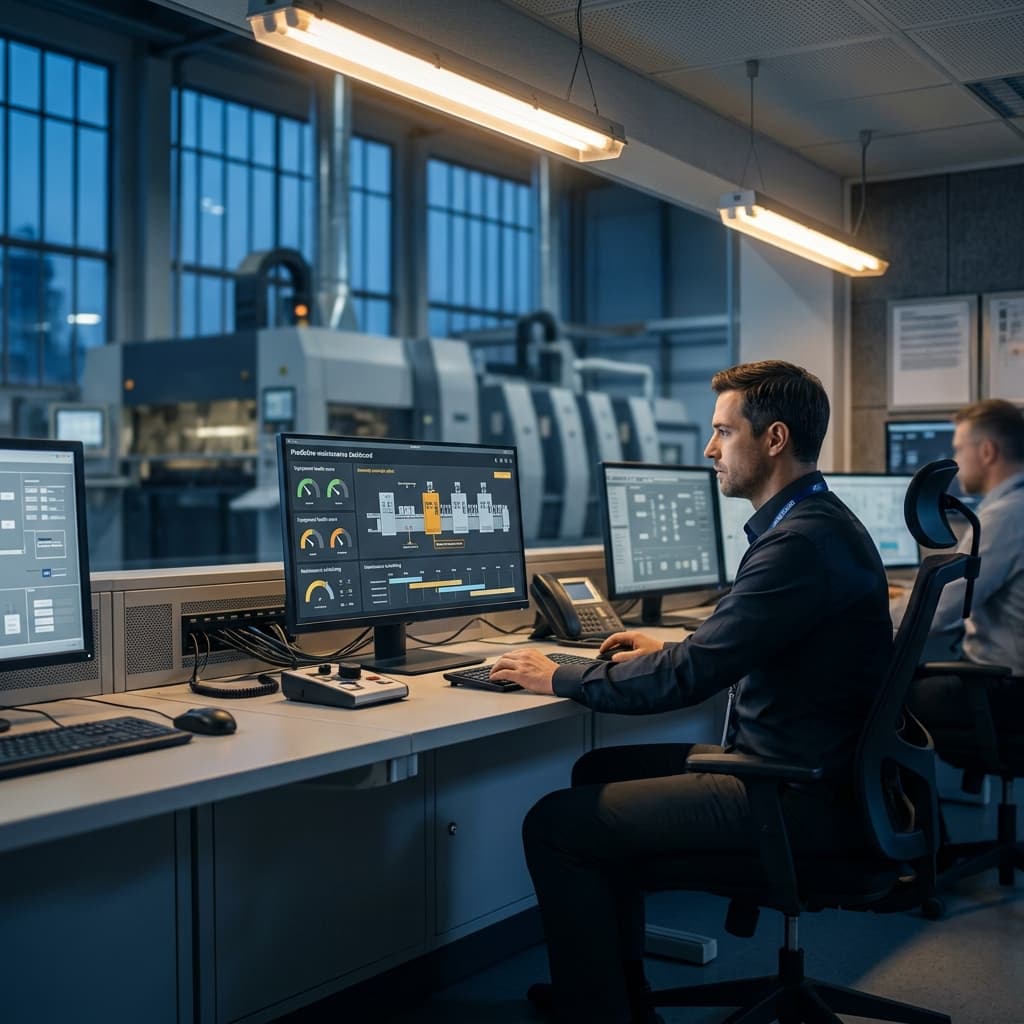 Manufacturing
AI-Powered Predictive Maintenance Solution for the Manufacturing Industry
The manufacturing industry faces unexpected equipment failures and costly downtime. This case study covers an AI-powered predictive maintenance solution.
Read more ↗ Education
Conversational AI Voice Agent for Mishkat Metaverse
Antier engineered a bilingual conversational AI Voice Agent for Mishkat Metaverse, an immersive education platform commissioned by King Abdullah City for Atomic and Renewable Energy, supporting AI-powered learning at a national scale.
Read more ↗What Our Clients Say About Fine-Tuning With Antier
The value of a fine-tuned model shows up in production — in the outputs it produces and the operational cost it removes.
We had years of internal claims documentation that no off-the-shelf model could interpret correctly no matter how we phrased the prompt. Antier fine-tuned a model on our own labeled examples, and it started producing outputs in the exact structure our downstream systems expected. The difference in reliability compared to prompting a general model was immediate, and it removed a layer of post-processing we had built just to work around inconsistent outputs.
Our biggest concern going into a fine-tuning project was whether the investment would actually be justified over just using a bigger commercial model. Antier ran a structured evaluation comparing prompting, retrieval, and fine-tuning on our actual use case before we committed to training anything. That evidence-first approach gave us confidence in the decision, and the resulting model has been running in production without the prompt maintenance overhead we used to deal with.
Working with a technical partner that understood both the machine learning side and our regulatory constraints made this project possible. Antier helped us curate a labeled dataset from historical case files, ran the fine-tuning process within our own secure environment, and built an evaluation framework we still use to test every new model version before it goes live.
See Whether Fine-Tuning Is the Right Investment for Your Data
Schedule a Fine-Tuning Assessment ↗Domain-Specific Fine-Tuning Across Regulated and Data-Rich Industries
Generic foundation models struggle with the vocabulary, reasoning patterns, and compliance expectations of specialized domains. We fine-tune models on your industry's data to close that gap.

Legal Services
We fine-tune models on contract language, case law, and filing formats so outputs reflect the precision and terminology legal teams expect, supporting contract analysis, clause extraction, and legal research assistants that require domain-accurate language rather than general summarization.

Healthcare and Life Sciences
Clinical documentation, medical terminology, and diagnostic reasoning patterns require models trained on representative medical text. We fine-tune within controlled, compliant environments to support clinical documentation support, medical knowledge assistants, and research applications.

Financial Services
From investment research to regulatory reporting, financial language carries precise meaning that general models frequently misinterpret. We fine-tune models on financial filings, research notes, and internal terminology to support financial analysis, compliance review, and advisory use cases.
Manufacturing and Engineering
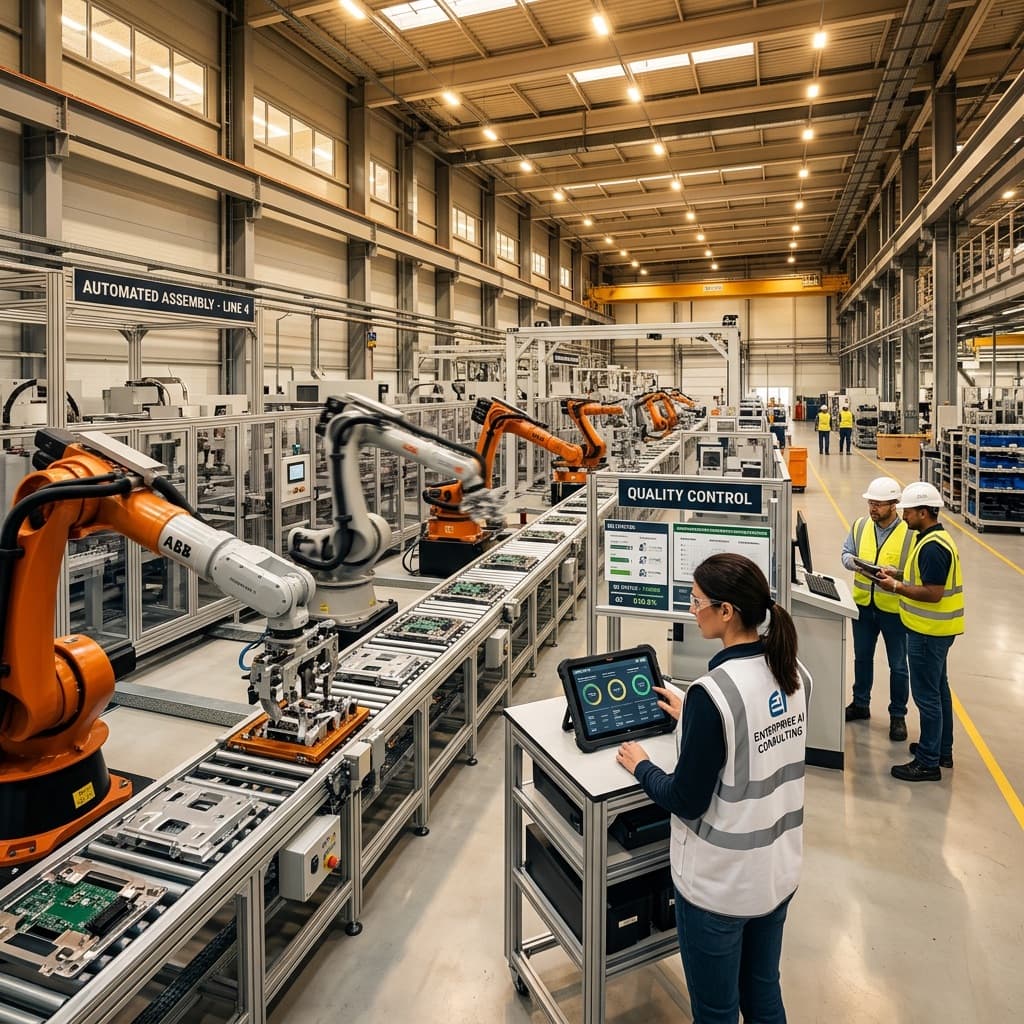
Technical manuals, maintenance logs, and engineering specifications use vocabulary and structured formats that benefit directly from domain fine-tuning, improving accuracy for maintenance copilots and technical documentation assistants.

Insurance
Claims narratives, underwriting guidelines, and policy language each carry industry-specific conventions. We fine-tune models on historical claims and policy data to improve consistency in underwriting support and claims assessment tools.
Enterprise Knowledge and Customer Support
Where a business has years of support tickets, internal documentation, or product knowledge, fine-tuning on that history teaches a model your product terminology and resolution patterns more reliably than prompting alone, reducing escalations and improving first-response accuracy.
Fine-Tuning Challenges We Help You Navigate
Training a custom model introduces engineering and governance considerations that prompting a hosted API does not. We manage these risks directly rather than leaving them for you to discover in production.
Avoid the Common Pitfalls of Custom Model Training
Discuss Your Fine-Tuning Risks ↗What the Research Says About Efficient Fine-Tuning
Parameter-efficient fine-tuning techniques have fundamentally changed the economics of adapting large language models, based on published research from the teams that developed them.
Fewer trainable parameters with LoRA
The original LoRA research showed fine-tuning could match full fine-tuning quality while training up to 10,000 times fewer parameters than updating an entire model, dramatically cutting compute and storage requirements.
Source: Hu et al., LoRA: Low-Rank Adaptation of Large Language Models (2021)
Parameter model fine-tuned on a single GPU
QLoRA demonstrated that 4-bit quantization combined with low-rank adapters could fine-tune models as large as 65 billion parameters on a single 48GB GPU without materially sacrificing output quality compared with full 16-bit fine-tuning.
Source: Dettmers et al., QLoRA: Efficient Finetuning of Quantized LLMs (2023)
Yet preferred by human evaluators
OpenAI's InstructGPT research found that outputs from a 1.3-billion-parameter model fine-tuned with human feedback were preferred by evaluators over outputs from the 175-billion-parameter base GPT-3 model, illustrating how alignment tuning can outperform raw scale.
Source: Ouyang et al., Training Language Models to Follow Instructions with Human Feedback (2022)
Curated examples used to align a 65B model
Meta's LIMA study showed that a base model fine-tuned on just 1,000 carefully curated instruction-response pairs could produce outputs competitive with models trained on far larger datasets, reinforcing that curation quality often matters more than dataset volume.
Source: Zhou et al., LIMA: Less Is More for Alignment (2023)
Business Benefits of Fine-Tuning Your Own Language Model
Done well, fine-tuning isn't just a technical exercise — it changes the cost, reliability, and defensibility of your AI systems in ways that prompting a shared model cannot.
Lower Inference Costs at Scale
A model fine-tuned to produce the right output format and reasoning path directly often needs shorter prompts and fewer retries than a general model steered through extensive prompt engineering, reducing token consumption across high-volume applications.
Consistent Domain Language and Tone
Fine-tuned models internalize your organization's terminology, style, and formatting conventions, producing more consistent outputs across users and use cases than prompt instructions that must be repeated and can be inconsistently followed.
Reduced Prompt Engineering Overhead
When behavior is trained into the model rather than described in an ever-growing system prompt, teams spend less time maintaining brittle prompt chains and troubleshooting inconsistent responses as edge cases accumulate.
Stronger Data and IP Moat
A model trained on your proprietary data and institutional knowledge becomes a differentiated asset that competitors using the same base model and public prompts cannot easily replicate.
Improved Accuracy on Specialized Tasks
For narrow, well-defined tasks such as classification, structured extraction, and domain-specific generation, fine-tuned models frequently outperform larger general-purpose models prompted generically, because they have been directly optimized for that task's patterns.
Deployment Flexibility and Smaller Footprint
A smaller fine-tuned model can often match a much larger general model's performance on a specific task, opening deployment options such as on-premises hosting, edge inference, and lower-latency serving that aren't practical with frontier-scale models.
Our LLM Fine-Tuning Methodology
We follow a structured, evidence-driven process that treats fine-tuning as an engineering discipline — validating the need before training, and validating the result before deployment.
Use Case and Approach Assessment
We start by evaluating whether your problem actually requires fine-tuning, or whether prompt engineering or retrieval-augmented generation would deliver comparable results faster and at lower cost. Fine-tuning only proceeds when the evidence supports it.
Dataset Curation and Labeling
We source, clean, deduplicate, and label training examples from your internal documents, transcripts, and historical outputs, applying human review wherever labeling accuracy directly determines model behavior.
Base Model Selection
We evaluate candidate base models against your licensing requirements, deployment constraints, and task complexity, weighing open-weight models against commercial fine-tuning APIs based on what the use case actually demands.
Training Method Selection
Based on model size, available compute, and how much adaptation is required, we choose between LoRA, QLoRA, adapter-based methods, or full fine-tuning, and define the training configuration accordingly.
Fine-Tuning and Experimentation
We run training experiments with careful hyperparameter tuning and checkpointing, tracking learning curves and intermediate evaluation results to catch overfitting or instability early rather than after a full training run completes.
Evaluation and Benchmarking
Every fine-tuned model is tested against task-specific benchmarks, held-out data, and human review, and compared directly against the prompting or RAG baseline it is meant to improve on.
Alignment and Safety Tuning
Where the use case requires it, we apply instruction tuning and preference-based alignment methods such as RLHF or DPO to shape tone, refusal behavior, and safety characteristics around your organization's standards.
Deployment and Continuous Retraining
Once validated, the model is deployed into your serving infrastructure with monitoring in place, and we establish a retraining cadence so the model stays current as your data and business needs evolve.
The Technologies We Use for LLM Fine-Tuning and Model Training
Delivering production-grade fine-tuned models requires the right combination of base models, training frameworks, compute infrastructure, and evaluation tooling. Our team works across the modern training stack to fit the method to the model and the budget.
Open and Licensable Base Models
PEFT and Training Libraries
Alignment and RLHF Frameworks
Training Infrastructure and Compute
Data Labeling and Curation Tools
Evaluation and Benchmarking
MLOps and Experiment Tracking
Model Serving and Inference
Train the Right Model on the Right Infrastructure
Talk to Our AI Infrastructure Team ↗Why Enterprises Choose Antier for LLM Fine-Tuning
Fine-tuning a language model well requires machine learning depth, infrastructure judgment, and enough business context to know when training is — and isn't — the right investment.
Evidence-First Recommendations
We evaluate prompting, RAG, and fine-tuning against your actual use case before recommending an approach, rather than defaulting to the most technically interesting option. If a lighter-weight solution solves your problem, we'll tell you.
Deep Training and PEFT Expertise
Our team works hands-on with LoRA, QLoRA, adapter methods, full fine-tuning, and alignment techniques across a range of base models, matching training method to the constraints of your budget, timeline, and compute access.
Security and Data Governance by Design
Training data often includes an organization's most sensitive information. We operate within NDA-backed, access-controlled environments and can run training within your own cloud tenancy or on-premises infrastructure where data residency requires it.
Rigorous, Task-Specific Evaluation
We don't consider a fine-tuning project complete until we've measured it against your actual task with held-out data and, where appropriate, human review, not just generic benchmark scores that may not reflect your use case.
Long-Term Retraining Partnership
Fine-tuned models need maintenance as data and business needs change. We support retraining pipelines, version management, and ongoing evaluation well past initial deployment.
LLM Fine-Tuning Cost: How We Scope Investment
Fine-tuning costs vary widely based on model size, data readiness, and how much adaptation the task requires. We evaluate every engagement through structured discovery before recommending an approach and budget.
Base Model Size and Licensing
Larger models require more compute to fine-tune and may carry commercial licensing costs. We weigh model size against task complexity to avoid paying for capability your use case doesn't need.
Dataset Preparation Effort
Sourcing, cleaning, and labeling training data is frequently the largest cost driver in a fine-tuning project, particularly when existing enterprise data isn't already structured for training. We scope this work explicitly rather than treating it as an afterthought.
Training Method and Compute
Parameter-efficient methods such as LoRA and QLoRA cost a fraction of full fine-tuning in GPU time, but the right method depends on how much the model's behavior needs to change. We recommend the least expensive method that meets the accuracy bar.
Evaluation Rigor Required
High-stakes use cases in regulated industries warrant more extensive evaluation and human review than lower-risk internal tools, which affects both timeline and cost.
Deployment and Serving Infrastructure
Where and how a fine-tuned model is served, whether as a cloud API, on-premises, or at the edge, affects both upfront infrastructure investment and ongoing inference costs.
Ongoing Retraining Cadence
Models that need to stay current with fast-changing data require a recurring retraining budget, while more stable domains may only need periodic updates. We help define a cadence that matches how quickly your data actually changes.
Spotlight on Insights
Antier's industry insights help enterprises stay informed about model fine-tuning techniques, parameter-efficient training, alignment methods, dataset strategy, and the evolving economics of building custom language models.
 FinTech AI
The Fintech AI Integration Gap: Why AI Adoption Isn't Turning Into Profit
A maturity framework — Bolted-On, Wired-In, Compounding — for turning AI spend into compounding returns in financial services. Why 80%+ adoption still leaves most firms without a profitability gain.
 AI Governance
The Rise of Shadow AI Agents: What CIOs Need to Control Before They Scale
Shadow AI agents can act across enterprise systems without central oversight. Learn what CIOs need to discover, govern, secure, and monitor before agentic AI scales.
 Agentic AI
The UAE Is Moving From AI Assistants to AI Agents: What Business Leaders Need to Prepare For
The UAE is moving beyond AI assistants toward AI agents that reason, plan, and execute tasks. Learn where AI agents fit and what business leaders need to prepare for.
FAQs
Start a conversation with Antier
Connect with our consulting and engineering leads to scope your digital transformation from architecture review to production deployment.