
Machine Learning Development Company
Build production-grade machine learning systems, from feature pipelines and model training to MLOps infrastructure and drift monitoring, with an engineering team that ships models built to run in production, not just notebooks.
Antier is trusted by data science and engineering leaders to build and operate custom machine learning systems at enterprise scale.












Our Machine Learning Development Services
Whether you're standing up your first in-house ML capability or scaling an existing data science practice into production, our machine learning development services cover the full lifecycle, from data preparation and model training to deployment, monitoring, and retraining.
Supervised Learning Model Development
We design and train supervised learning models for classification, regression, and ranking using algorithms suited to your data and business objective, from linear and tree-based models to deep learning where the problem warrants it. Every model is benchmarked against a baseline and evaluated on metrics tied to business outcomes, not just statistical accuracy.
Unsupervised Learning & Clustering
For problems without labeled outcomes, such as customer segmentation, behavioral clustering, and dimensionality reduction, we build unsupervised learning models that surface structure in your data. These models often feed downstream supervised systems or directly inform segmentation and targeting decisions.
Tabular Data ML
The majority of enterprise ML problems are still tabular: structured rows of transactions, records, and events. We specialize in gradient-boosted trees, feature-rich linear models, and hybrid architectures that consistently outperform deep learning on structured business data while remaining faster to train and easier to interpret.
Ensemble & Gradient-Boosted Models
We build ensemble models using XGBoost, LightGBM, CatBoost, and stacked architectures to extract additional accuracy from tabular datasets. Ensembling is applied selectively, only where the accuracy gain justifies the added complexity and inference cost in production.
Custom Model Architecture Design
When off-the-shelf algorithms don't fit the problem shape, we design custom model architectures tailored to your data structure, latency requirements, and interpretability needs, rather than forcing a generic library default onto a non-standard problem.
Feature Engineering
Model performance is won or lost on feature quality. Our data scientists engineer domain-informed features from raw transactional, behavioral, and operational data, applying encoding strategies, temporal aggregations, and interaction terms that materially improve model signal.
Feature Store Implementation
We implement feature stores that make engineered features reusable, versioned, and consistent between training and serving, eliminating training-serving skew and letting multiple models share a common, governed feature layer.
Training Data Pipelines
We build automated, repeatable pipelines that pull, clean, join, and version training data from your warehouses, event streams, and operational systems, so retraining a model becomes a pipeline run rather than a manual data-wrangling exercise.
Data Labeling & Quality Pipelines
For supervised problems that need labeled data, we set up labeling workflows, quality checks, and inter-annotator agreement processes, combined with automated data validation that catches schema drift and quality regressions before they reach a training run.
MLOps Implementation
We stand up the MLOps infrastructure that turns machine learning from a research exercise into a repeatable engineering discipline, covering pipeline orchestration, environment management, artifact storage, and reproducible training runs.
Experiment Tracking & Model Versioning
Every training run, hyperparameter set, dataset version, and evaluation metric is tracked and versioned, giving your data science team full lineage from raw data to deployed model and the ability to reproduce or roll back any result.
CI/CD for Machine Learning
We extend standard CI/CD practices to machine learning, with automated testing of data schemas and model performance, staged promotion between environments, and deployment pipelines that treat models as versioned, testable artifacts rather than one-off scripts.
Model Monitoring & Drift Detection
Once in production, models are monitored for prediction drift, data drift, and performance decay against live outcomes, with automated alerting so degradation is caught before it affects business decisions rather than discovered weeks later.
Model Retraining Pipelines
We build retraining pipelines that trigger on schedule, on drift detection, or on data volume thresholds, so models stay current with changing customer behavior and market conditions without manual intervention.
Recommendation System Development
We build recommendation engines using collaborative filtering, content-based methods, and hybrid ranking models, tuned to the cold-start conditions, catalog size, and business objective, whether that's engagement, conversion, or basket size, specific to your product.
Anomaly Detection Systems
Our anomaly detection systems identify outliers in transactions, network activity, sensor readings, or operational metrics using statistical, isolation-based, and density-based methods suited to the rarity and shape of the anomalies you're trying to catch.
Time-Series Forecasting
We build forecasting models for demand, revenue, capacity, and operational metrics using classical statistical methods, gradient-boosted models with temporal features, and deep learning architectures where data volume and seasonality complexity justify them.
Customer Churn & Propensity Modeling
We develop churn prediction and propensity models that score customers on likelihood to convert, upgrade, or leave, giving revenue and retention teams a ranked, explainable list to act on rather than a black-box score.
Fraud & Risk Scoring Models
Our fraud and risk scoring models combine supervised classification with anomaly detection to flag suspicious transactions and behaviors in near real time, balancing false-positive rates against the operational cost of manual review.
Ready to build a machine learning capability that ships to production?
Discuss Your ML Roadmap ↗Why Data Science Leaders Choose Antier for Machine Learning Development
Years of Experience
AI & Tech Experts
Global Clients
Projects Delivered
Machine Learning Projects That Delivered Measurable Business Impact
Our case studies show how organizations moved from experimental models to production ML systems that changed how they forecast, detect risk, and personalize experiences.
 Sales AI
Turn Every Sales Conversation into Closure
An AI-powered Lead-to-Closure platform that supports sales teams before, during, and after every call, turning conversations into tasks, proposals, MoMs, and CRM updates in real time.
Read more ↗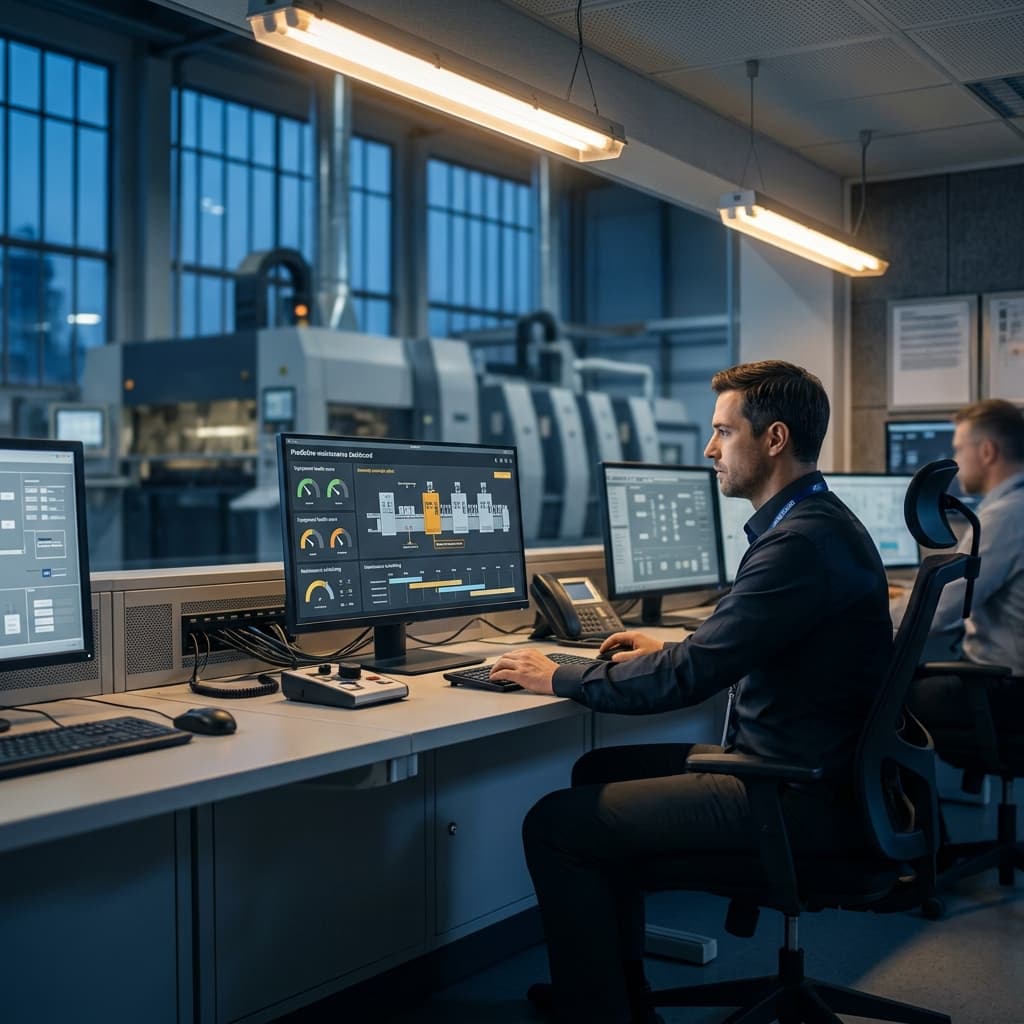 Manufacturing
AI-Powered Predictive Maintenance Solution for the Manufacturing Industry
The manufacturing industry faces unexpected equipment failures and costly downtime. This case study covers an AI-powered predictive maintenance solution.
Read more ↗ Education
Conversational AI Voice Agent for Mishkat Metaverse
Antier engineered a bilingual conversational AI Voice Agent for Mishkat Metaverse, an immersive education platform commissioned by King Abdullah City for Atomic and Renewable Energy, supporting AI-powered learning at a national scale.
Read more ↗What Data Science and Engineering Leaders Say About Working With Antier
The trust we earn from clients is reflected in how they describe working with our machine learning team, from model rigor to production accountability.
We needed a team that understood both the modeling side and the production engineering side of machine learning. Antier's team built our feature pipelines and model training infrastructure without treating MLOps as an afterthought.
Antier helped us move our forecasting models out of notebooks and into a monitored production pipeline. The retraining and drift detection setup alone saved our data science team significant manual effort every month.
Their engineers were rigorous about evaluation and honest about where simpler models outperformed more complex ones. That kind of judgment is rare in an ML vendor.
Partner with an ML development team that builds for production, not demos
Talk to Our Team ↗Machine Learning Investment and MLOps Trends Enterprises Should Know
Enterprise spending on machine learning infrastructure continues to rise as organizations recognize that model accuracy alone doesn't deliver business value without the engineering discipline to operate models reliably.
of Data Science Projects Never Reach Production
Widely cited industry research has found that the vast majority of machine learning models built by enterprises never make it into production, most often due to gaps in engineering, infrastructure, and MLOps maturity rather than modeling skill.
Source: VentureBeat
and Growing Global Machine Learning Market
Multiple market research firms project continued strong growth in the global machine learning market over the coming decade, driven by enterprise demand for predictive analytics, automation, and production-grade ML infrastructure rather than experimental pilots.
Monitoring Is Now Considered Baseline for Production ML
Surveys of MLOps maturity consistently find that organizations with formal model monitoring and drift detection processes report fewer production incidents and faster time-to-resolution than teams relying on ad hoc, manual checks.
Industries That Rely on Custom Machine Learning
As a machine learning development company, Antier builds industry-specific ML systems designed to improve forecasting accuracy, catch risk earlier, and automate decisions that used to depend on manual review.

FinTech
Financial institutions use custom machine learning models for credit risk scoring, transaction fraud detection, and underwriting decisions where accuracy and explainability both matter. We build models that integrate with existing risk and compliance workflows rather than operating as a disconnected scoring engine.

Retail & Ecommerce
Retailers rely on machine learning for demand forecasting, dynamic pricing, and product recommendations that adapt to changing catalogs and seasonal patterns. Our retail ML systems are built to retrain automatically as inventory and customer behavior shift.
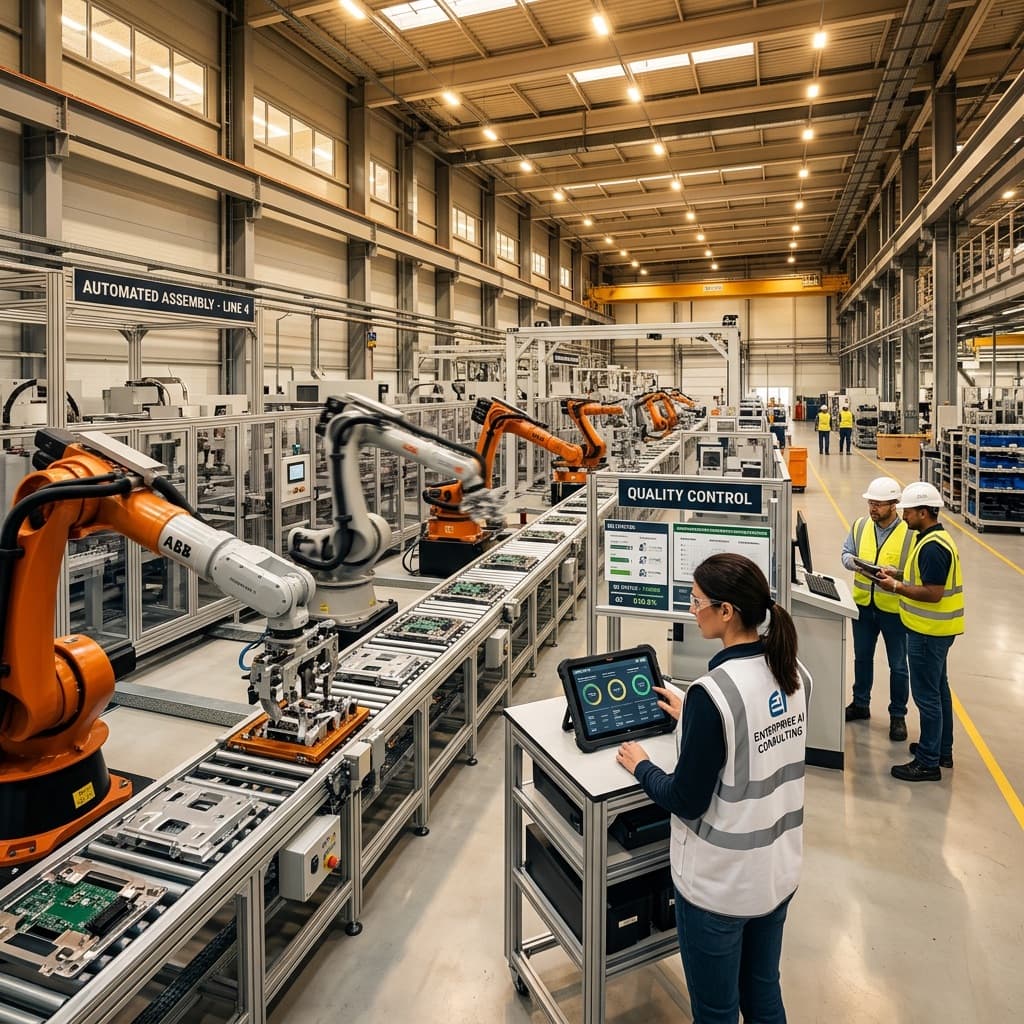
Manufacturing
Manufacturers use anomaly detection and time-series forecasting to predict equipment failures, flag sensor anomalies, and plan maintenance before breakdowns disrupt production. These models typically run on streaming sensor data with tight latency requirements.

Insurance
Insurers apply machine learning to claims fraud detection, underwriting risk scoring, and claims severity prediction, where model decisions need to be explainable to regulators, auditors, and claims adjusters alike.
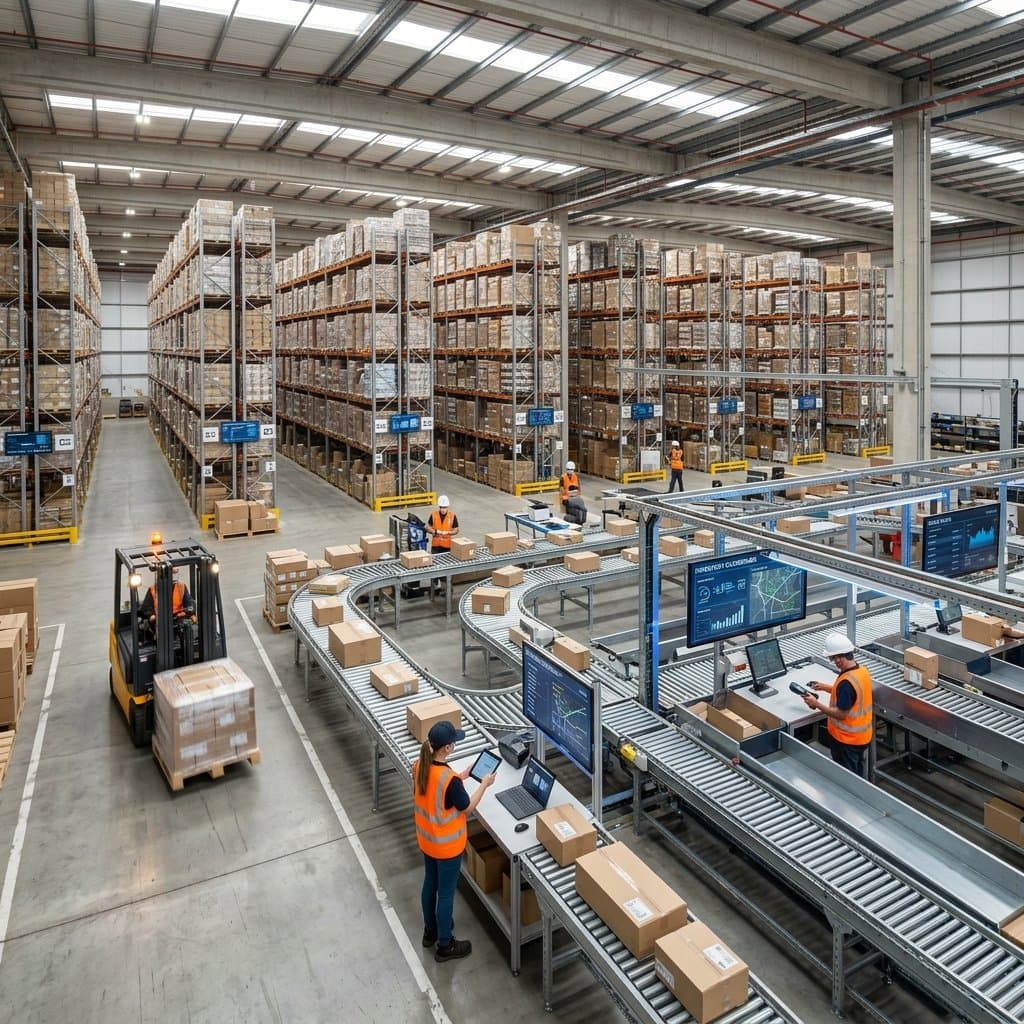
Logistics & Supply Chain
Supply chain teams use forecasting and anomaly detection models to predict demand, flag delivery exceptions, and optimize inventory positioning across distribution networks with constantly shifting variables.

Healthcare
Healthcare organizations use machine learning for risk stratification, readmission prediction, and resource utilization forecasting, built with the data governance and explainability standards clinical and compliance teams require.

Telecom
Telecom providers use churn prediction and network anomaly detection models to identify at-risk customers and flag unusual network behavior before it affects service quality.
SaaS & Technology
Software companies use propensity and churn models built on product usage data to identify expansion opportunities and at-risk accounts, feeding customer success and revenue teams a ranked, explainable signal rather than a raw usage dashboard.
Our Machine Learning Development Process
Antier follows a structured machine learning development process that moves a business problem from initial framing to a monitored, continuously improving production system.
- 1
Discovery & Problem Framing
We start by defining the business problem in terms a model can actually solve, whether it's classification, regression, ranking, or anomaly detection, and identifying the decision the model needs to inform.
- 2
Data Assessment & Feature Engineering
We assess data availability, quality, and history, then engineer the features needed to give the model meaningful signal, flagging gaps that need to be addressed before training begins.
- 3
Model Selection & Baseline Development
We establish a simple baseline model first, then evaluate more complex approaches against it, so every added layer of model complexity is justified by a measurable accuracy or business gain.
- 4
Model Training & Evaluation
Models are trained, tuned, and evaluated against metrics tied to the business decision they support, with rigorous validation to catch overfitting and data leakage before deployment.
- 5
MLOps Pipeline & Infrastructure Setup
We build the training pipelines, experiment tracking, model registry, and CI/CD infrastructure needed to move a validated model from a notebook into a repeatable, testable deployment process.
- 6
Deployment & Serving
Models are deployed as batch, real-time, or streaming services depending on latency requirements, with serving infrastructure sized to actual production traffic rather than notebook benchmarks.
- 7
Monitoring & Drift Detection
Once live, we monitor prediction distributions, feature drift, and model performance against ground-truth outcomes, with alerting configured to catch degradation early.
- 8
Retraining & Continuous Improvement
We set up retraining triggers based on schedule, drift signals, or new data volume, and continue refining models as business conditions and data patterns evolve.
Have a dataset and a business problem? Let's find out if ML is the right fit.
Schedule an ML Consultation ↗Why Businesses Choose Antier for Machine Learning Development
Organizations partner with Antier as their machine learning development company for engineering discipline, evidence-based modeling decisions, and accountability that extends well past deployment day.
Engineering-First MLOps Discipline
We treat MLOps as a first-class engineering discipline, not an afterthought bolted onto a research project. Every model we build ships with experiment tracking, versioning, and monitoring built in from day one.
Model-Agnostic, Evidence-Based Approach
We don't default to the most complex model available. Our team benchmarks simpler, cheaper, more interpretable models first and only adds complexity, such as deep learning, ensembling, or custom architectures, when it produces a measurable improvement.
Production Accountability
We stay involved after deployment, monitoring model performance, tuning retraining schedules, and addressing drift, rather than handing over a model and moving on to the next project.
Transparent, Collaborative Delivery
Our data scientists and ML engineers work directly with your team, with clear milestones, shared experiment logs, and full visibility into model decisions, training data, and evaluation results throughout the engagement.
Flexible, Cost-Conscious Engagement Models
Whether you need a dedicated ML team, an extension of your existing data science function, or a fixed-scope project, we structure engagements to fit your budget and internal capability maturity.
How We Solve Common Machine Learning Challenges
Organizations building custom ML capability tend to hit the same set of obstacles, from models that never leave the notebook to silent drift in production. Here's how our machine learning development services address them.
The Antier Advantage: What Sets Us Apart from Typical ML Development Vendors
| Comparison Factors | Antier | Typical ML Development Vendors |
|---|---|---|
| ML Engineering Depth | Full-stack capability across model development, feature engineering, MLOps, and production infrastructure | Data science expertise without dedicated ML engineering support |
| MLOps Maturity | Experiment tracking, model versioning, CI/CD, and monitoring built into every engagement by default | MLOps treated as an optional add-on, if offered at all |
| Model Selection Philosophy | Evidence-based model selection starting from simple baselines, adding complexity only when it's justified | Default bias toward the most complex or trending model architecture |
| Production Monitoring | Ongoing drift detection, performance monitoring, and retraining pipelines after deployment | Limited or no monitoring once the model is handed over |
| Data Engineering Capability | In-house feature engineering, feature stores, and training data pipeline development | Reliance on the client's existing data infrastructure with limited pipeline support |
| Applied ML Breadth | Experience across recommendation systems, anomaly detection, forecasting, and tabular ML use cases | Narrow specialization in a single ML use case or industry |
| Delivery Transparency | Shared experiment logs, milestone visibility, and direct collaboration with your data science team | Limited visibility into modeling decisions and evaluation methodology |
| Post-Deployment Support | Ongoing monitoring, retraining, and model lifecycle management after launch | Limited support once the model is deployed |
What Influences the Cost of Machine Learning Development?
As a machine learning development company, Antier focuses on the factors that most affect the cost of building and operating custom ML systems.
Data Readiness & Volume
The state of your existing data, including its volume, history, structure, and quality, significantly affects project cost. Clean, well-governed data with sufficient history reduces the feature engineering and data preparation effort required.
Problem Complexity & Model Type
A straightforward tabular classification problem requires far less engineering effort than a custom forecasting system or a recommendation engine handling millions of items and users.
Feature Engineering Scope
The number and complexity of features needed, and whether they require real-time computation, streaming aggregation, or a dedicated feature store, directly influences engineering time and infrastructure cost.
MLOps & Infrastructure Requirements
Setting up experiment tracking, CI/CD pipelines, model registries, and monitoring infrastructure is a one-time investment that pays off across every model you build afterward, but it does add to initial project scope.
Integration with Existing Systems
Connecting a model to your data warehouse, application layer, or operational systems for real-time or batch scoring adds integration work beyond the model itself.
Compliance & Explainability Requirements
Regulated use cases that require model interpretability, audit trails, and documented validation processes require additional engineering and documentation effort compared to unregulated use cases.
Ongoing Monitoring & Retraining
Production ML isn't a one-time deliverable. Budgeting for ongoing monitoring, periodic retraining, and model maintenance is necessary to keep accuracy from degrading over time.
Team Composition & Engagement Model
Whether you need a full-time dedicated team, a fixed-scope project, or an extension of your existing data science function changes both the cost structure and the delivery timeline.
Get a clear estimate for your machine learning project
Get a Quote ↗Machine Learning Frameworks, Tools, and Infrastructure We Use
From training libraries and feature stores to model registries and monitoring platforms, we build machine learning systems using the technologies best suited to your data environment, latency requirements, and existing infrastructure.
ML Frameworks & Libraries
Feature Engineering & Data Processing
Experiment Tracking & Versioning
Model Orchestration & Serving
Monitoring & Observability
Cloud & Managed ML Infrastructure
Looking for the right ML stack for your data environment?
Talk to Our ML Engineers ↗Machine Learning Governance, Security & Reliability Standards
Trust in a production ML system depends on more than model accuracy. Our machine learning development services are guided by governance, security, and reproducibility practices designed for enterprise requirements.
Data Privacy & Access Controls
We implement role-based access controls, data anonymization, and privacy-preserving techniques so training data and model outputs are handled in line with your data governance policies.
Model Risk Management
For regulated use cases, we support model risk management practices including documented validation, performance benchmarking, and ongoing model review aligned with your organization's risk framework.
Explainability & Auditability
Models are built with interpretability techniques, including feature importance and SHAP values alongside decision documentation, so predictions can be explained to auditors, regulators, and business stakeholders.
Secure Model Deployment
Model serving infrastructure follows secure deployment practices including access controls, encrypted data in transit and at rest, and isolated environments for sensitive training data.
Reproducibility & Lineage
Every model is versioned alongside its training data, code, and evaluation results, giving you full lineage from raw data to production prediction for audit and compliance purposes.
Spotlight on Machine Learning Insights
Our machine learning insights help data science and engineering leaders keep pace with modeling techniques, MLOps practices, and production ML trends shaping how enterprises build and operate custom ML systems.
 AI Strategy
The State of AI in the Logistics Industry: Executive Insights for Business Leaders
Explore AI in logistics with insights into market trends, business value, implementation strategies, industry examples, and the future of supply chains.
 AI Strategy
What the UAE's 50% Agentic Government Mandate Means for Enterprises?
Discover what the UAE's 50% Agentic AI strategy reveals about the future of enterprise AI. Learn why governance, organizational readiness, and execution matter more than AI adoption alone.
 AI Architecture
RAG vs. Fine-Tuning: A Strategic Guide for Business Leaders
RAG or Fine-Tuning? Go through this blog post to compare business value, costs, governance, scalability, & more factors and choose the right AI architecture.
Still scoping your machine learning use case or data readiness?
Talk to Our ML Consultants ↗Frequently Asked Questions
Start a conversation with Antier
Connect with our consulting and engineering leads to scope your digital transformation from architecture review to production deployment.