
Predictive Analytics Development Company
Turn historical, operational, and behavioral data into reliable forecasts, risk scores, and demand signals with predictive analytics solutions built for the business decisions that depend on them.
Antier is a trusted predictive analytics development company helping analytics, finance, and operations leaders forecast with confidence.












Our Comprehensive Suite of Predictive Analytics Services
Whether you need to forecast demand, score customer or credit risk, predict equipment failure, or explain model output to non-technical stakeholders, our predictive analytics services turn historical and real-time data into forward-looking business decisions.
Demand Forecasting
Our demand forecasting solutions combine historical sales data, seasonality, promotions, and external signals such as weather or macroeconomic indicators to project future demand at the SKU, category, or region level. These models help planning and merchandising teams reduce stockouts, cut excess inventory, and align procurement with actual market conditions.
Sales Forecasting
We build sales forecasting models that give revenue leaders visibility into pipeline conversion, deal velocity, and quota attainment weeks or months ahead of quarter close. By combining CRM data with historical win rates and market signals, these models replace spreadsheet-driven guesswork with statistically grounded revenue projections.
Revenue & Financial Forecasting
Our revenue and financial forecasting models help FP&A teams project revenue, cash flow, and budget variance with greater precision than trend-line methods. These models incorporate business drivers, seasonality, and scenario inputs so finance leaders can stress-test assumptions before they reach the board.
Churn Prediction
We develop churn prediction models that score customers or accounts by likelihood to cancel, downgrade, or disengage, using usage patterns, support interactions, billing history, and engagement signals. Retention and customer success teams use these scores to prioritize outreach and intervene before revenue is lost.
Predictive Lead Scoring
Our predictive lead scoring models rank inbound and outbound leads by likelihood to convert, using patterns from historical closed-won and closed-lost deals rather than static point systems. This helps revenue operations teams focus sales capacity on the accounts most likely to close.
Customer Lifetime Value Prediction
We build CLV prediction models that estimate the long-term value of a customer at the point of acquisition or renewal, factoring in purchase frequency, margin, and retention probability. These models inform acquisition spend, account tiering, and retention investment decisions.
Credit & Risk Scoring
Our credit and risk scoring models help lenders, fintechs, and financial institutions assess borrower or counterparty risk using traditional credit variables alongside alternative data sources. These models are built with fairness testing, documentation, and explainability suited to regulated lending environments.
Fraud Risk Prediction
We develop fraud risk prediction models that flag anomalous transactions, applications, or account behavior in real time, balancing detection accuracy against false-positive rates that affect genuine customers. These models integrate directly into transaction and onboarding workflows to support automated and manual review decisions.
Predictive Underwriting Models
Our predictive underwriting models support insurance and lending organizations in pricing risk more accurately by combining structured policy or loan data with behavioral and third-party signals. This helps underwriting teams move faster on standard cases while flagging edge cases for manual review.
Predictive Maintenance
We build predictive maintenance models that analyze sensor data, maintenance logs, and equipment telemetry to forecast failures before they occur. Operations teams use these predictions to schedule maintenance around production windows rather than reacting to unplanned downtime.
Inventory & Supply Chain Forecasting
Our inventory and supply chain forecasting models project stock requirements, lead times, and supplier risk across multi-tier networks, helping operations leaders balance service levels against carrying costs. These models adapt to disruptions such as supplier delays or sudden demand shocks.
Workforce & Capacity Planning Models
We develop workforce and capacity planning models that forecast staffing needs, contact center volumes, or production capacity requirements based on historical demand patterns and business drivers. These models help operations leaders plan shifts, hiring, and resource allocation with greater confidence.
Time-Series Forecasting Models
Our data science teams build time-series forecasting models using methods suited to the underlying data, from ARIMA and exponential smoothing to gradient-boosted trees and deep learning architectures such as LSTMs and temporal transformers. Model choice is driven by data volume, seasonality, and required forecast horizon, not by default preference for the most complex option.
Causal Inference & Impact Modeling
Beyond correlation-based forecasting, we build causal inference and impact modeling capabilities that help business leaders understand what actually drives an outcome, not just what is associated with it. These models support pricing decisions, marketing mix analysis, and policy changes where cause and effect matters more than prediction alone.
Predictive Model Development & MLOps
We handle the full model lifecycle, including feature engineering, training, validation, deployment, and monitoring, using MLOps practices that keep predictive models accurate as underlying data patterns shift. Automated retraining pipelines and drift detection reduce the risk of models silently degrading in production.
Predictive Dashboards & BI Integration
Our predictive dashboards surface forecasts, risk scores, and confidence intervals directly inside the BI tools business teams already use, rather than requiring analysts to interpret raw model output. This makes forward-looking insight accessible to planning, finance, and operations teams without a data science background.
Model Explainability & Interpretability
We build explainability into every predictive model we deliver, using techniques such as SHAP values, feature importance analysis, and plain-language reason codes that let business stakeholders understand why a model produced a given prediction. This matters most for models that influence credit decisions, pricing, or customer treatment.
Predictive Analytics Consulting
For organizations early in their analytics journey, our predictive analytics consulting services help assess data readiness, prioritize use cases by business impact, and define a roadmap for building forecasting and scoring capabilities incrementally rather than all at once.
Get predictive analytics solutions tailored to your forecasting and risk challenges
Discuss Your Requirements ↗Why Antier Stands Among Leading Predictive Analytics Companies
Years of Experience
AI & Tech Experts
Global Clients
Projects Delivered
Our Proven Predictive Analytics Success Stories That Delivered Measurable Impact
Our case studies show how organizations have used forecasting, scoring, and predictive modeling to reduce risk, improve planning accuracy, and support faster, better-informed business decisions.
 Sales AI
Turn Every Sales Conversation into Closure
An AI-powered Lead-to-Closure platform that supports sales teams before, during, and after every call, turning conversations into tasks, proposals, MoMs, and CRM updates in real time.
Read more ↗ Manufacturing
AI-Powered Predictive Maintenance Solution for the Manufacturing Industry
The manufacturing industry faces unexpected equipment failures and costly downtime. This case study covers an AI-powered predictive maintenance solution.
Read more ↗ Education
Conversational AI Voice Agent for Mishkat Metaverse
Antier engineered a bilingual conversational AI Voice Agent for Mishkat Metaverse, an immersive education platform commissioned by King Abdullah City for Atomic and Renewable Energy, supporting AI-powered learning at a national scale.
Read more ↗Antier's Predictive Analytics Expertise Validated by Clients and Industry Recognition
The trust we earn from clients is reinforced by verified reviews, delivery track record, and successful predictive analytics engagements across forecasting, risk, and customer intelligence use cases.
Antier helped us build a demand forecasting model that finally gave our planning team confidence in the numbers. Forecast accuracy improved significantly, and the team was transparent about model assumptions and limitations throughout the engagement.
We engaged Antier to build a churn prediction model for our subscription business. Their team understood both the data science and the business context, and the scores are now embedded directly into our customer success workflows.
Antier developed a credit risk scoring model for our lending platform that met our compliance team's explainability requirements without sacrificing predictive performance. The documentation and testing rigor stood out compared to previous vendors.
Partner with a predictive analytics company trusted by forecasting and risk teams
Talk to Our Team ↗Predictive Analytics Trends & Market Forecast: Why Enterprises Are Investing in Forward-Looking Intelligence
Growing investment in forecasting, risk scoring, and predictive maintenance reflects a broader shift toward data-driven planning across finance, operations, and customer functions.
Global Predictive Analytics Market by 2026
The global predictive analytics market is projected to grow from USD 10.5 billion in 2021 to USD 28.1 billion by 2026, at a compound annual growth rate of 21.7%, as organizations invest in forecasting, scoring, and forward-looking decision support.
Source: MarketsandMarkets
of Large Organizations to Adopt AI-Based Demand Forecasting by 2030
Gartner predicts that 70% of large organizations will adopt AI-based supply chain forecasting to predict future demand by 2030, as businesses move away from spreadsheet-driven planning toward statistically grounded forecasting models.
Source: Gartner
Reduction in Unplanned Downtime from Predictive Maintenance
Manufacturers using predictive maintenance models typically reduce machine downtime by 30% to 50% and extend machine life by 20% to 40%, according to McKinsey research on manufacturing analytics, reinforcing the operational case for predictive maintenance investment.
Source: McKinsey & Company
Profit Increase from a 5% Improvement in Customer Retention
Increasing customer retention rates by just 5% can increase profits by 25% to 95%, a widely cited finding from Bain & Company research that explains why churn prediction and retention scoring have become priorities for subscription and services businesses.
Source: Bain & Company
Industries We Empower with Predictive Analytics Solutions
As a predictive analytics development company, Antier builds forecasting, scoring, and risk models tailored to the data patterns, decisions, and regulatory context specific to each industry.

Retail & Ecommerce
Retail and ecommerce businesses face constant pressure to forecast demand accurately across thousands of SKUs and locations. Our predictive analytics solutions help retailers reduce stockouts, minimize markdowns, and plan inventory with greater precision.

Banking & Financial Services
Banks and financial institutions need to assess credit risk, detect fraud, and forecast portfolio performance under changing market conditions. Antier's predictive analytics solutions support credit scoring, risk modeling, and financial forecasting aligned with regulatory expectations.

Insurance
Insurers must price risk accurately while managing claims volume and fraud exposure. Our predictive underwriting and claims forecasting models help insurance teams improve loss ratios and speed up underwriting decisions.

Manufacturing
Manufacturers rely on production uptime and quality control to protect margins. Through predictive maintenance and demand forecasting models, we help manufacturers reduce unplanned downtime and align production schedules with real demand.

Healthcare
Healthcare organizations need to anticipate patient volumes, readmission risk, and resource requirements. Our predictive analytics solutions help hospitals and payers forecast demand, identify at-risk patients, and plan staffing more effectively.

Telecom
Telecom providers manage high customer volumes and churn pressure in competitive markets. Antier's churn prediction and network demand forecasting models help telecom operators retain subscribers and plan infrastructure investment.
Logistics & Supply Chain
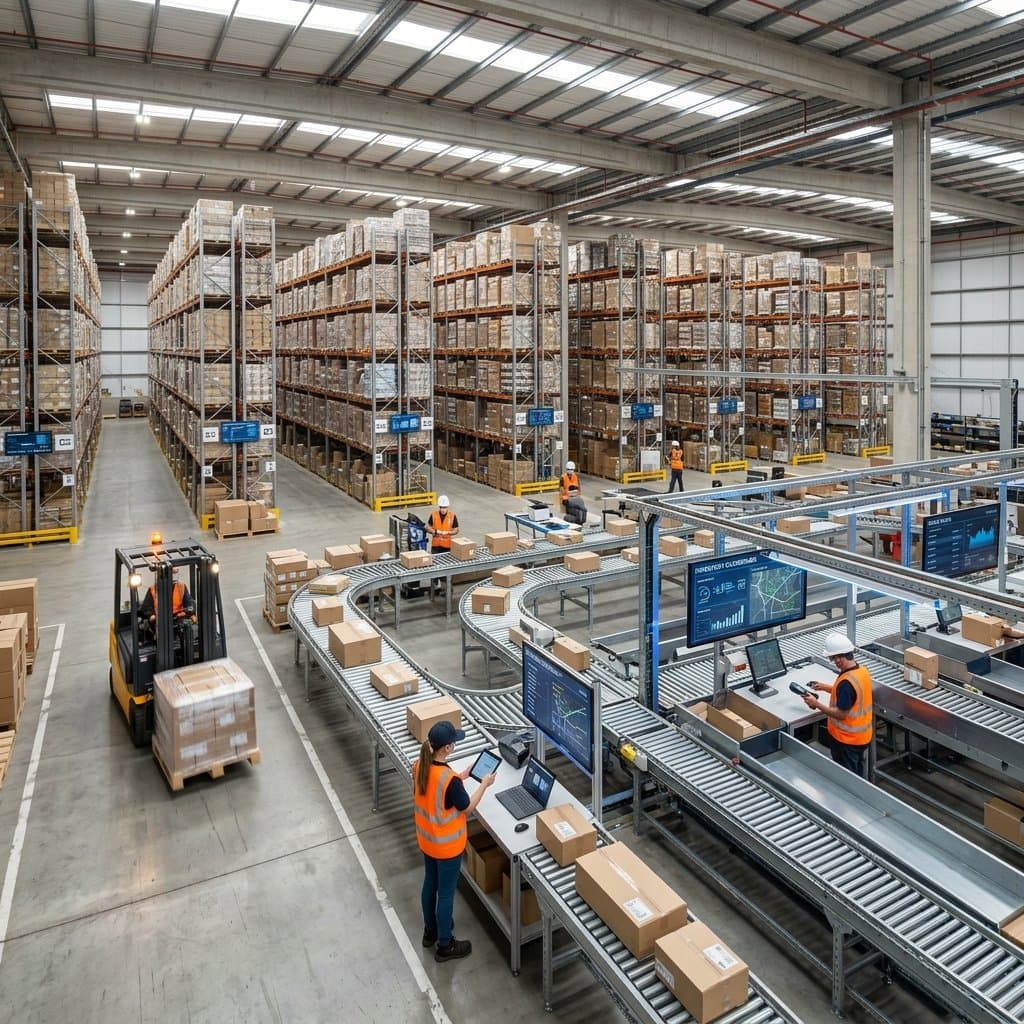
Supply chain teams must plan around demand volatility, supplier risk, and transportation constraints. Our forecasting and inventory optimization models help logistics organizations improve service levels while controlling carrying costs.
SaaS & Subscription Businesses
Subscription businesses depend on predictable recurring revenue and low churn. We build churn prediction, expansion scoring, and revenue forecasting models that help SaaS leaders protect net revenue retention.

Energy & Utilities
Energy and utility providers need to forecast demand, plan grid capacity, and predict equipment failure across distributed infrastructure. Our predictive analytics solutions support load forecasting, asset health monitoring, and outage risk prediction.

Travel & Hospitality
Travel and hospitality businesses must forecast demand and price inventory in real time across shifting booking patterns. Our predictive analytics models help these organizations anticipate occupancy, optimize pricing, and plan capacity.
Our Predictive Analytics Development Process: From Data to Decision
Antier follows a structured process that moves predictive analytics initiatives from business objective and data assessment through model deployment, monitoring, and continuous improvement.
- 1
Business Objective & Use Case Discovery
We start by understanding the business decisions a forecast or score needs to support, whether that's inventory planning, credit approval, or retention outreach, so the model is built around a measurable business outcome rather than a generic accuracy target.
- 2
Data Assessment & Feasibility
Our team evaluates the availability, history, and quality of the data needed to support reliable predictions, and flags gaps early so expectations around model performance are grounded in what the data can actually support.
- 3
Feature Engineering & Data Preparation
We prepare historical data, external signals, and business variables into features that capture the patterns driving the outcome, addressing missing data, seasonality, and data leakage risks along the way.
- 4
Model Selection & Development
Based on the forecasting horizon, data volume, and interpretability requirements, we select and train the appropriate modeling approach, from statistical time-series methods to gradient-boosted models and deep learning architectures.
- 5
Validation & Backtesting
Before a model reaches production, we validate its performance against historical holdout periods and stress-test it against edge cases to understand where predictions are reliable and where they are not.
- 6
Explainability & Business Review
We translate model output into terms business stakeholders can evaluate, including feature importance, confidence intervals, and reason codes, so finance, risk, and operations leaders can validate the model against their own judgment before it goes live.
- 7
Deployment & Dashboard Integration
Once validated, the model is deployed into production and connected to the dashboards, CRM, or planning tools business teams already work in, so predictions reach decision-makers without requiring a separate tool.
- 8
Monitoring & Retraining
After deployment, we monitor prediction accuracy and data drift on an ongoing basis, retraining models as market conditions, customer behavior, or operational patterns change.
- 9
Continuous Optimization
We continue refining models, expanding coverage to new use cases, and incorporating stakeholder feedback so predictive capabilities improve in step with the business.
Ready to replace guesswork with data-driven forecasts?
Schedule a Predictive Analytics Consultation ↗Why Business & Analytics Leaders Choose Antier for Predictive Analytics
Organizations partner with Antier as their trusted predictive analytics development company for business-first modeling, built-in explainability, and delivery discipline across forecasting, scoring, and risk use cases.
Transparency
We keep FP&A, RevOps, and risk teams involved throughout model development, sharing assumptions, validation results, and known limitations rather than delivering a black-box score. This structured approach helps stakeholders trust and act on model output.
Business-First Modeling
We start every predictive analytics engagement from the business decision the model needs to support, not from a preference for a particular algorithm. This keeps model complexity proportional to the actual decision being made.
Explainability by Default
Every model we deliver includes explainability tooling suited to its audience, with technical documentation for data teams and plain-language reason codes for business stakeholders, so predictions can be trusted, challenged, and acted on.
Cross-Industry Modeling Experience
From credit scoring in regulated lending environments to demand forecasting in retail and predictive maintenance in manufacturing, our team brings modeling patterns proven across industries to new engagements.
Confidentiality & Security
As a trusted predictive analytics development company, Antier operates within NDA-backed environments supported by secure infrastructure, controlled data access, and enterprise-grade security practices that protect sensitive business and customer data.
How Our Predictive Analytics Solutions Address Common Business Challenges
Organizations pursuing forecasting, scoring, and predictive maintenance initiatives often run into data, trust, and integration barriers. Antier's predictive analytics services are designed to help business and analytics leaders overcome these barriers.
What Determines the Cost of a Predictive Analytics Solution?
As an experienced predictive analytics development company, Antier focuses on the key factors that influence the cost of building forecasting, scoring, and risk models for enterprise use cases.
Data Readiness
The volume, history, and quality of available data significantly affect project cost. Organizations with clean, well-structured historical data typically require less preparation effort than those with fragmented or manual data sources.
Forecasting Horizon & Granularity
Predicting a single monthly aggregate number requires far less modeling effort than forecasting demand at the SKU, store, and day level. Granularity requirements directly influence data volume, model complexity, and infrastructure needs.
Model Complexity & Technique
The choice between statistical time-series models, machine learning approaches, and deep learning architectures affects both development effort and the computational resources required to train and serve the model.
Explainability & Regulatory Requirements
Models used in credit decisions, underwriting, or other regulated contexts require additional documentation, bias testing, and explainability tooling that add to development scope.
Integration Requirements
Connecting predictive output to CRM systems, ERP platforms, BI dashboards, or planning tools involves engineering effort that scales with the number and complexity of target systems.
Deployment & Infrastructure
Real-time scoring at high transaction volumes requires different infrastructure than batch forecasts refreshed weekly. Deployment architecture and latency requirements influence both build and ongoing operating costs.
Ongoing Monitoring & Retraining
Ongoing model monitoring, drift detection, and periodic retraining represent a recurring cost beyond initial development, and should be planned for as part of the total cost of ownership.
Get an accurate estimate for your predictive analytics project
Get a Quote ↗Platforms, Models, and Frameworks We Work With
From statistical forecasting libraries to deep learning architectures and enterprise MLOps platforms, we build predictive analytics solutions using technologies matched to your data, forecasting horizon, and deployment requirements.
Statistical & Time-Series Forecasting
Machine Learning & Gradient Boosting
Deep Learning for Forecasting
Explainability & Model Interpretability
MLOps & Model Lifecycle
Cloud & Enterprise AI Platforms
BI & Predictive Dashboard Tools
Looking for the right modeling approach for your forecasting or risk use case?
Talk to our Predictive Analytics Experts ↗Predictive Analytics Governance, Security & Compliance Standards Followed by Antier
Trust matters most when a model influences a credit decision, a price, or a customer's treatment. Our predictive analytics services are guided by governance, security, and explainability practices designed for regulated and enterprise environments.
Model Risk Management Alignment
For credit scoring and underwriting use cases, we align model development, validation, and documentation practices with model risk management expectations common in regulated financial environments.
GDPR-Focused Data Protection
Our predictive analytics services support GDPR-aligned data handling, access controls, and privacy-focused architectures when models are trained on customer or personal data.
Bias Testing & Fairness Review
We test scoring and risk models for disparate impact across protected groups and document mitigation steps taken, helping organizations meet fairness expectations for models that influence credit, pricing, or eligibility decisions.
Explainability & Auditability
Every regulated model we deliver includes documentation of features used, validation results, and decision logic, supporting audit and regulatory review requirements.
NDA & Confidentiality Standards
As a trusted predictive analytics development company, we support NDA-backed engagements, protected data environments, and strict confidentiality practices for enterprise and financial services clients.
The Antier Advantage: What Sets Us Apart from Traditional Analytics Vendors
| Comparison Factors | Antier | Traditional Analytics Vendors |
|---|---|---|
| Modeling Breadth | Expertise across time-series forecasting, causal inference, credit risk scoring, churn prediction, and predictive maintenance | Narrow focus on dashboards or descriptive reporting |
| Explainability | Explainability built into every model, with reason codes and documentation suited to business and regulatory stakeholders | Black-box models with limited interpretability |
| Business Alignment | Models built around a specific business decision, validated with the teams who will act on the output | Generic models built primarily around statistical accuracy |
| Regulated Use Cases | Experience with model risk management, bias testing, and audit-ready documentation for credit and underwriting models | Limited experience with regulatory requirements |
| Deployment & Integration | Predictions integrated directly into BI dashboards, CRM, and planning tools business teams already use | Models delivered as standalone outputs disconnected from workflows |
| Monitoring & Retraining | Ongoing drift detection and retraining pipelines that keep models accurate as conditions change | One-time delivery with limited post-launch support |
| Security & Confidentiality | NDA-backed engagements, controlled data access, and enterprise-grade security practices | Basic security and confidentiality processes |
Spotlight on Insights
Our predictive analytics insights help business and analytics leaders understand forecasting methods, model explainability, and emerging trends shaping data-driven decision-making.
 AI Strategy
The State of AI in the Logistics Industry: Executive Insights for Business Leaders
Explore AI in logistics with insights into market trends, business value, implementation strategies, industry examples, and the future of supply chains.
 AI Strategy
What the UAE's 50% Agentic Government Mandate Means for Enterprises?
Discover what the UAE's 50% Agentic AI strategy reveals about the future of enterprise AI. Learn why governance, organizational readiness, and execution matter more than AI adoption alone.
 AI Architecture
RAG vs. Fine-Tuning: A Strategic Guide for Business Leaders
RAG or Fine-Tuning? Go through this blog post to compare business value, costs, governance, scalability, & more factors and choose the right AI architecture.
Still evaluating the right predictive analytics use case for your business?
Talk to our Analytics Consultants ↗Frequently Asked Questions
Start a conversation with Antier
Connect with our consulting and engineering leads to scope your digital transformation from architecture review to production deployment.